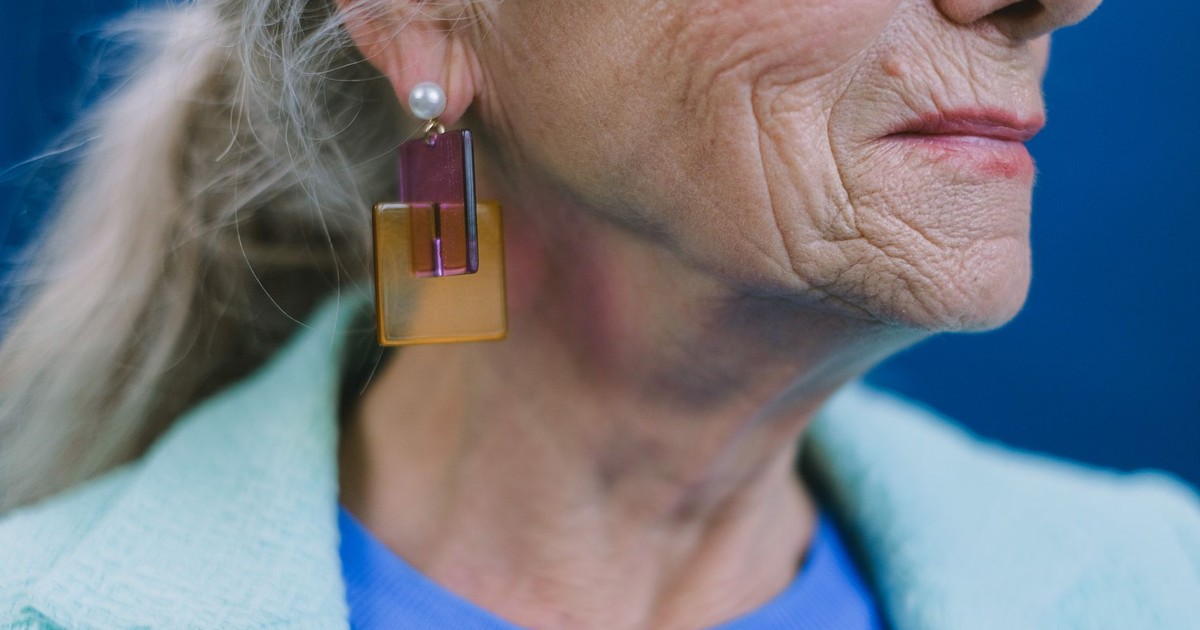

Millions of people have one. Most never give it a second thought. But since the early 1970s, cardiologists have been quietly noting a small physical detail in patient after patient with verified coronary artery disease, and the pattern has proved persistent enough to generate more than half a century of medical research. A diagonal crease running across the earlobe at a 45-degree angle sounds like a trivial feature of aging skin. The crease has a name, a discoverer, and a growing body of data that makes it difficult to dismiss – though equally difficult to use as a standalone diagnostic tool.
The finding is called Frank’s sign. Some researchers describe it as a “dermatological sign indicative of cardiovascular disease.” It’s defined as a “continuous fold” that runs diagonally to the back edge of the earlobe at a 45-degree angle and covers more than two-thirds of the earlobe length. You can have it on one ear, both ears, and in varying degrees of depth. According to the research that has accumulated around it, each of those variations carries a different statistical weight when it comes to wrinkles and heart disease risk.
Frank’s sign is named for Dr. Sanders T. Frank, who in 1973 noticed the diagonal earlobe crease in 20 people he was treating for angina (chest pain). In a letter published in the New England Journal of Medicine, Dr. Frank described this possible link between an earlobe crease and heart disease. What followed was decades of observational research, autopsy studies, and clinical trials – producing results that range from striking to conflicting, and that together paint a picture of a useful but imperfect signal.
In the United States, coronary heart disease killed 349,470 people in 2023 – roughly two deaths every three minutes – according to 2026 cardiovascular statistics published in JACC. Against that backdrop, the question of whether a simple visual cue could help identify at-risk individuals earlier has obvious clinical appeal.
What the Research Actually Shows About Wrinkles and Heart Disease
A study published in The American Journal of Medicine analyzed the relationship between the diagonal earlobe crease and cardiovascular risk in 1,050 adults residing in Spain, examining their age, sex, BMI, smoking status, blood pressure, blood glucose, cholesterol, and cardiovascular events. Both earlobes were examined for crease presence, length, depth, and whether additional secondary creases were present.
The results showed that estimated cardiovascular mortality risk was significantly higher in individuals who had a diagonal earlobe crease, and the proportion with moderate, high, or very high cardiovascular risk climbed sharply with crease severity – from 23.8% among those with no crease to 35.6% with a unilateral crease to 58% among those with bilateral creases. The mean cardiovascular risk was also significantly higher for those whose creases were longer, deeper, or accompanied by accessory creases.
The study’s conclusion was unambiguous: the diagonal earlobe crease is independently associated with higher cardiovascular risk scores, especially when the crease is complete, bilateral, deep, and has accessory creases.
A 2025 autopsy-based study from Universiti Kebangsaan Malaysia added forensic weight to those clinical findings. Researchers examined 51 cardiovascular deaths and 51 matched non-cardiovascular deaths from autopsy cases collected between September 2023 and December 2024, assessing Frank’s sign severity in both ears and correlating findings with critical coronary artery stenosis (the narrowing of the arteries that supply the heart). Frank’s sign – defined as a diagonal crease on the earlobe extending from the tragus to the outer edge – has been proposed as a potential external marker for cardiovascular mortality, and prior autopsy studies have linked it to fatal outcomes of coronary artery disease. The 2025 Cureus study found that Frank’s sign was present in 77.1% of cases with critical coronary artery occlusion.
A 2023 study published in Wiener klinische Wochenschrift, examining the independent relationship between bilateral diagonal earlobe crease (DELC) and coronary artery disease (CAD), found that clinical studies and systematic reviews have demonstrated an association with coronary artery disease, particularly in cases that involve both earlobes. The 2023 analysis in that journal placed the odds ratio for bilateral DELC and CAD between 1.36 and 1.47, independent of traditional risk factors such as smoking and diabetes.
The Bilateral Difference: Why Both Ears Matter
The distinction between a crease on one ear versus both is not incidental. The research consistently shows that bilateral presentation is where the cardiovascular signal becomes strongest. The diagonal earlobe crease is independently associated with higher cardiovascular risk scores, especially when the crease is complete, bilateral, deep, and has accessory creases.
Long-term survival data from a 1996 study in The American Journal of Medicine, still cited in current literature, illustrated the gradient with 10-year cardiac event-free survival rates: 43.5% for those with no earlobe crease, 33.0% for those with a unilateral crease, and just 17.5% for those presenting bilateral creases. The difference between having no crease and having bilateral creases represented more than a halving of long-term cardiac event-free survival.
Older research has noted that an ear crease in people younger than 40 was associated with coronary artery disease in 80% of those participating in one study. A 2022 forensic study found that the presence of a diagonal earlobe crease appears to carry particular prognostic value for younger patients with heart disease – a finding that makes the sign especially clinically relevant in adults who might otherwise not be considered high-risk.
The Biology Behind the Crease
Understanding why a wrinkle on the earlobe might reflect what’s happening in the coronary arteries requires a look at the tissue-level changes that produce it. Proposed mechanisms include microvascular changes and accelerated aging of connective tissue. A 2022 paper in the European Journal of Internal Medicine noted that Frank’s sign is thought to result from loss of dermal and vascular elastic fibers – a process that may mirror what is simultaneously occurring in the walls of the coronary arteries.
Today.com’s 2026 coverage of the topic described this mechanism further: microvascular disease weakens the elastic fibers in the earlobe, and the same vascular deterioration that reduces blood supply to the heart may compromise the tiny vessels that nourish the earlobe’s connective tissue, causing it to lose structural integrity and fold.
The hormone Klotho provides another mechanistic thread. Age-related complications such as oxidative stress, decreased autophagy, mitochondrial dysfunction, inflammatory responses, and cardiac dysfunction are associated with relative Klotho deficiency. Klotho, an anti-aging protein with anti-oxidative and anti-inflammatory properties, protects against endothelial dysfunction by increasing nitric oxide production. Research cited by Medical News Today found that people with earlobe creases had low serum levels of Klotho – a deficit linked to premature aging of the vascular endothelium (the inner lining of blood vessels). Reduced Klotho levels appear in both the earlobe’s structural failure and in the coronary artery disease process itself, suggesting the crease may be a visible expression of a shared biological decline.
A 2024 multivariate analysis published in the International Journal of Hypertension found that being male, being older than 55 years, obesity, type 2 diabetes, arterial hypertension, smoking, and dyslipidemia were all associated with the presence of diagonal earlobe crease – a list that overlaps almost entirely with the established checklist for cardiovascular risk. That overlap is part of why researchers continue to debate whether Frank’s sign adds independent predictive value or whether it simply mirrors conventional risk factors.
Where the Evidence Has Limits
Frank’s sign is a risk marker, not a diagnostic test. A systematic review analyzing 13 cross-sectional studies evaluating 3,951 patients – all focused on chronic coronary syndromes – found that the diagnostic accuracy of diagonal earlobe crease for detecting chronic coronary syndromes is insufficient as a standalone test. The diagonal earlobe crease, a wrinkle extending obliquely across the earlobe, has been linked by many researchers to various atherosclerotic diseases – but the systematic review found the diagnostic performance highly variable across studies.
That variability is quantified in the sensitivity and specificity numbers from the 2021 systematic review in the Journal of Clinical Medicine: sensitivity for detecting coronary artery disease ranged from 26% to 90%, and specificity ranged from 32% to 96% across included studies. Ranges that wide mean the sign performs excellently in some study populations and barely above chance in others. The differences in methodology, patient selection, and crease definition across studies help explain the spread, but they also underscore why clinical use must be careful.
A 2022 study in the European Journal of Internal Medicine suggests that age is a predictor for both Frank’s sign and coronary artery disease risk, and it’s a stronger predictor of heart disease risk than the earlobe itself. This is an important caveat: older adults develop earlobe creases for reasons unrelated to cardiovascular disease, including general skin aging and loss of elasticity. The sign is therefore far more informative in middle-aged adults than in those over 70, where its presence becomes much more ambiguous.
Across the published research, the practical guidance is consistent with what the Today.com coverage noted: the presence of an earlobe crease alone is not a reliable standalone indicator for diagnosing coronary artery disease, and researchers continue to call for its use alongside conventional risk assessment tools rather than as a replacement for them.
Frank’s Sign in Combination With Other Visual Markers
Frank’s sign rarely appears in the research in complete isolation. The American Journal of Medicine study noted that visible signs such as the diagonal earlobe crease, baldness, and xanthelasma (cholesterol deposits around the eyes) were associated with a greater risk of ischemic heart disease, myocardial infarction, and death, regardless of other factors. Researchers examining clusters of these dermatological markers have found that their combination strengthens the predictive signal considerably – more so than any single feature alone.
Specifically, visible signs including earlobe crease, male pattern baldness, and cholesterol deposits in the eyes (xanthelasma), whether alone or in combination, are associated with an increased risk of ischemic heart disease and heart attack. For clinicians doing a physical examination, this means Frank’s sign is most usefully considered alongside other visible external markers, not evaluated in isolation.
You can read more about how the skin and body surface reflect cardiovascular stress in our in-depth look at skin signs of heart disease, including why dermatologists are increasingly part of early cardiac screening conversations.
Read More: Signs On Your Face and Head That Could Indicate Heart Trouble
What This Means for You
Frank’s sign occupies an unusual position in cardiovascular medicine: its association with coronary artery disease is real, replicated across dozens of studies, and mechanistically plausible – yet it falls short of being a reliable diagnostic instrument on its own. The most clinically meaningful finding is not whether a crease is present, but how it presents. A bilateral, deep, full-length crease with accessory lines is a materially different finding from a faint, superficial, unilateral one. Among study participants with bilateral creases, 58% fell into moderate, high, or very high cardiovascular risk categories – a proportion that would justify further clinical evaluation in most settings.
For adults under 55, the sign carries particular weight. In that age group, the presence of a bilateral diagonal earlobe crease combined with any traditional cardiovascular risk factor – hypertension, type 2 diabetes, a history of smoking, or elevated LDL cholesterol – makes a proactive cardiovascular workup reasonable to discuss with a physician. The appropriate next step is not self-diagnosis in a mirror; it’s a conversation about whether a cardiovascular risk assessment, including lipid panels, blood pressure tracking, and potentially imaging, is warranted sooner than standard screening protocols might otherwise trigger. The earlobe doesn’t make the diagnosis. It asks the question.
Disclaimer: This information is not intended to be a substitute for professional medical advice, diagnosis, or treatment and is for information only. Always seek the advice of your physician or another qualified health provider with any questions about your medical condition and/or current medication. Do not disregard professional medical advice or delay seeking advice or treatment because of something you have read here.
AI Disclaimer: This article was created with the assistance of AI tools and reviewed by a human editor.