

Roughly 1 in 3,000 people are born with an extra finger. The researchers who study personality quirks found that statistic useful – not because fingers have anything to do with psychology, but because it illustrates something important: the most common arrangement isn’t the only possible one. The same logic, it turns out, applies to how human personalities are built.
Most people’s personalities follow a predictable internal logic. Score high on honesty and you tend to trust others easily. Value discipline and you probably aren’t fussed about aesthetics. These trait pairings are so consistent across millions of people that psychologists built an entire model around them. But a small slice of the population breaks that pattern entirely – and the researchers who found them reached for an unusual word to describe what they’d discovered.
They called them personality mutants. The label isn’t an insult. It’s a precise term borrowed from genetics, and the people it describes aren’t disordered or damaged. They simply carry trait combinations that the standard models of human personality never accounted for – and for decades, those models quietly assumed they didn’t exist.
What the Big Five Gets Right – and Where It Falls Short

The Five Factor Model (FFM) is widely accepted as a satisfactory description of the pattern of trait co-variations, supposedly fitting, more or less adequately, every individual. The model – better known as the Big Five or OCEAN – scores people across five broad dimensions: Openness to experience, Conscientiousness, Extroversion, Agreeableness, and Neuroticism. These traits remain relatively stable throughout most of one’s lifetime, influenced significantly by both genes and the environment. Twin studies have consistently found that the heritability of the Big Five traits sits between 40 and 60%, according to a 2015 study in Translational Psychiatry – meaning roughly half the variation in personality across people traces back to genetic differences, with the rest shaped by environment and experience. That figure comes from twin-study data and should be understood as an estimate rather than a fixed rule; the actual genetic contribution likely varies by trait and population.
The model works well for most people because the five traits don’t exist in isolation – they travel in predictable company. Certain facets (the sub-components within each broad trait) reliably cluster together. A person who scores high on trust tends to score high on straightforwardness. Someone high in aesthetic appreciation tends to be low on rigid self-discipline. The FFM assumes, at least implicitly, that there is only one configuration into which those traits can be grouped – one standard template that all personalities follow.
Researchers at the University of Tartu and the University of Warwick challenged that assumption directly. In an observational study published in Frontiers in Psychology, Drs. Jüri Allik, Martina Hřebíčková, and Anu Realo tested over 4,000 participants from the Czech Republic and Estonia, with each person completing a personality inventory and also being rated by someone who knew them well. Their 2018 study proposed that the five-factor structure is best described as a near-universal – a template that fits most people, but not all. Evidence from both self-ratings and observer-ratings revealed a small minority with personality configurations that clearly deviated from the standard pattern. The authors were careful to note that their findings raise important questions about how and why these configurations form and persist – questions that require further investigation before firm conclusions can be drawn.
Unusualness in personality, as the researchers defined it, is the extent to which an individual’s personality deviates from that of others – either through a rare score on a single trait or through an atypical combination of multiple traits. For personality mutants, it’s the second kind. The combination, not any single extreme score, is what sets them apart.
How Rare Are the Personality Mutants?

Fewer than 1 in 10 people fall into this category – a figure the Allik, Hřebíčková, and Realo study identified across both Czech and Estonian samples, in both self-reported and observer-rated assessments. Because the finding emerged from a single observational study of two European populations, it’s best treated as a strong initial estimate rather than a definitive global prevalence. The same research identified three distinct clusters within this group, each defined by a specific pairing of traits that the standard model says shouldn’t coexist – but consistently does.
There’s a parallel worth drawing from genetics: researchers know far more about the most common genetic makeup than they do about rare genetic variations, and rare variations can produce patterns that are difficult to interpret. Personality science faces the same challenge. If a small but real group of people carry a rare combination of personality facets, then the FFM cannot be the only template according to which personality facets organize themselves. The three clusters below represent the clearest examples of what that means in practice.
1. The Skeptical Straight-Shooter (H1): High Honesty, Low Trust
Most people who score high on Straightforwardness – meaning they are frank, direct, and don’t conceal their intentions – also score high on Trust. The logic is intuitive: if you operate with transparency yourself, you tend to assume others do the same. The first cluster, called H1, saw people who scored high in Straightforwardness also score low in Trust. These are straight-shooters who are usually frank and sincere but don’t trust that others are returning the favor.
The Five Factor Model is a nearly universally accepted approach to explaining how individuals describe their own or someone else’s personality – but the H1 profile challenges one of its quieter assumptions: that honesty and trust are inseparable traveling companions. For the H1 personality mutant, they aren’t. This person is genuinely transparent in how they communicate, but applies a skeptical lens when reading other people’s motivations. They use their own understanding of how honesty works to detect when it’s absent in others.
That combination has a certain internal logic, even if it defies the standard model. Knowing what honesty looks like from the inside makes it easier to spot its absence on the outside. As in anatomical variation among humans, the most common combination of personality traits is probably the best-functioning under most circumstances – but unknown factors are responsible for the formation of unusual combinations. The H1 profile doesn’t make someone a worse communicator or a cynical misanthrope. It makes them a precise one: direct in what they say, careful about what they believe.
2. The Disciplined Aesthete (H2): High Conscientiousness, High Aesthetic Appreciation

The stereotypical highly conscientious person is organized, methodical, and not particularly concerned with beauty or style. Openness to experience shows up as curiosity, creativity, and a comfort with complexity, while Conscientiousness tends to take the form of structure, responsibility, and a desire for order. On the surface, those orientations pull in opposite directions – which is exactly why the H2 cluster caught the researchers’ attention.
H2 individuals score high in Conscientiousness – the trait associated with diligence, planning, and follow-through – but also score high in Aesthetics, meaning they place significant value on visual style, beauty, and artistic quality. When both traits are present at high levels, something distinctive emerges. The Big Five typically frames openness and conscientiousness as near-opposites. The H2 person manages to hold both ends of that spectrum simultaneously. They are rigorous and disciplined, but they care deeply about how things look and feel – not as a distraction from their work, but often as an integral part of it.
Research on the Big Five has long noted that high openness and high conscientiousness tend to pull in different directions, which is precisely why the H2 combination is flagged as unusual. Think of the architect who obsesses over the visual integrity of a building’s design while delivering every project on deadline, or the surgeon who insists on the precise aesthetic presentation of their clinical notes. The H2 profile produces people who bring rigor to their aesthetic instincts and creativity to their organized routines.
3. The Trusting Diplomat (H3): High Trust, Lower Straightforwardness
If the H1 mutant is frank but skeptical, the H3 mutant runs in a different direction entirely. H3s are highly Trusting of others but less Straightforward themselves. Where the H1 profile might seem paradoxical at first glance – honest people who don’t trust – the H3 profile raises different questions. Someone who extends trust readily but doesn’t communicate with the same directness as an H1 isn’t necessarily being deceptive. They may simply be more focused on preserving harmony than on stating hard truths.
This combination has real-world implications. Trust, as a personality facet, encompasses the belief that others are acting with good intentions – it’s an orientation toward people, not a judgment of evidence. H3s carry that orientation strongly. But their lower Straightforwardness means they’re less likely to be the ones who name the elephant in the room, challenge a colleague openly, or deliver unvarnished feedback. The same Allik, Hřebíčková, and Realo study confirmed that this pattern appeared consistently in both self-reported and observer-rated assessments – it’s not simply how H3 individuals see themselves, but how others who know them see them too.
That makes the H3 mutant something of a social navigator: warm and trusting in their approach to relationships, but more strategic in how they express their own views. In some contexts, that combination is an asset. In others, it can create tension between what they feel and what they say. Like the other two clusters, this profile isn’t a measurement error – it’s a real, stable pattern that the standard personality model was never built to capture.
What “Mutant” Actually Means
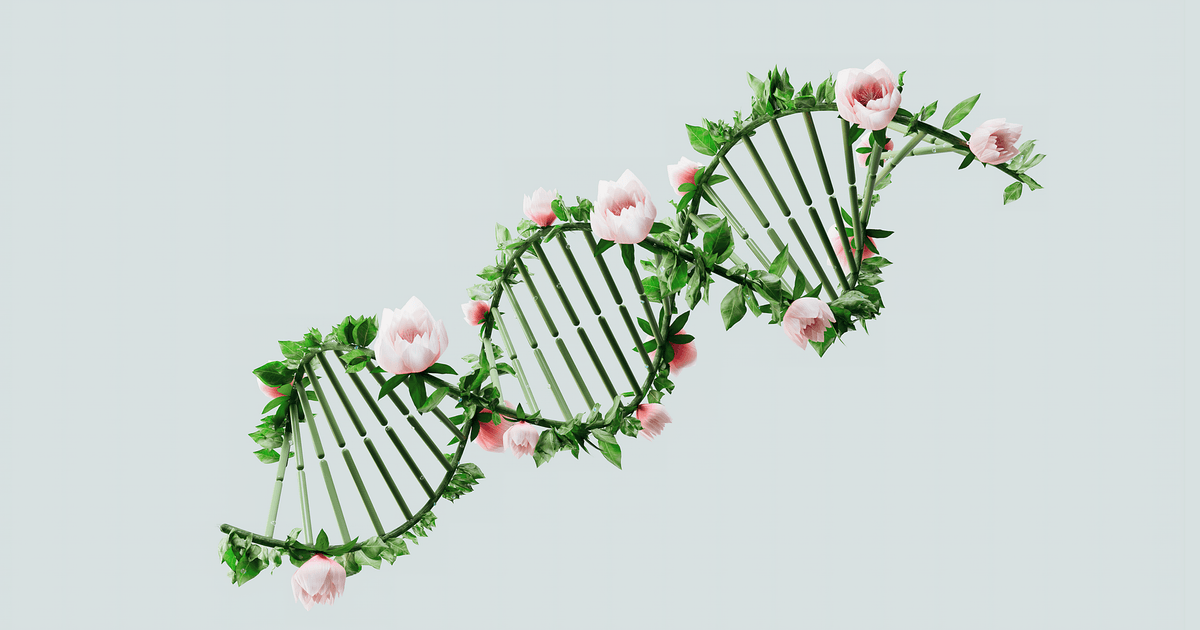
The word mutant carries baggage it doesn’t deserve in this context. The researchers used the genetic parallel deliberately: just as an extra finger isn’t a disorder but rather the usual biological components arranged unusually, personality mutants are made of the same raw material as everyone else’s personality – just configured differently. The term was chosen for precision, not provocation.
Although the number of individuals who fit these atypical profiles appears to be small – fewer than 1 in 10 – their existence carries significant implications for personality theory. It challenges the core assumption that personality facets can only combine in one standard way. The 2018 Frontiers in Psychology study describes personality facets as functioning more like building blocks than like a fixed structure: they can be assembled into different configurations, and while most people follow the standard build, some don’t. The researchers note that this finding does not invalidate the Five Factor Model – it refines it, suggesting the FFM is a near-universal rather than a universal.
Read More: How to Recognize True Character: The Two Signs That Reveal Everything
What This Means for You

Standard personality models were built on the assumption that everyone follows the same internal logic, the same trait pairings, the same underlying structure. For roughly 1 in 10 people, that assumption doesn’t hold – and the Allik, Hřebíčková, and Realo research offers a concrete explanation for why some people have always found that personality tests capture them only partially.
If you recognize yourself in the H1 profile – direct in how you communicate, cautious about how much you extend that trust to others – that pairing has a coherent internal logic the standard model simply wasn’t designed to accommodate. If you’re a disciplined, organized person who genuinely cares about aesthetics, the H2 research suggests you’re not straddling two contradictory identities – you’re an example of a documented, stable personality configuration. And if you lead with trust in relationships while choosing your words carefully, the H3 profile fits that pattern with precision.
The broader takeaway is simpler still: personality models describe the majority, not the totality. The most common variant of personality can be called “normal” only in the statistical sense. If the standard map doesn’t quite fit you, the research suggests the problem may not be with you.
Disclaimer: This information is not intended to be a substitute for professional medical advice, diagnosis, or treatment and is for information only. Always seek the advice of your physician or another qualified health provider with any questions about your medical condition and/or current medication. Do not disregard professional medical advice or delay seeking advice or treatment because of something you have read here.
AI Disclaimer: This article was created with the assistance of AI tools and reviewed by a human editor.