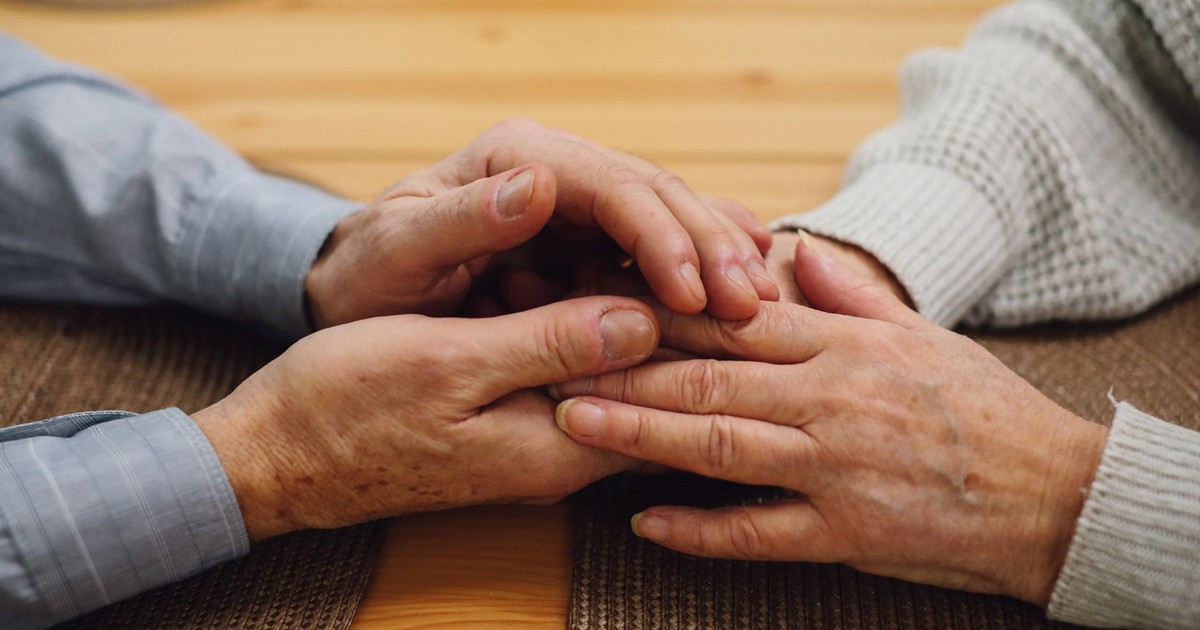

Nine out of every ten men whose wives develop dementia will not get dementia themselves. That might sound reassuring – until you look at the ones who do. The numbers from a sweeping new study out of Taiwan don’t offer much comfort if you’re on the wrong side of the statistic.
Spouses of people who develop dementia are significantly more likely to develop the condition themselves, according to research covering nearly 1 million married people in Taiwan. Women whose spouses had dementia faced a 74% higher risk of developing dementia themselves, while men in the same situation faced a 69% higher risk. Those are relative risk figures, meaning they describe the proportional jump – not the baseline odds – but they’re striking regardless of how you frame them.
Published in JAMA Network Open in July 2026, the work ranks among the largest ever done on what scientists call spousal dementia concordance, and it raises a pressing question for families and doctors: once one partner receives a diagnosis, should the other be watched more closely? The answer, based on this data, is almost certainly yes.
The study doesn’t suggest dementia is contagious in any biological sense. There’s no virus, no protein that transfers between spouses. The explanation is more layered than that – and it touches on who we choose to marry, how we live together, and what happens to our bodies when we spend years watching someone we love lose their mind.
What the Numbers Actually Show
The study identified incident dementia cases occurring among 118,904 women and 72,117 men exposed to spouses with dementia, drawing on Taiwan’s National Health Insurance Research Database between 1998 and 2022. The scale of the dataset matters: with nearly a million participants tracked across more than two decades, this isn’t a small-sample study that might not replicate.
Over five years, around 6.5% of women whose spouse developed dementia were diagnosed themselves, compared with 3.7% of women whose spouse did not. That gap – 6.5% versus 3.7% – represents a near-doubling of the five-year diagnosis rate. Among men, the corresponding figures were 9.2% and 5.8%. Men started with a higher baseline dementia rate, but the proportional bump from having a spouse with dementia was similar across both sexes.
Similar associations were found for Alzheimer’s disease and vascular dementia when researchers studied each type separately. Alzheimer’s disease involves abnormal deposits of proteins that form amyloid plaques and tau tangles throughout the brain, while vascular dementia occurs when conditions such as blood clots disrupt blood flow in the brain. The fact that the spousal association held across both of these biologically distinct processes is itself a clue: whatever is driving the risk is not specific to one disease pathway.
The relative increase in risk was more pronounced among younger spouses, while the actual gap in risk between exposed and unexposed spouses grew with age. Younger people don’t develop dementia at the same rate as older adults, so a large relative increase still translates to a small absolute number. But as age advances, that absolute gap widens – which is where the real-world burden lands.
The link between a partner’s dementia diagnosis and one’s own risk was weaker among people with higher incomes or more children. That detail points toward something protective about financial resources and social support networks, both of which may buffer the physical toll that caregiving places on a spouse.
Why This Happens: Three Overlapping Explanations
Dementia is not contagious in any ordinary sense. Researchers instead point to several overlapping causes, among them shared homes, similar lifelong diets and habits, and the heavy strain of caring full-time for a partner whose brain is failing. Three distinct pathways emerge from the research – and they have different implications for what can actually be done.
Assortative mating is the first mechanism. People tend to choose partners who are like them. Education, income, health behaviors, and even cognitive reserve – a kind of mental resilience built up over a lifetime of learning – often align long before dementia enters the picture. Researchers describe this as assortative mating. Two people who marry often share similar levels of education, similar socioeconomic histories, and similar baseline brain health. If one is predisposed to dementia due to a combination of genetic and lifestyle factors, the other may carry a similar profile – not because they infected each other, but because they were similar to begin with.
Shared environment and lifestyle compounds that effect over time. Over subsequent decades, couples accumulate shared experiences. They live in the same neighborhoods, breathe the same air, eat similar diets, remain similarly active, and encounter many of the same opportunities and constraints that shape brain health across the life course. Two people eating the same breakfast, taking the same evening walk, and living in the same home for 40 years converge on many of the same health outcomes – for better and for worse.
The study found that the association persisted even after accounting for many established cardiometabolic risk factors – including high blood pressure and insulin resistance – and psychiatric risk factors such as depression and anxiety in both partners. This suggests that shared health profiles alone may not fully explain the findings, though the study was not designed to pinpoint specific mechanisms.
Caregiving stress is the third pathway, and possibly the most direct. When one spouse becomes the primary caregiver, chronic stress, poor sleep, and social isolation – all recognized dementia risk factors – may increase their own risk. Previous studies have shown that spouses acting as primary caregivers are more likely to experience mental health problems and may also have a higher incidence of dementia.
The biology behind this is increasingly well-documented. Persistent stress can disrupt the body’s stress response system, leading to chronically elevated cortisol. Sympathetic nervous system hyperactivity then fosters hypertension and metabolic dysfunction, while systemic inflammation accelerates neurodegeneration – making stress not just a psychosocial phenomenon but a biological driver of cognitive decline.
Dementia caregivers in particular illustrate these consequences clearly. Studies consistently show they experience elevated psychological stress, sleep disruption, and immune dysregulation, which increase their risk of depression, cardiovascular disease, and cognitive impairment. Caregiving effectively acts as a “natural experiment,” demonstrating how prolonged psychosocial strain can accelerate biological aging and potentially increase dementia risk in otherwise healthy people.
The American Psychological Association has long noted that dementia caregivers report more stress and depression than other types of caregivers, and that caregivers may be less likely to engage in preventive health behaviors – skipping exercise, eating poorly, skimping on their own medical appointments – while focused entirely on their partner’s needs.
What the Study Can and Can’t Tell Us
The study does not suggest that caring for a spouse with dementia causes dementia, but rather that people in that situation are in a statistically high-risk group that requires more attention, according to lead researcher Wang Shi-heng, an associate researcher at Taiwan’s National Health Research Institutes.
The association varied according to family and socioeconomic factors. Among people with higher incomes or more children, the elevated risk was less pronounced – a signal that financial security and robust social networks may offer real protection against the cognitive toll of caregiving.
One important caveat: this was an observational cohort study, not a randomized controlled trial. It identifies associations, not causes. The authors note that because dementia outcomes were identified from administrative claims, they may be subject to some misclassification. Taiwan’s National Health Insurance system is extraordinarily comprehensive – a 2019 data profile found it covers more than 99.6% of the Taiwanese population – which makes the dataset unusually reliable for this kind of research. But the findings still need to be replicated in other populations before they can be generalized globally.
In 2021, approximately 57 million people were living with dementia worldwide, over 60% of whom live in low- and middle-income countries, according to the World Health Organization. As that number climbs, the ripple effects on spouses – and their own brain health – will only grow in scale.
The Hearty Soul’s detailed breakdown of dementia prevention factors covers the 14 modifiable risk factors identified by the 2024 Lancet Commission, many of which overlap directly with what couples can address together.
Read More: Surprising New Research Reveals What’s Really Raising Your Dementia Risk
What to Do With This Information
The marriage dementia risk finding is not a reason to panic, and it’s certainly not a reason to rethink long-term relationships. But it is a reason to think more carefully about two things: the shared lifestyle habits that accumulate over decades, and the health toll that intensive caregiving can quietly impose.
The study’s authors say the results point to the need for a household-level approach to assessing dementia risk, rather than looking at individuals in isolation. Practically, that means that when one spouse receives a dementia diagnosis, the other should be proactively assessed – not dismissed as healthy simply because they haven’t yet shown symptoms.
Researchers have previously suggested several possible explanations for why dementia risk might be shared between spouses, including similar lifestyles and environments, and the toll that caregiving can take through stress, disrupted sleep, social isolation, and poor health behaviors. Each of those factors is, to varying degrees, modifiable. A caregiver who prioritizes their own sleep, maintains social connections, and doesn’t abandon their own medical care is addressing real biological risk – not just managing stress in the abstract.
Jennifer E. Graham-Engeland and colleagues at Penn State University, writing in Policy Insights from the Behavioral and Brain Sciences, found that stress related to caregiving may have long-reaching effects, increasing the risk of future dementia among care providers. Their recommendation is that midlife – when caregiving responsibilities often peak – is the most critical window for intervention.
If you or someone you know is a caregiver for a spouse with dementia, the most concrete step is to treat caregiver brain health as its own medical priority – not a secondary concern. That means asking a doctor for a cognitive baseline screening, keeping up with your own preventive appointments, and not treating social isolation as an unavoidable byproduct of the situation. The data now makes clear that the stakes for the caregiver are higher than most people have assumed.
Disclaimer: This information is not intended to be a substitute for professional medical advice, diagnosis, or treatment and is for information only. Always seek the advice of your physician or another qualified health provider with any questions about your medical condition and/or current medication. Do not disregard professional medical advice or delay seeking advice or treatment because of something you have read here.
AI Disclaimer: This article was created with the assistance of AI tools and reviewed by a human editor.