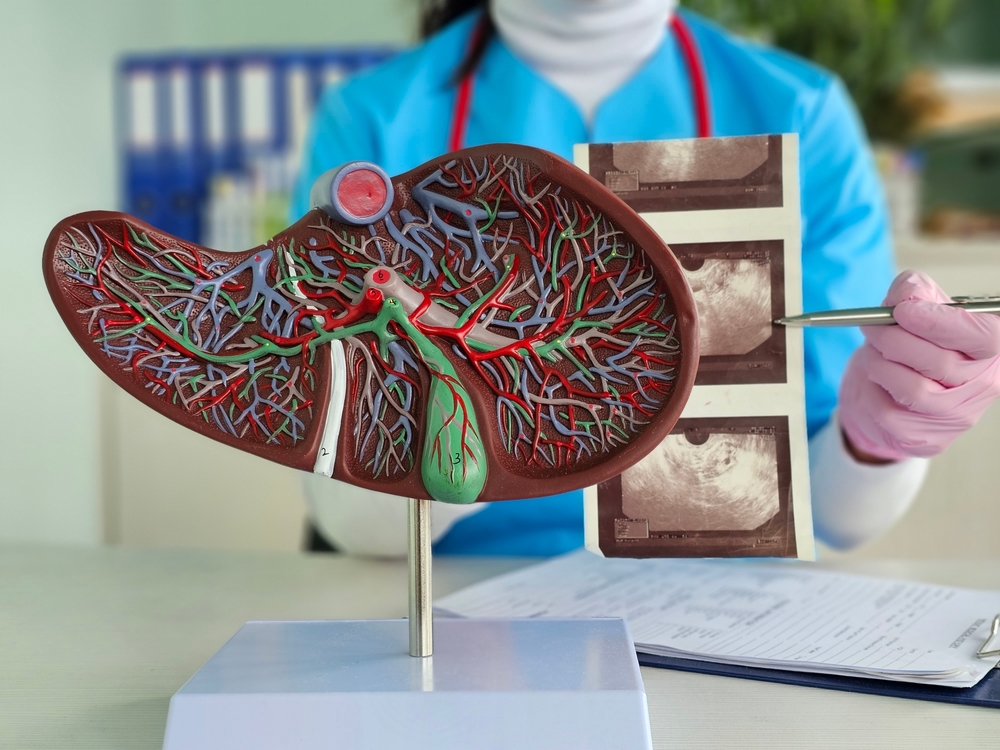

About one in four people with a fatty liver doesn’t know they have it. The liver generates no pain signals the way a damaged knee or an inflamed appendix does. Fat can accumulate quietly in liver cells for years, causing no obvious symptoms and no detectable discomfort, while the damage is already underway. What a major 2026 study found is that this invisible condition may be leaving its mark somewhere most people wouldn’t expect: inside the walls of the arteries that supply the heart.
The connection between fatty liver heart disease isn’t entirely new territory for researchers, but the scale and specificity of what scientists at Mass General Brigham uncovered this year raised the stakes considerably. In an observational analysis of more than 3,600 adults, people with fatty liver disease faced nearly doubled rates of heart attack and other cardiac emergencies – findings published in May 2026 in the journal Clinical Gastroenterology and Hepatology. The mechanism researchers identified isn’t simply that liver disease and heart disease share common risk factors like obesity or diabetes. There’s something more direct happening, and it involves the specific type of plaque building up inside coronary arteries.
Unless specific testing is done to identify the condition, fatty liver disease is typically silent until advanced and potentially irreversible liver impairment has already occurred. That silence is precisely what makes the cardiac connection so medically significant. A person can have no liver symptoms at all, show up for a routine cardiac CT scan for an unrelated concern, and be carrying both a fatty liver and dangerous arterial plaque simultaneously, without knowing about either.
The Plaque Problem: Why Fatty Liver Affects the Heart
People with fatty liver disease have higher levels of artery-clogging plaques that are prone to rupture, which can cause a heart attack or stroke by blocking blood flow to the heart or brain. The distinction between plaque types matters here more than it might seem. Calcified plaque, the kind that shows up as white deposits on a CT scan, is relatively stable. Even after adjusting for cardiovascular risk factors, hepatic steatosis (excess fat in liver cells) remained associated with a 69% higher risk of major adverse cardiovascular events in the observational PROMISE trial data, and noncalcified plaque burden accounted for 11% of the increased cardiovascular risk associated with hepatic steatosis.
Noncalcified plaque is softer and structurally less stable than calcified plaque, and it’s the kind more likely to crack and trigger a clot. Researchers found a 24% increase in noncalcified plaque volume in people with fatty liver disease compared to those without the condition. Over the study’s follow-up period, the real-world consequence of that plaque difference showed up in the event data: those individuals experienced markedly higher rates of major cardiovascular events, including heart attack, unstable angina, and death.
The research was led by Dr. Jan Brendel, a postdoctoral research fellow at the Mass General Brigham Heart and Vascular Institute. “Our findings highlight that fatty liver disease is not only a liver condition but also an important marker of heart disease risk,” Brendel said, adding that “fatty liver disease can be detected on routine cardiac CT scans and could help guide earlier, preventive treatment.”
How Widespread Is This Problem?
A scientific statement from the American Heart Association found that nonalcoholic fatty liver disease affects more than 25% of adults worldwide. In the United States, the numbers are even higher. A 2024 analysis published in Diabetes Spectrum found the prevalence of nonalcoholic fatty liver disease in the United States has reached 38%, having increased by 50% over the past three decades.
The overlap with metabolic conditions makes those numbers particularly relevant to cardiovascular outcomes. The estimated prevalence of NAFLD among people with type 2 diabetes is between 55% and 70%, and that population is already at elevated risk for heart disease through multiple other pathways. For people living with both conditions simultaneously, the risk accumulates from several directions at once.
A separate analysis of real-world population data found that metabolic dysfunction-associated steatotic liver disease (MASLD), the updated clinical term for what most people call fatty liver disease, is an independent risk factor for major cardiovascular events and for all-cause mortality. Independent, in this context, means the risk holds up even when researchers strip out confounding factors like body weight, blood sugar, and blood pressure, the usual suspects in heart disease risk assessment.
The Biology: What Fatty Liver Does to Arteries
The pathophysiology of MASLD involves insulin resistance, visceral adiposity, systemic inflammation, and oxidative stress, factors that collectively contribute to both hepatic fibrosis and cardiovascular disease. Insulin resistance, where cells stop responding properly to insulin and glucose management breaks down, is especially central. Research published in 2025 confirmed that insulin resistance contributes to hepatic lipid accumulation through increased lipolysis, meaning that fat cells throughout the body release fatty acids into the bloodstream at a higher rate than the liver can process, and that excess fat ends up embedded in liver tissue.
Beyond the liver, MASLD is independently associated with increased risks of coronary artery disease, stroke, arrhythmias, and heart failure, even after adjusting for traditional cardiovascular risk factors. Part of the explanation lies in how chronic low-grade inflammation, a hallmark of fatty liver disease, accelerates atherosclerosis (the build-up of plaque in artery walls). The inflammatory environment created by a fat-laden liver doesn’t stay confined to the abdomen. It circulates, and the arteries respond.
The pathophysiological effects of obesity in MASLD extend beyond metabolic dysfunction to direct heart muscle involvement, with patients often exhibiting subclinical changes including diastolic dysfunction and atrial remodeling. These changes predispose them to atrial fibrillation, driven by chronic inflammation and ectopic fat deposition within cardiac tissue. If you’re looking at steps you can take on the lifestyle side of fatty liver, understanding what foods stress the liver is a useful starting point, including how dietary fructose overload triggers fat conversion inside liver cells.
The PROMISE Trial: Where the Evidence Comes From
The 2026 study analyzed data from more than 3,600 adults participating in the PROMISE trial (Prospective Multicenter Imaging Study for Evaluation of Chest Pain), a large multicenter observational study focused on patients being evaluated for chest pain. Researchers used cardiac CT scans to examine both the heart and portions of the liver visible on the same imaging. About one in four participants had hepatic steatosis, the clinical term for excess fat in liver cells.
The trial structure gave researchers something unusually useful: a way to look at both liver fat and coronary artery plaque in the same scan, in the same patients, at the same time. That simultaneous view helped isolate the relationship between liver fat and plaque composition in a way that previous research hadn’t managed as cleanly. Even after adjusting for traditional cardiovascular risk factors like obesity, blood pressure, and diabetes, fatty liver disease still remained associated with a 69% higher risk of major cardiac events in this observational dataset.
High-risk coronary plaque features are associated with substantially elevated risk of major adverse cardiovascular events, according to a 2025 position statement in JACC: Cardiovascular Imaging, which puts the plaque findings from the PROMISE trial in context: the type of plaque that fatty liver disease promotes is among the most dangerous predictors of a future cardiac event.
Read More: Fatty liver disease explained
What Treatment Options Are on the Horizon
The Mass General Brigham researchers say future studies should examine whether therapies such as high-intensity statins or GLP-1 receptor agonists can reduce the burden of high-risk plaque in patients with hepatic steatosis. GLP-1 receptor agonists, the class of medications that includes semaglutide (Ozempic, Wegovy) and tirzepatide (Mounjaro), have already shown promise in reducing liver fat, and their cardiovascular benefits are documented in multiple randomized trials. The LEADER and SUSTAIN-6 trials found significant reductions in major cardiovascular events, including heart attack and stroke, for high-risk patients on these medications compared to standard care alone, with some individual trials exceeding 20% reductions in cardiac event rates.
Beyond obesity and type 2 diabetes, the therapeutic potential of GLP-1 receptor agonists extends to cardiovascular disease, liver disease, and other systemic conditions, making them an increasingly logical candidate for patients who carry both a fatty liver diagnosis and elevated cardiac risk. Clinical trials specifically designed to test whether these medications reduce plaque burden in people with hepatic steatosis are still needed. The 2026 study established the connection but didn’t test an intervention, and this distinction matters: the call for future trials is a hypothesis, not a confirmed finding.
Statins already reduce LDL cholesterol and have established efficacy against cardiovascular events. The open question the Mass General Brigham team is now posing is whether aggressive statin use, possibly combined with GLP-1 therapy, can specifically address the noncalcified plaque buildup that fatty liver promotes, a question that will likely drive clinical trial design over the next several years.
What This Means for You
Fatty liver heart disease risk is something that most routine health checkups are not designed to detect. A standard lipid panel showing normal cholesterol won’t flag the problem. Blood pressure readings won’t either. Fatty liver disease can be detected on routine cardiac CT scans, and those scans could help guide earlier, preventive treatment, according to the Mass General Brigham research team. If you’ve had a cardiac CT for any reason, ask your cardiologist or primary care physician whether the liver tissue visible on that scan was assessed.
Cardiovascular disease is the main cause of mortality among people with NAFLD, which reframes how the condition should be understood. It’s not just a liver problem that might eventually become serious. It’s a cardiovascular risk factor that can be operating well before any liver symptoms emerge. People with type 2 diabetes, obesity, or metabolic syndrome face a substantially higher chance of having undiagnosed fatty liver, and should talk explicitly with their doctor about whether cardiovascular screening that accounts for hepatic steatosis is appropriate. The 2026 PROMISE trial findings give clinicians a specific, evidence-based reason to connect those two conversations, and give patients a reason to start them.
Disclaimer: This information is not intended to be a substitute for professional medical advice, diagnosis, or treatment and is for information only. Always seek the advice of your physician or another qualified health provider with any questions about your medical condition and/or current medication. Do not disregard professional medical advice or delay seeking advice or treatment because of something you have read here.
AI Disclaimer: This article was created with the assistance of AI tools and reviewed by a human editor.