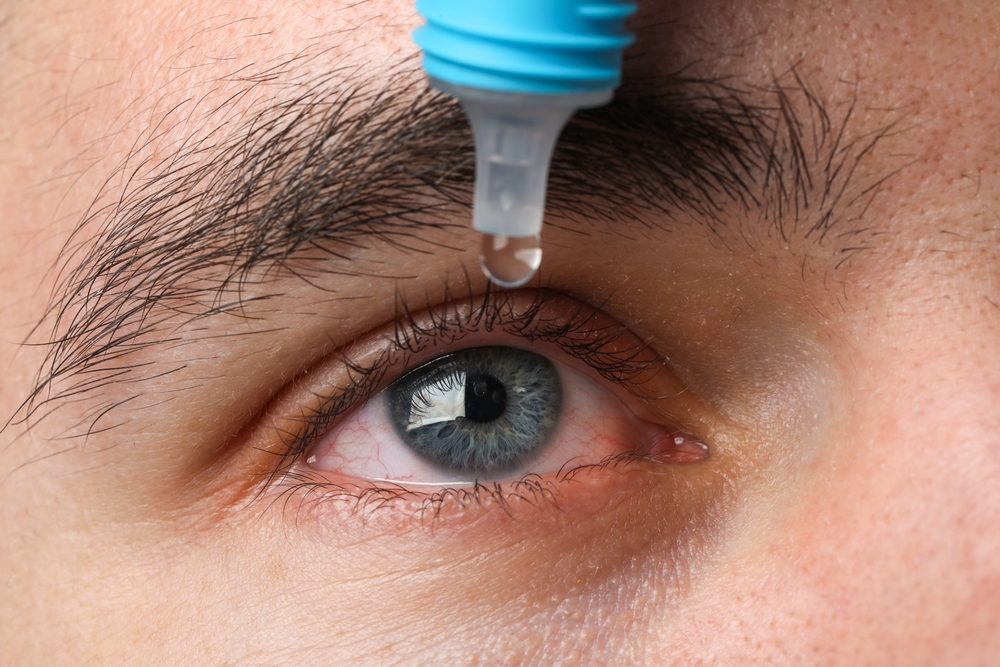

The word “sterile” appears on the label of every single bottle of lubricating eye drops involved in this recall, yet that label offered no guarantee. A California pharmaceutical company just pulled more than 3.1 million bottles from U.S. shelves not because contamination was confirmed, but because it couldn’t prove its products were clean in the first place. That distinction matters more than it might seem.
K.C. Pharmaceuticals, a California-based manufacturer, recalled more than 3.1 million bottles of lubricating eye drops after the company had not properly tested whether the products were actually sterile. The recall began on March 3, 2026. The FDA’s official reason for the eye drop sterility recall is listed as “lack of assurance of sterility” – a phrase that doesn’t say contamination was found, but says the company couldn’t rule it out. For anyone who has been using these drops regularly, that’s a meaningful difference.
That designation does not mean there is proof of contamination, but rather that there has been a potential lapse in the manufacturing process that could compromise the product’s safety. The company makes these drops for a wide range of store brands, which is how a single manufacturer’s quality failure ends up touching millions of people shopping at their local pharmacy.
What’s Actually Being Recalled
Eight products are being recalled: Dry Eye Relief Eye Drops, Artificial Tears Sterile Lubricant Eye Drops, Sterile Eye Drops Original Formula, Sterile Eye Drops Redness Lubricant, Eye Drops Advanced Relief, Ultra Lubricating Eye Drops, Sterile Eye Drops AC, and Sterile Eye Drops Soothing Tears.
These products are sold under different company names, including Top Care, Best Choice, Good Sense, Rugby, Leader, Good Neighbor Pharmacy, Quality Choice, Valu Merchandisers, Geri Care, Walgreens, CVS, and Kroger. Expiration dates on affected bottles run from April 30, 2026 through October 31, 2026, and the products were sold at stores including Walgreens, CVS, Rite Aid, Kroger, Harris Teeter, Dollar General, Circle K, and Publix.
The FDA classified this as a Class II recall on March 31, indicating that while serious health issues are unlikely, there is a risk of temporary adverse effects. A Class II recall, per FDA definition, covers “a situation in which use of or exposure to a violative product may cause temporary or medically reversible adverse health consequences or where the probability of serious adverse health consequences is remote.”
To check whether your specific bottle is affected, look for lot codes beginning with the prefixes AC, AR, LT, SU, RG, RL, SY, or AT, combined with expiration dates in May or October 2026. The FDA’s enforcement report lists exact lot numbers for each product line. If your bottle has the same product name but a different lot number or expiration date, it is not subject to this recall. If it is recalled, stop using it and return it to the store for a refund. A CVS spokesperson confirmed that the chain’s four implicated products had already been pulled from its shelves roughly a year earlier.
Why the Eye Is Especially Vulnerable
Using nonsterile eye drops that harbor bacteria and fungus can cause eye infections, which can become severe because the immune system has a hard time accessing the eyeball and fighting the microbes. This is the core concern with any sterility problem in ophthalmic products – the eye can’t defend itself the way other tissues can.
According to the FDA’s product sterility guidelines, product sterility is a critical quality attribute for ophthalmic drug products. The agency treats eye drops differently from, say, a topical cream, because any microbe that enters the eye through a contaminated drop can take hold quickly.
Artificial tears and lubricating eye drops are among the most commonly used over-the-counter products in the United States, relied upon by people with dry eye syndrome, contact lens wearers, allergy sufferers, and individuals who spend extended hours in front of screens. That broad user base is part of why a recall of this scale affects so many people across so many demographics.
The infection types that can follow range in severity. The recalled products are flagged for “lack of assurance of sterility,” meaning the manufacturing process could not confirm the products were free from bacterial contamination and microbes. While no injuries or illnesses had been reported as of the recall announcement, the potential for eye infection is real. A mild bacterial conjunctivitis is treatable. But at the more serious end, keratitis – a corneal infection – can escalate rapidly. According to the New York Eye and Ear Infirmary, keratitis resulting from an infection is among the leading causes of preventable blindness worldwide.
A Pattern of Oversight Failures – and the Eye Drop Sterility Recall That Followed
This is not the first time a major recall has occurred in the eye drop market, and it is the second time since 2023 that the FDA has become aware of sterility issues at K.C. Pharmaceuticals.
The first major warning came in 2023, when the FDA identified issues at the company and issued a warning letter. The FDA was concerned that K.C. Pharmaceuticals had failed to establish and follow appropriate written procedures designed to prevent microbiological contamination. Although the agency did not request a recall at that time, it asked the company to immediately change its protocols and consult outside experts to prevent the issues from recurring. The fact that a recall of this scale happened anyway, just a few years later, raises real questions about follow-through.
The 2023 inspection wave that followed an outbreak that year exposed how badly the FDA had lagged on eye drop manufacturer oversight. The FDA had inspected over-the-counter eye drop manufacturers only a few times before 2023, when a nationwide infection outbreak made the gap in monitoring impossible to ignore.
That outbreak had fatal consequences. In 2023, recalled eye drops were associated with four deaths, 14 cases of vision loss, and 80 infections. The source of the infections was a drug-resistant bacterium, Pseudomonas aeruginosa. This strain of carbapenem-resistant Pseudomonas aeruginosa had never been reported in the United States prior to that outbreak, according to CDC records. The products primarily linked to those cases were EzriCare Artificial Tears and Delsam Pharma’s Artificial Tears.
Among the manufacturers flagged during that round of inspections was Kilitch Healthcare India Limited, a Mumbai-based drug maker. The FDA’s investigators found unsanitary conditions and positive bacterial test results in critical drug production areas at the facility. According to CBS News, workers at the factory went barefoot on the manufacturing floor, and the company fraudulently passed products that had failed sterility tests. These weren’t marginal violations – they were the kind of conditions that make contamination inevitable rather than possible.
The current K.C. Pharmaceuticals recall sits in a different category – no confirmed contamination, no reported infections – but it fits a broader pattern of eye drop manufacturers failing to meet basic sterility requirements for products that go directly onto the surface of the eye.
Read More: Antidepressant Recalled Over Possible Contamination
What to Do Now
The current voluntary recall has not reported any infections to date. That’s reassuring, but it doesn’t mean everyone who used the affected products is in the clear. Eye infections from contaminated drops may not appear immediately after use, and early symptoms are easy to dismiss.
If you’ve used any of the recalled products and experience redness in your eyes, eyelids stuck together, unusual eye discharge such as goo or pus, vision changes, eyelid swelling, or eye pain, itchiness, or irritation, these symptoms could signal an eye infection – seek medical attention and, if possible, report the symptoms to the FDA.
Over-the-counter eye drops are held to different standards than prescription drops and don’t require FDA review before going to market, though they must still meet Current Good Manufacturing Practice regulations to assure quality and purity. Prescription eye drops are not part of this recall, and anyone using prescription medications for glaucoma, dry eye, or infections should continue their course without concern.
For anyone who bought a recalled product, refunds are available – return the bottle to the retailer where you purchased it. No receipt is required at most major chains. Cross-reference your bottle’s product name and lot code against the FDA’s enforcement report, which is publicly available and searchable by product name and lot number. If your bottle doesn’t match, you don’t need to take action. If it does, stop using it today.
The broader lesson from this recall and the ones before it is that “sterile” on the label is a manufacturer’s claim, not a guarantee – and the gap between those two things is exactly what the FDA’s oversight is meant to close. When that oversight fails to keep up, the result is millions of people using a product on one of their most sensitive organs without knowing whether it was properly made.
Disclaimer: This information is not intended to be a substitute for professional medical advice, diagnosis, or treatment and is for information only. Always seek the advice of your physician or another qualified health provider with any questions about your medical condition and/or current medication. Do not disregard professional medical advice or delay seeking advice or treatment because of something you have read here.
AI Disclaimer: This article was created with the assistance of AI tools and reviewed by a human editor.