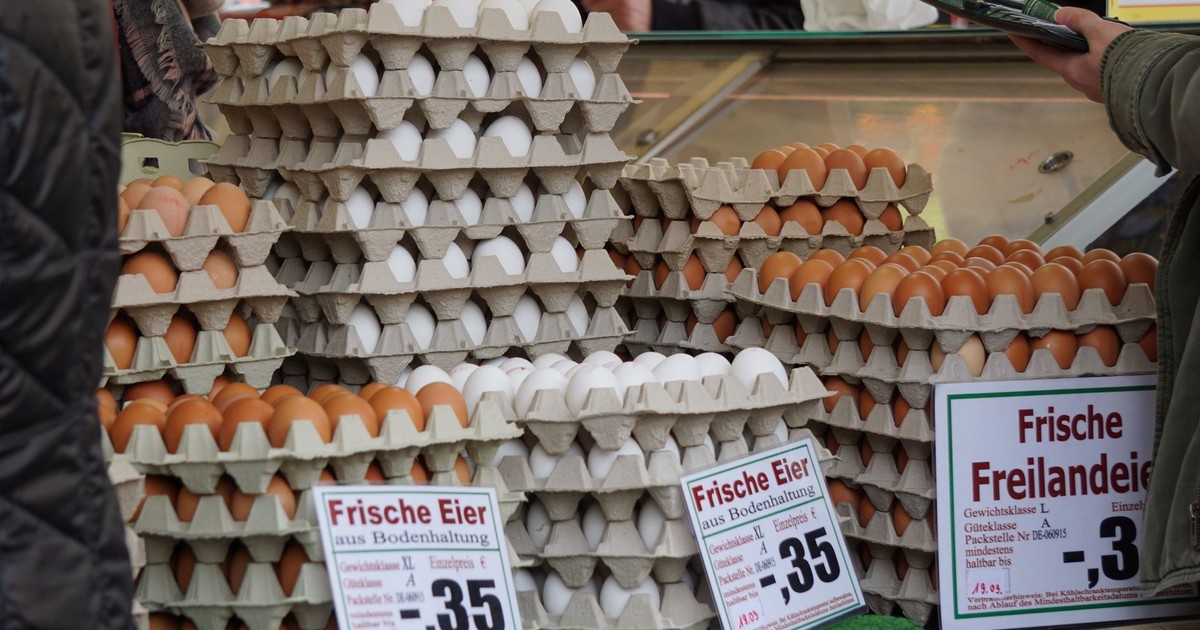

The three egg companies at the center of the biggest federal egg price fixing settlement in recent memory collectively posted over $1.2 billion in profit during the same years they allegedly manipulated the market. The settlement they agreed to pay works out to roughly one-tenth of one percent of that figure.
That disparity is what makes the June 30, 2026 agreement between the U.S. Department of Justice and the three producers – Cal-Maine Foods, Versova, and Hickman’s Egg Ranch – so striking to consumer advocates. Federal antitrust enforcers and state attorneys general alleged that the three companies coordinated to artificially inflate daily egg price quotations between June 2022 and March 2025, leading to higher prices for retailers and consumers. At the same time, all three pointed to bird flu and grain costs as the real culprits behind the historic price surges. The federal government saw it differently.
Cal-Maine Foods, the largest of the three and the only publicly traded company in the group, reported net income of $1.2 billion for its full fiscal year ended May 31, 2025. Its $1.5 million settlement payment represents roughly 0.12% of that single year’s profit.
1. Three Companies Allegedly Rigged a Pricing Index Most People Have Never Heard Of
The mechanism at the center of this case isn’t a grocery store price tag or a supermarket contract – it’s a daily market report published by Urner Barry Publications, a company whose egg quotations have served as the industry’s benchmark for over a century. The government accused Cal-Maine Foods, Versova, and Hickman’s Egg Ranch of a behind-the-scenes arrangement to artificially inflate the daily price quotations for eggs, specifically by coordinating what bids they submitted to Urner Barry, whose index determines how much grocery stores, restaurants, and others pay for billions of eggs each year.
According to the U.S. Department of Justice, the companies “illegally coordinated” over nearly three years to inflate the daily price index for eggs. When producers submitted coordinated bids to push the index higher, the effects rippled outward to virtually every grocery chain, restaurant, and food distributor in the country.
According to a Washington Monthly investigation, executives acknowledged that Urner Barry is more likely to raise its price index when it sees multiple companies placing high bids simultaneously. That’s the mechanism the DOJ alleges was exploited: by submitting coordinated bids early and often, the companies could consistently push the published index upward, and every buyer downstream paid the inflated result.
2. The Egg Price Fixing Settlement Timeline: Prices Dropped When the Investigation Began
Egg prices rose to a record high of $6.23 per dozen in March 2025, according to U.S. Bureau of Labor Statistics data. That same month, something else happened.
The DOJ complaint notes that price quotations “dropped significantly” after Cal-Maine, Versova, and Hickman’s learned of the Justice Department’s investigation and were instructed to preserve documents in March 2025. The companies maintain that bird flu and supply chain disruptions were driving the price surge, and the recovery in egg flocks – not the investigation – brought prices back down. The government’s complaint draws a direct line between the companies learning of the probe and the sudden easing of prices.
Consumer egg prices later tumbled to under $2.20 per dozen as of May 2026, a drop of more than 64% from the March 2025 peak in roughly 14 months. Based on the current average price of a dozen large Grade A eggs – about $2.19 per dozen – the 53 million eggs the companies agreed to donate could be worth roughly $9.7 million at retail value, CNBC reported.
3. The Settlement Numbers Look Very Different Depending on How You Read Them
The three egg producers agreed to donate about 53 million eggs combined to food banks and related nonprofits as part of the settlement. Add in the cash component and the total package looks more substantial – but the breakdown reveals how unevenly the burden falls across the three companies.
Cal-Maine Foods agreed to pay $1.5 million in civil penalties and donate 30 million eggs to food banks and nonprofits. Hickman’s agreed to pay $1 million and donate 3.25 million eggs, while Versova agreed to pay $800,000 and donate 20 million eggs, according to CNBC’s coverage of the settlement terms. The combined cash penalty across all three companies totals $3.3 million.
For context on how those fines compare to the companies’ earnings: Cal-Maine’s $1.5 million settlement payment represents roughly 0.12% of its fiscal 2025 profit. Angela Huffman, president of Farm Action, stated in response to the settlement: “Consumers paid record prices while dominant egg producers reported extraordinary profits, yet the result is another settlement that corporations can treat as the cost of doing business rather than meaningful accountability.”
4. None of the Companies Admitted Any Wrongdoing

None of the companies admitted wrongdoing under the settlements. Cal-Maine went further, calling the allegations “baseless” and insisting its conduct was entirely legal. Iowa-based Versova said it is “pleased the U.S. Department of Justice investigation has been resolved without any finding of or admission of wrongdoing.”
In separate company statements, Cal-Maine and Versova denied wrongdoing and pointed to bird flu as the primary driver of higher egg prices, rather than their alleged collusion. Versova added that egg farmers don’t actually set the wholesale price of eggs – the company argued grain costs and commodity market forces bear more responsibility than any coordination between producers.
Mantiqueira USA, which owns Hickman’s, said in a written statement that the conduct referenced in the legal complaint predates its acquisition of Hickman’s in November 2025, and that it’s committed to complying with all applicable laws. The civil – rather than criminal – nature of the complaint is also significant. While price-fixing allegations can be brought as criminal charges by the DOJ, the complaint and simultaneous settlements were filed as civil actions, according to legal analysis from Duane Morris. That distinction matters: a civil settlement carries no risk of prison time and allows companies to resolve allegations without admitting fault.
5. Seventeen States Joined the Federal Government – Here’s Who They Are

This wasn’t just a federal action. The attorneys general of Arizona, California, Colorado, Connecticut, Florida, Hawaii, Iowa, Maryland, Minnesota, New York, North Carolina, Ohio, Pennsylvania, Texas, Utah, Vermont, and Wisconsin all joined the settlement, according to Duane Morris’s analysis of the case. That’s a broad coalition spanning every region of the country, and it signals the kind of coordinated enforcement posture that tends to precede larger actions in the same industry.
New York Attorney General Letitia James, who co-led the investigation alongside the DOJ, said in her office’s official statement: “When powerful corporations collude behind the scenes to raise prices, working families suffer the costs.” The $3.3 million in cash penalties will be distributed among the participating states. The eggs – all 53 million of them – will go to food banks and nonprofits, a form of restitution targeted at the households most harmed by the price surge.
The settlements still require court approval and are subject to a 60-day public comment period under the Tunney Act, per the Justice Department’s announcement. Until a federal judge signs off, the terms aren’t final. Members of the public can submit comments during that window, which means the settlement is still technically open to challenge.
6. The Settlement Bans Future Coordination and Requires Compliance Programs

Beyond the financial penalties, the DOJ’s proposed settlements require the defendants to adopt antitrust compliance programs and ban communicating with competitors on pricing and bidding strategies, according to the Justice Department’s announcement.
Those structural requirements are often the more meaningful long-term outcome of antitrust settlements. A fine can be absorbed into operating costs. A binding prohibition on competitor communication – enforced by a federal court order – changes how a company can legally operate. Whether those prohibitions hold up in practice depends on ongoing oversight, but the DOJ’s framing suggests they view the behavioral remedies as central to the agreement’s purpose.
The egg market is highly consolidated: a small number of large producers control a disproportionate share of national supply, which means coordination – alleged or real – can move consumer prices with unusual speed and scale. The Duane Morris analysis of the case noted that the action signals the DOJ’s intensifying focus on commodity benchmark manipulation across industries, not just eggs. If you’re interested in how food industry pricing affects everyday grocery bills, this breakdown of 2026 grocery price trends is worth a look.
7. Bird Flu Was Real – But It Wasn’t the Whole Story
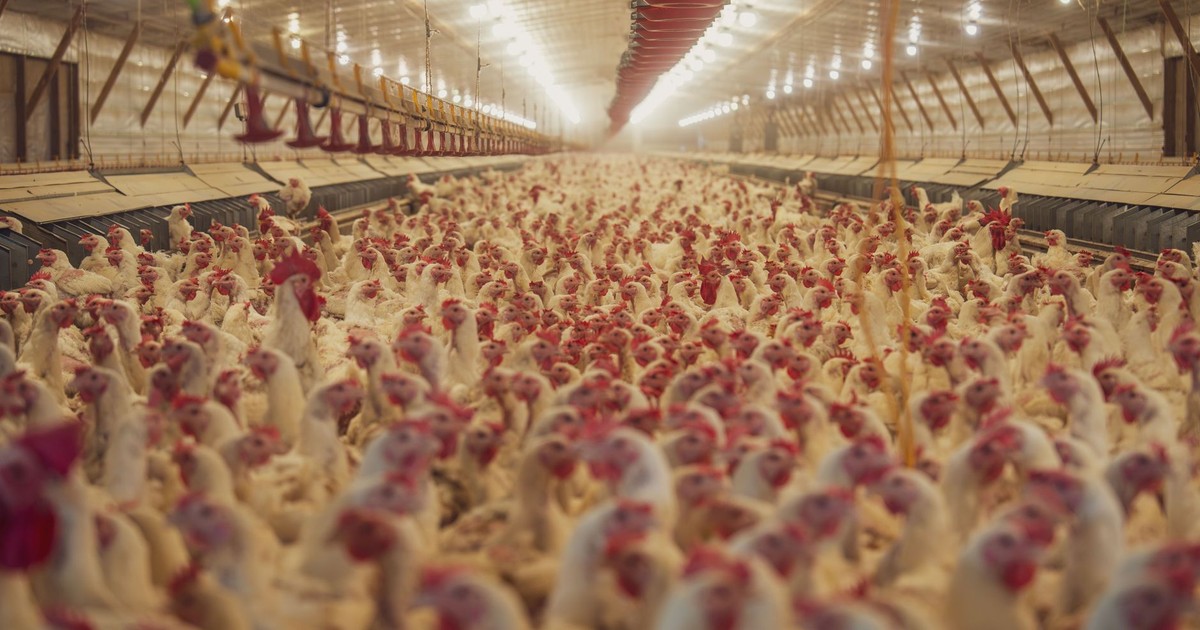
The companies’ primary defense rests on an undeniable fact: bird flu devastated egg-laying flocks across the United States during the period in question. Economists pointed largely to a historic and deadly outbreak of avian influenza, which killed millions of egg-laying chickens and crimped egg supply. That disruption was real, documented, and severe.
In February 2023, average retail prices for a dozen large Grade A eggs spiked 150% from a year earlier – the largest annual change on record, according to Bureau of Labor Statistics data. The bird flu outbreaks in early 2025 added another surge on top of an already stressed market, pushing prices to that March 2025 record of $6.23.
The DOJ’s position isn’t that bird flu was irrelevant. It’s that producers allegedly used the cover of a genuine supply shock to amplify prices beyond what the underlying disruption justified – specifically by coordinating submissions to the Urner Barry benchmark rather than letting market forces set the index independently. Consumer advocates point to the timing of the price drop, which coincided precisely with the companies learning of the DOJ investigation, as the most telling piece of evidence available without an admission of wrongdoing.
Read More: Grocery Prices Hit 3-Year High – And It’s Getting Worse
What This Means for You
If you’re waiting for a check in the mail, don’t hold your breath. The $3.3 million collected from the three companies will be distributed among the 17 participating states, not individual consumers. There is no direct consumer refund mechanism built into this settlement. The egg donation – 53 million eggs routed to food banks – is the closest thing to direct consumer benefit, and it’s aimed at households that faced food insecurity during the peak price period.
What you can do right now: if you live in one of the 17 participating states and believe you were financially harmed as a consumer, monitor your state attorney general’s website for any future consumer relief announcements tied to this case. Separately, private class-action attorneys often file follow-on suits after a federal antitrust settlement, which can create a separate compensation pathway. The DOJ’s civil complaint and the public record it established make those private suits easier to pursue. The 60-day public comment period under the Tunney Act also allows any American to submit a formal comment to the court – search “Tunney Act comment egg settlement” at justice.gov for the submission details. The settlement isn’t closed yet, and public input can influence the final terms.
Disclaimer: This information is not intended to be a substitute for professional financial advice, investment advice, tax advice, or legal advice, and is provided for informational purposes only. Always seek the guidance of a qualified financial advisor, accountant, or other licensed professional regarding your personal financial situation or investment decisions. Do not make financial, investment, or tax decisions based solely on information presented here. Past performance is not indicative of future results, and all investments carry risk, including the potential loss of principal.
AI Disclaimer: This article was created with the assistance of AI tools and reviewed by a human editor.