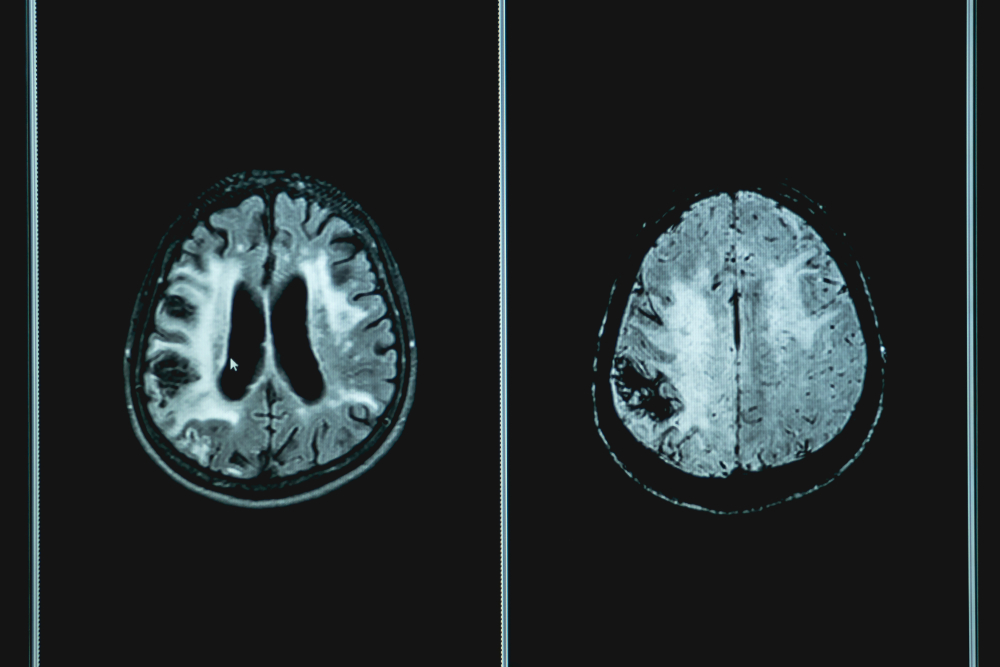

An 80-year-old woman who hadn’t spoken in full sentences for five years began telling autobiographical stories roughly 19 hours after swallowing a single dose of psilocybin-containing mushrooms. She also regained urinary continence and showed renewed recognition of family members. The improvements lasted for weeks. The researchers who documented the case did not claim they had reversed Alzheimer’s disease – and yet the case has ignited one of the most substantive debates in dementia research in years.
The woman, a Japanese-American in her 80s, had been living with Alzheimer’s disease for a decade. Her baseline features included chronic urinary incontinence, executive dysfunction, dysphagia (difficulty swallowing), dependent mobility, flat affect, and severe reduction in spontaneous communication. For five of those ten years, her verbal output had been predominantly monosyllabic. For all practical purposes, the clinical picture was one of irreversible late-stage decline.
The formal case report that followed documents both what was observed and precisely where the evidence stops. Understanding what actually happened, why it may have happened, and what it genuinely means for the future of dementia treatment requires grappling with the same complexity the researchers themselves insisted upon.
The Case That Sparked the Debate
Lago, Cerveira, and Simonet published the case report in Frontiers in Neuroscience on May 28, 2026, under the title “Transient multidomain functional improvement in advanced Alzheimer’s disease following high-dose psilocybin-containing mushroom administration.” The authors are affiliated with the Medical Department of Associação Cruz de Ankh in São Paulo, Brazil, as confirmed in the study’s PubMed record. The report is notable not only for what it observed but for how carefully the authors bounded their conclusions.
After receiving 5 grams of psilocybin-containing mushrooms of the Enigma strain – a variety documented within the published case report – the patient experienced acute autonomic activation, suspected hyperthermia, profuse sweating, and a prolonged deep sleep-like state. No body temperature measurements were formally recorded during this phase, which represents one of the documentation gaps the authors acknowledged.
Advanced Alzheimer’s disease is generally regarded as a stage of irreversible functional decline, and psilocybin is known to transiently alter large-scale brain network dynamics and to induce plasticity-related mechanisms in preclinical models, yet clinical data in advanced dementia remain lacking. This case, then, stands alone – but what happened after the acute phase was striking enough to generate serious scientific attention.
The next day, spontaneous autobiographical speech emerged. Functional gains followed over subsequent days and weeks, including restored urinary continence, improved walking, and greater emotional responsiveness – a form of multi-domain recovery she had not produced in years. The improvements were real but transient, and the study’s primary limitation is that it involved a single patient with no control group, no randomization, and no ability to rule out other explanations.
The authors were unambiguous about the ceiling of their conclusions. Their central hypothesis is that functional capacities thought to have been lost in late-stage dementia may not be entirely lost but inaccessible – and that a strong enough neuromodulatory event can briefly let them through.
Why This Matters – The Scale of the Problem
To understand why even a single case report generates this level of attention, the baseline statistics are instructive. The patient was an octogenarian Japanese-American woman with a 10-year history of Alzheimer’s disease, including 5 years of marked hypofunction and predominantly monosyllabic speech.
Alzheimer’s disease afflicts roughly 11% of elderly people in the United States. Its effects are stark, unpredictable, and harrowing for both patients and their families. According to the Alzheimer’s Association’s 2026 Facts & Figures, an estimated 7.4 million Americans age 65 and older are currently living with the disease, with almost two-thirds of those affected being women. The demographic skew matters: the woman in this case report is statistically representative of the population most burdened by the disease.
The trajectory without intervention is stark. Alzheimer’s disease was the sixth-leading cause of death in the United States in recent years, with deaths from the disease rising 134% between 2000 and 2024 while mortality from stroke, heart disease, and HIV declined over the same period, according to the Alzheimer’s Association. The disease is projected to affect 13.8 million Americans by 2060 absent medical breakthroughs.
Advanced Alzheimer’s disease imposes profound loss of autonomy, communication, continence, mobility, and social interaction. Current therapeutic strategies at this stage are largely supportive, and meaningful functional recovery is generally considered unlikely. The incontinence recovery in this case attracted particular clinical attention for exactly that reason. Incontinence in Alzheimer’s patients carries enormous practical consequences – according to the Alzheimer’s Association, it is one of the leading factors in decisions to move a person with dementia into residential care, a transition that is frequently traumatic for patients and financially devastating for families.
A Dementia Treatment Breakthrough – Or a Signal Worth Following?
The phrase “dementia treatment breakthrough” gets applied loosely in health reporting. In this instance, the researchers themselves were deliberate in resisting it. The authors are not claiming psilocybin reversed the disease. The underlying neurodegeneration remained. What changed, temporarily, was functional access to capacities that still existed at some level in the patient’s brain.
The biological mechanism connects to a specific receptor. Psilocybin’s active metabolite, psilocin, acts through modulation of the serotonin 5-HT2A receptor, which drives heightened neural plasticity, reduced inflammation, and improvements in cognitive functions including creativity, cognitive flexibility, and emotional recognition. These are not the mechanisms of a drug that clears amyloid plaques or untangles tau proteins – the structural hallmarks of Alzheimer’s pathology. They are the mechanisms of a drug that reorganizes how existing brain circuits communicate.
Recent studies demonstrate marked reorganization of large-scale brain networks following psilocybin administration, including increased global integration, cortical desynchronization, and transient desegregation of canonical cortical systems. These findings support the hypothesis that psilocybin may transiently facilitate functional reintegration of residual neural systems in neurodegenerative disease. In a brain severely compromised by Alzheimer’s, this type of reorganization could – hypothetically – briefly restore access to functional capacity that the disease had suppressed rather than fully destroyed.
Animal research adds supporting context. A study published in Alzheimer’s & Dementia in December 2025 found that psilocybin can restrain neuroinflammation and improve hippocampal neurogenesis, and the researchers investigated its efficacy in slowing cognitive decline in a familial Alzheimer’s mouse model. Mice in the psilocybin group displayed improved pattern separation, associative recognition memory, and no anhedonia compared to controls, with analyses revealing a significant reduction of chronic neuroinflammatory markers. Mouse models cannot be directly extrapolated to humans – the biology differs in ways that matter – but the directionality of effects in preclinical work aligns with what the case report observed clinically.
A 2024 review in Frontiers in Neuroscience from researchers at Huazhong University of Science and Technology examined psilocybin’s candidacy as an Alzheimer’s treatment, concluding that the compound’s capacity to induce neural plasticity and reduce neuroinflammation made it a plausible, if unproven, therapeutic target. The authors of that review also noted the ethical and legal dimensions of advancing this research – psilocybin remains a Schedule I controlled substance federally in the United States, which constrains clinical trial design significantly.
For researchers interested in whether the brain retains hidden capacity in late-stage disease, the case report’s framing may actually matter more than the dose itself. If the hypothesis is correct – and it remains a hypothesis – it changes how scientists should think about the architecture of late-stage neurodegeneration. The question shifts from “can we reverse the damage?” to “can we temporarily bypass it?”
The Clinical Trial Landscape
The case report did not emerge into a vacuum. Formal investigation of psilocybin in cognitive decline has been building for several years, though none of the existing trials have targeted the advanced-stage population this case represents.
A pilot study running from March 2021 through December 2026 is evaluating whether psilocybin, provided in a supervised environment, reduces depression and improves quality of life in people with mild cognitive impairment or early-stage Alzheimer’s disease. That trial, registered via Alzheimers.gov, targets a population at the opposite end of the disease spectrum from the woman in the case report – people who still have significant preserved function and who have not yet entered the severe decline that characterized her baseline condition.
A randomized trial registered as NCT06041152 is studying whether psilocybin changes synaptic density in people with amnestic mild cognitive impairment – the memory-focused stage that often precedes Alzheimer’s – using PET imaging alongside memory and executive function measures.
The advanced-disease setting in this case report is a different and harder problem, and it is the one that controlled studies have barely touched. The Brazilian authors were explicit about this gap and explicit about the limitations that prevent their case report from filling it. Without a control condition, there is no way to rule out spontaneous fluctuation – a recognized feature of Alzheimer’s disease in which patients occasionally and unpredictably show transient improvement independent of any intervention. The dose used (5 grams of whole mushroom, corresponding to a high psilocybin content) also has no established safety profile in this population. The FDA granted breakthrough therapy status to psilocybin for treatment-resistant depression – a classification that accelerates the review process for drugs showing substantial improvement over existing treatments – but no comparable designation exists for dementia indications.
What the Case Does Not Tell Us
The paper outlines only one patient’s story. That is not a rhetorical disclaimer – the report has important limitations including the single-case design, absence of formal monitoring, neuroimaging biomarkers, and standardized cognitive scales. Causality cannot be established, and spontaneous fluctuations inherent to neurodegenerative disease cannot be completely excluded.
The incontinence recovery, for example, is one of the details that attracted particular attention. An 80-year-old woman with advanced dementia experienced the restoration of urinary continence – a change that carries enormous practical weight. Incontinence frequently drives the decision to transition a patient with dementia into residential care, a move that carries significant emotional and financial consequences for families.
The case report authors drew an explicit and important distinction: psilocybin did not reverse the disease; the underlying neurodegeneration remained, and the improvements were real but transient. No dosing protocol exists for this population. There is no established framework for selecting candidates, assessing risk, monitoring during an acute high-dose event, or determining what follow-up looks like after functional improvement fades.
Psilocybin acts on serotonin 5-HT2A receptors to alter large-scale brain network dynamics and may promote structural neural plasticity, potentially making residual functional capacity temporarily accessible in severely degenerated neural systems – but the findings from this single case in Frontiers in Neuroscience cannot establish causation, and the authors argue the case warrants systematic controlled investigation into psilocybin’s role in late-stage neurodegeneration.
Read More: 6 Dietary Habits That May Lower Your Dementia Risk Before Symptoms Start
What This Means for You
For the 7.4 million Americans living with Alzheimer’s and the families supporting them, the honest translation of this case report is this: psilocybin produced a documented, multi-domain functional recovery in a single patient with advanced disease, and that recovery was real enough that the researchers who observed it felt obligated to publish it despite its limitations. That is not permission to seek out high-dose psychedelic mushrooms as a dementia intervention. It is evidence that a hypothesis worth testing formally now exists.
Approved medications for late-stage Alzheimer’s remain palliative, and any unsupervised administration of psilocybin carries serious and unquantified risks in elderly populations. Controlled trials targeting this advanced-disease population do not yet exist. The case report from Lago, Cerveira, and Simonet is best understood as the documented rationale for building those trials – the evidence that the scientific community needs before it can design studies with the rigor, safety monitoring, and sample sizes that would let researchers say anything definitive.
What has changed is the scientific conversation. A 10-year Alzheimer’s patient who had not spoken in full sentences for five years began telling stories. Researchers documented it. The work of understanding whether it can be reproduced safely under controlled conditions is what comes next.
Disclaimer: The author is not a licensed medical professional. The information provided is for general informational and educational purposes only and is based on research from publicly available, reputable sources. It is not intended to constitute, and should not be relied upon as, medical advice, diagnosis, or treatment. Always consult a licensed physician or other qualified healthcare provider regarding any medical condition, symptoms, or medications. Do not disregard, avoid, or delay seeking professional medical advice or treatment because of information contained herein.
AI Disclaimer: This article was created with the assistance of AI tools and reviewed by a human editor.