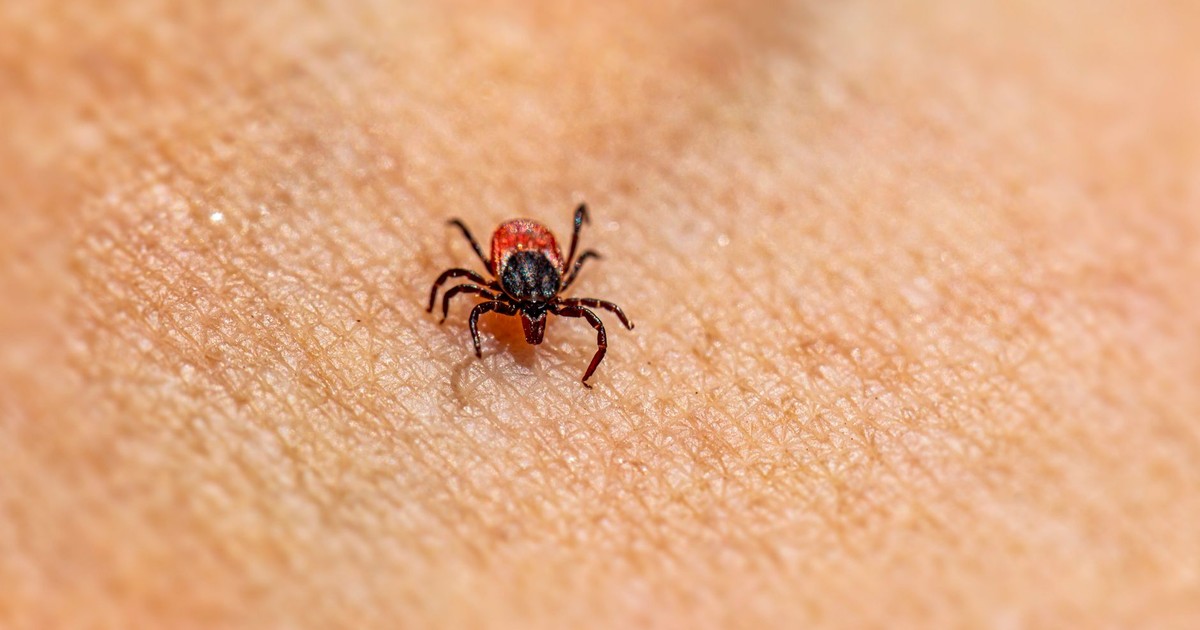

A man in Brookhaven Town, Long Island, found two lone star ticks on his leg while doing yard work in the summer of 2021. He assumed it was nothing serious – until the headaches began, then the crushing fatigue, then a collapse so severe his wife rushed him to the hospital. It took five years for anyone to figure out what had actually made him sick.
The answer was Bourbon virus, and it had never been confirmed in a human patient in New York State before.
The case, identified in April 2026 by Dr. Luis Marcos, director of the Tick-borne Disease Clinic at Stony Brook University and professor in the Departments of Medicine and Microbiology and Immunology at the Renaissance School of Medicine, marks a significant shift in where this rare pathogen is showing up. Marcos and his colleagues at Stony Brook Medicine in Suffolk County confirmed the case when they treated the patient in April 2026. The findings were published in the American Journal of Tropical Medicine and Hygiene and sent a clear message to clinicians in the Northeast: a virus once considered a regional curiosity of the rural Midwest has reached one of the most densely populated coastlines in the country.
Only six human cases of Bourbon virus have been reported since it was first identified in Bourbon County, Kansas, where the first known patient was diagnosed in 2014. That patient later died. The rarity of the disease has long provided a kind of false comfort. With so few confirmed cases, most physicians outside the Midwest have never needed to consider it. That calculus may now be changing.
What Bourbon Virus Symptoms Look Like
Symptoms of Bourbon virus may include fever, fatigue, rash, headache, body aches, nausea, and vomiting, according to the CDC. On the surface, that list looks almost identical to a dozen other tick-borne and flu-like illnesses, which is precisely the problem.
The Long Island patient’s experience illustrates how easily Bourbon virus symptoms can be mistaken for something else. Doctors initially suspected Lyme disease and treated him with doxycycline, an antibiotic commonly used for several bacterial tick-borne infections. His symptoms, including fatigue and severe headaches, did not improve as expected. Patients presenting with unexplained fever, fatigue, and a history of tick exposure may warrant consideration of Bourbon virus, particularly when routine testing is negative and symptoms fail to improve.
The clinical picture can worsen well beyond flu-like discomfort. Some patients need to be hospitalized and given intravenous fluids and treatment for pain and fever. Over a one-month period, the Long Island patient’s antibody levels increased eightfold. “The patient had shown some very severe symptoms and was hospitalized,” Dr. Marcos confirmed. At the blood level, the damage can be serious: the CDC’s clinical guidance notes that patients with Bourbon virus may develop lower-than-normal counts of both white blood cells (the cells the immune system uses to fight infection) and platelets (the cells involved in blood clotting).
The very first Bourbon virus case, in 2014, ended in death. A healthy man in Bourbon County, Kansas, developed a serious illness after removing an engorged tick from his shoulder. He was hospitalized with a rash, and lab tests showed very low white blood cell and platelet counts. Doctors treated him with doxycycline for suspected tick-borne bacteria, but he worsened despite therapy, as tests for all known tick-borne infections came back negative. He died 11 days after symptoms began. Bourbon virus has been confirmed to cause the deaths of at least two people, one in 2014 and another in 2026.
Why Antibiotics Won’t Help
One of the most dangerous aspects of Bourbon virus is how its early symptom profile closely resembles bacterial tick-borne illnesses that do respond to antibiotics – Lyme disease, ehrlichiosis, anaplasmosis. Doctors often start empirical antibiotic treatment while awaiting test results, and in most tick-borne cases, that approach works.
With Bourbon virus, it doesn’t. No medicines are available to treat Bourbon virus. Antibiotics do not treat viruses. The CDC’s treatment guidance is unambiguous: persons with Bourbon virus disease will have similar signs and symptoms to bacterial tick-borne infections but will not respond to antibiotic treatment. This is what makes early correct identification so critical and, given the absence of a commercial diagnostic test, so difficult.
Because there is no commercial test for the virus, any samples in New York are sent to the New York State Department of Health for analysis, according to the Stony Brook Medicine news release. That routing adds time and complexity to a diagnostic process that – in the most severe cases – may not have much time to spare. The confirmed case count has remained so small that no diagnostic company has sufficient patient-volume data to support a commercially viable test, and definitive Bourbon virus diagnosis currently requires biosafety-level-3 lab capabilities that are incompatible with commercial diagnostic infrastructure.
The Virus Itself and Where It Comes From
Bourbon virus was discovered in 2014 and named for Bourbon County, Kansas, where it was first identified. Scientifically, the CDC classifies it as an RNA virus in the genus Thogotovirus, part of the family Orthomyxoviridae – the same virus family that includes influenza.
Bourbon virus is believed to spread to people through bites of infected ticks, likely lone star ticks (Amblyomma americanum). The lone star tick is identifiable by a single white dot on the back of the female. Unlike the deer tick that waits passively on tall grass for a host to walk by, the lone star tick actively pursues hosts, following carbon dioxide trails across open ground – behavior that makes it considerably harder to avoid.
Researchers at the University of North Carolina at Chapel Hill found evidence of human Bourbon virus infections in North Carolina, publishing their findings in Emerging Infectious Diseases in 2024. That study expanded the known geographic footprint of the disease and suggested that infections are likely underdiagnosed. It identified Bourbon virus-specific neutralizing antibodies in North Carolina patients and concluded that infections are likely more common than previously thought. More recent studies have detected Bourbon virus in both lone star ticks and Asian longhorned ticks, reinforcing the need for continued surveillance.
Why New York’s Case Matters Beyond One Patient
The Long Island case didn’t happen in isolation. In 2019, Bourbon virus genetic material was detected in a lone star tick removed from a Long Island resident. Investigators were unable to determine whether that person became infected because no human blood samples were available. Later surveillance found the virus in tick pools and detected antibodies in white-tailed deer. The virus was present in New York’s ecosystem years before anyone confirmed a human case.
Marcos and his team found this case only by examining a retrospective blood sample cohort. The original cause of the Long Island patient’s illness remained unknown until researchers examined blood samples from 107 patients treated for fever and possible tick-related infections between 2019 and 2024. Two patients had antibodies capable of neutralizing Bourbon virus. One patient showed at least a four-fold rise in antibody levels – the laboratory benchmark for an acute or recent infection. According to the Stony Brook Medicine news release, his antibody levels increased eight-fold over one month, confirming the case.
That methodology is both promising and sobering. It confirms the virus is there. It also confirms that without a deliberate, specialized hunt, cases simply vanish into a pile of unresolved tick-borne illness diagnoses.
The lone star tick’s range is a key part of the story. Twenty years ago, the lone star tick was considered a southern species. Today it is established through the mid-Atlantic, across Long Island, up the Connecticut coast, and into Massachusetts and Rhode Island. Two forces drive the expansion: milder winters that no longer knock back overwintering populations, and abundant white-tailed deer in suburban landscapes. In the northeastern USA, lone star ticks have encroached on the range of blacklegged ticks, becoming more numerous in a wide range of habitats.
Anywhere the lone star tick is established is, in principle, somewhere Bourbon virus could transmit to a human host. And as Dr. Marcos put it, the overlap between Bourbon virus symptoms and common tick-borne illnesses means the disease is “likely more prevalent than we think in our region, and other cases are likely not being diagnosed,” according to the Stony Brook Medicine news release.
Read More: 10+ Areas On Your Body Ticks Love To Bite
What to Do Now
No vaccines or medicines are available to prevent Bourbon virus. Reducing the risk of infection means preventing tick bites. That practical reality makes tick avoidance and prompt tick removal the only real tools available right now.
Use an EPA-registered repellent containing DEET, picaridin, or oil of lemon eucalyptus when spending time outdoors, particularly in wooded areas, tall grass, or brush – all habitats where lone star ticks are active. Wearing light-colored clothing makes ticks easier to spot. Tucking pants into socks when walking through vegetation reduces the chances of a tick reaching skin. After any outdoor activity in tick habitat, do a full-body tick check, including the scalp, behind the ears, and behind the knees.
If a tick has been attached, remove it promptly using fine-tipped tweezers, grasping as close to the skin as possible and pulling steadily without twisting. The CDC recommends seeing a healthcare provider if fever, rash, or flu-like symptoms develop within weeks of a tick bite. If a standard antibiotic course for Lyme disease or another tick-borne illness doesn’t bring improvement, ask your doctor specifically about Bourbon virus and whether a sample can be sent to your state health department for testing. Marcos and his co-authors stress the need for “expanded viral surveillance, clinical testing, and assay development to improve clinical decision-making and inform tick-borne disease epidemiology.” The Long Island patient spent five years without a diagnosis – not because the illness was untraceable, but because no one yet knew to look for it in New York. That’s the gap clinicians and patients alike now have reason to close.
Disclaimer: The author is not a licensed medical professional. The information provided is for general informational and educational purposes only and is based on research from publicly available, reputable sources. It is not intended to constitute, and should not be relied upon as, medical advice, diagnosis, or treatment. Always consult a licensed physician or other qualified healthcare provider regarding any medical condition, symptoms, or medications. Do not disregard, avoid, or delay seeking professional medical advice or treatment because of information contained herein.
AI Disclaimer: This article was created with the assistance of AI tools and reviewed by a human editor.
Read More: Lone Star Ticks: Why They’re More Dangerous Than Other Tick Species