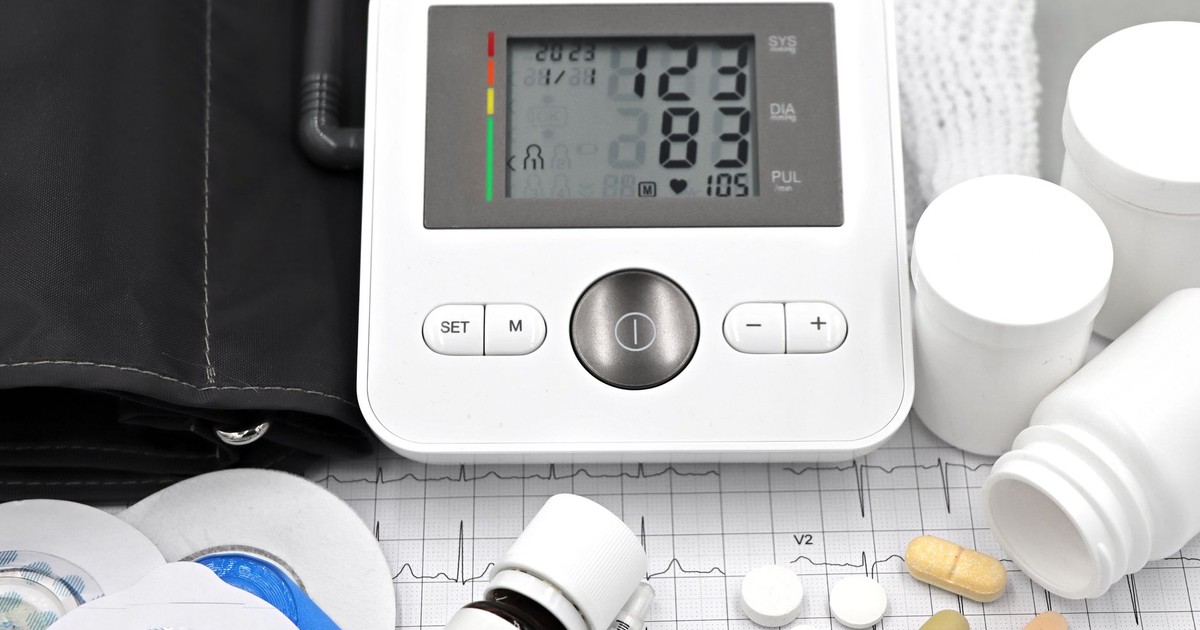

Chlorthalidone has been prescribed for high blood pressure since 1960, but a pair of large clinical trials has produced a finding that most patients on this medication have never been told: the drug raises the risk of a dangerous potassium deficiency at a rate measurably higher than a virtually identical, far more widely prescribed alternative. The margin is not enormous. But when the condition it produces can increase the risk of a fatal heart rhythm disturbance, even a small statistical difference carries real clinical weight.
The blood pressure drug potassium connection at the center of this finding involves hypokalemia, which is the medical term for low potassium in the blood. Potassium is an electrolyte – a mineral that carries an electrical charge and helps regulate heartbeat, muscle contraction, and kidney function. When levels fall too low, the consequences extend well beyond muscle cramps.
Chlorthalidone belongs to a class called thiazide-like diuretics, sometimes called “water pills.” These drugs reduce blood pressure by prompting the kidneys to flush more sodium and water out of the body as urine. That process is effective, well-tolerated by most people, and backed by decades of outcome data. Chlorthalidone has been a first-line option in hypertension guidelines for years, and recent FDA approval of a lower 12.5 mg dose has only broadened its clinical footprint. The problem is a side effect that accumulates quietly, often without obvious symptoms, and which carries cardiovascular consequences that most patients never connect to the medication in their bathroom cabinet.
What the Diuretic Comparison Project Found
The Diuretic Comparison Project (DCP) was a prespecified randomized clinical trial conducted across Veterans Affairs facilities nationwide between June 2016 and June 2022. A total of 13,523 people already on hydrochlorothiazide for blood pressure were randomized either to stay on that drug or to be switched to chlorthalidone. The study duration was approximately four years.
The kidney outcomes analysis, published in JAMA Network Open in December 2024, was a secondary analysis of the DCP and directly addressed whether chlorthalidone offered superior kidney protection. Chlorthalidone was not superior to hydrochlorothiazide in preventing kidney outcomes, and there was no difference in the incidence of chronic kidney disease or acute kidney injury requiring hospitalization.
That finding deflated a long-held clinical assumption. Earlier observational data had pointed toward chlorthalidone being the harder-working drug – stronger blood pressure reduction, longer half-life, possibly better cardiovascular outcomes. Prior studies had suggested a greater rate of kidney function decline with chlorthalidone compared with hydrochlorothiazide, yet the DCP’s slope of kidney function progression was similar between both groups, as was the incidence of chronic kidney disease.
The potassium finding, however, moved in the opposite direction. Chlorthalidone resulted in hypokalemia in 8.9% of patients, compared to 6.9% with hydrochlorothiazide, a difference that was statistically significant. Translated out of clinical language: for every 100 patients switched from hydrochlorothiazide to chlorthalidone, approximately two additional people will develop low potassium as a direct consequence of the medication change. Given that tens of millions of Americans take thiazide-type diuretics for blood pressure, that 2% difference represents a substantial number of individuals in absolute terms.
An earlier observational cohort study of 12,722 older adults published in JAMA Network Open in 2021 also found that chlorthalidone use was associated with a higher risk of eGFR decline of 30% or more, cardiovascular events, and hypokalemia compared with hydrochlorothiazide use. The DCP’s randomized design provides stronger evidence than that observational cohort on kidney outcomes – but the hypokalemia signal aligns consistently across both study types.
Why Potassium Matters More Than Most Patients Realize
Potassium is tightly regulated in the body because its concentration is essential for acid-base balance, blood pressure control, smooth muscle tone, cardiac conduction and rhythm, and membrane potential repolarization. When a diuretic disrupts that regulation, the effects travel well beyond the kidneys.
A 2023 study in a nephrology journal documents two physiological mechanisms by which thiazide diuretics deplete potassium: increased sodium delivery to the distal tubules of the kidney, and secondary hyperaldosteronism (a state in which the adrenal glands secrete excess aldosterone, a hormone that causes the kidneys to retain sodium while losing potassium). Both pathways compound each other.
Potassium disturbances are more common in patients with chronic kidney disease than in the general population, and hypokalemia – defined as a blood potassium level below 3.5 mmol/L – frequently results from diuretic use in this group.
The cardiovascular stakes are well documented. A study in the Journal of the American College of Cardiology found that thiazide diuretics have differing incidences of hypokalemia, which may increase the risk of both cardiovascular disease and progression of kidney disease. The same research established that hypokalemia is present in 7% to 17% of patients with hypertension, and in up to 40% of patients actively taking diuretics – a strikingly high prevalence for a condition that often produces no obvious symptoms until it becomes severe.
The connection between potassium and fatal arrhythmias is dose-dependent: the lower the potassium level, the higher the risk of ventricular arrhythmia (an abnormal, potentially lethal heart rhythm) and sudden cardiac death. Research in the Journal of the Formosan Medical Association documents this relationship clearly, noting that abnormal potassium affects the cardiovascular system through cardiac arrhythmia, hypertension, and myocardial ischemia. In patients with pre-existing cardiovascular disease, the risk is amplified dramatically – hypokalemia in this population has been associated with an increase in all-cause mortality of up to tenfold.
A further study added important precision to the optimal target range. A 2024 cardiovascular analysis identified a U-shaped relationship between potassium levels and cardiovascular mortality, with the lowest mortality risk occurring at approximately 4.2 mmol/L. Both high and low potassium carry risk – but for patients on chlorthalidone or other diuretics, the clinical concern is overwhelmingly on the low side.
The Kidney Risk Dimension
The kidneys and potassium are not separate conversations. Low potassium accelerates kidney disease in its own right, independent of whether a patient is already on a diuretic. A 2017 study in Nephrology Dialysis Transplantation found that hypokalemia was associated with an increased risk of chronic kidney disease with or without diuretic use – meaning the electrolyte disturbance itself, not just the drug causing it, contributes to kidney deterioration.
For patients with advanced kidney disease, the drug selection question carries additional complexity. Research in Current Drug Targets notes that in patients with CKD Stage 4, defined as a glomerular filtration rate (GFR – a measure of how well the kidneys filter waste) below 30 mL/min, loop diuretics are generally preferred to thiazide-type drugs for blood pressure control because of impaired thiazide responsiveness and higher electrolyte risk at that stage of kidney function decline.
That clinical calculus becomes more complicated when a patient needs both blood pressure control and diuretic therapy. The same research notes that potassium-sparing diuretics – including triamterene, amiloride, spironolactone, and eplerenone – are frequently combined with loop diuretics in CKD patients specifically to reduce potassium losses. These combinations require careful monitoring because they introduce their own risk of dangerously elevated potassium if kidney function declines further.
What Chlorthalidone’s Own Clinical Profile Shows
Initially approved in 1960, chlorthalidone has remained an effective oral treatment for managing hypertension. It is a thiazide-like diuretic with a long history of effectiveness at preventing major cardiovascular complications associated with hypertension, while being less expensive and more accessible for patients.
The NIH drug monograph on chlorthalidone identifies electrolyte disturbance as a commonly reported adverse effect of the drug, resulting from its mechanism of increased diuresis and altered kidney tubule function. The Mayo Clinic’s drug profile confirms that this medication may cause hypokalemia and recommends monitoring for symptoms including muscle cramps, weakness, and irregular heartbeat – symptoms that often appear only when potassium has already dropped significantly below the normal range.
The practical implication: patients may feel fine while their potassium is drifting toward levels that increase arrhythmia risk. Routine blood monitoring is the only reliable way to catch this early.
A 2025 analysis published in the American Journal of Hypertension – available as an advance online publication – found that the DCP’s results were associated with a measurable slowdown in chlorthalidone prescribing trends in the United States from 2019 to 2024, suggesting the clinical community is beginning to re-evaluate how aggressively to recommend the drug over its less potassium-depleting alternative.
Monitoring, Potassium, and Guideline Guidance on Blood Pressure Drug Potassium Risks
The 2025 American Heart Association and American College of Cardiology hypertension guidelines address the potassium issue directly. The full guideline published in Hypertension includes a recommendation focusing on potassium-rich diets and potassium-based salt substitutes, particularly for patients consuming a high-sodium diet – with explicit caution noted for those with chronic kidney disease, who face a different risk of hyperkalemia (excessively high potassium) from the same interventions.
On the monitoring side, the 2025 guideline summary via Medscape recommends obtaining a basic metabolic panel – a standard blood test that measures potassium, sodium, kidney function, and other electrolytes – within 2 to 4 weeks following the initiation or dose increase of diuretics, ACE inhibitors, ARBs, and mineralocorticoid receptor antagonists. That window is short for a reason: the largest drops in serum potassium tend to occur in the early weeks of treatment, before many patients have returned for a follow-up.
A 2024 meta-analysis pooling data from six studies involving more than 368,000 patients found that chlorthalidone was associated with a higher incidence of hypokalemia compared to hydrochlorothiazide across the pooled analyses, and that the two drugs were otherwise comparable in efficacy for preventing cardiovascular disease. The conclusion from that body of evidence – spanning an RCT, observational cohorts, and a meta-analysis – is consistent: the blood pressure drug potassium trade-off is the most clearly differentiated risk factor between the two medications.
Read More: A Common Blood Pressure Medication May Increase the Risk of Skin Cancer
What This All Means
The DCP’s 2024 kidney outcomes analysis delivered a verdict that clinicians and patients both need to act on: chlorthalidone is not superior to hydrochlorothiazide for protecting kidney function in people with hypertension. It does, however, cause statistically more hypokalemia – a condition that, left unmonitored, increases the risk of ventricular arrhythmia and cardiovascular death, particularly in patients who already carry cardiac risk factors.
For anyone currently taking chlorthalidone, the practical steps are specific. Ask your prescribing physician whether a basic metabolic panel has been checked within the past few months, and specifically ask for your serum potassium value – the normal range is 3.5 to 5.0 mmol/L, with the lowest cardiovascular mortality risk near 4.2 mmol/L. If you experience muscle cramps, unusual fatigue, or heart palpitations, report them promptly rather than attributing them to other causes. For patients with CKD Stage 3 or lower, discuss with your doctor whether chlorthalidone or a different antihypertensive combination is appropriate for your current kidney function. Dietary potassium through foods such as bananas, sweet potatoes, beans, and leafy greens can help support adequate levels – but this is a complement to monitoring, not a substitute for it.
For patients who have been told that chlorthalidone is the superior thiazide option: the DCP’s data now shows that for most patients without a specific clinical reason to prefer it, the two drugs produce equivalent outcomes for both kidney function and cardiovascular events, with hydrochlorothiazide carrying a modestly lower hypokalemia burden. That is a conversation worth having with your doctor at the next appointment.
Disclaimer: The author is not a licensed medical professional. The information provided is for general informational and educational purposes only and is based on research from publicly available, reputable sources. It is not intended to constitute, and should not be relied upon as, medical advice, diagnosis, or treatment. Always consult a licensed physician or other qualified healthcare provider regarding any medical condition, symptoms, or medications. Do not disregard, avoid, or delay seeking professional medical advice or treatment because of information contained herein.
AI Disclaimer: This article was created with the assistance of AI tools and reviewed by a human editor.