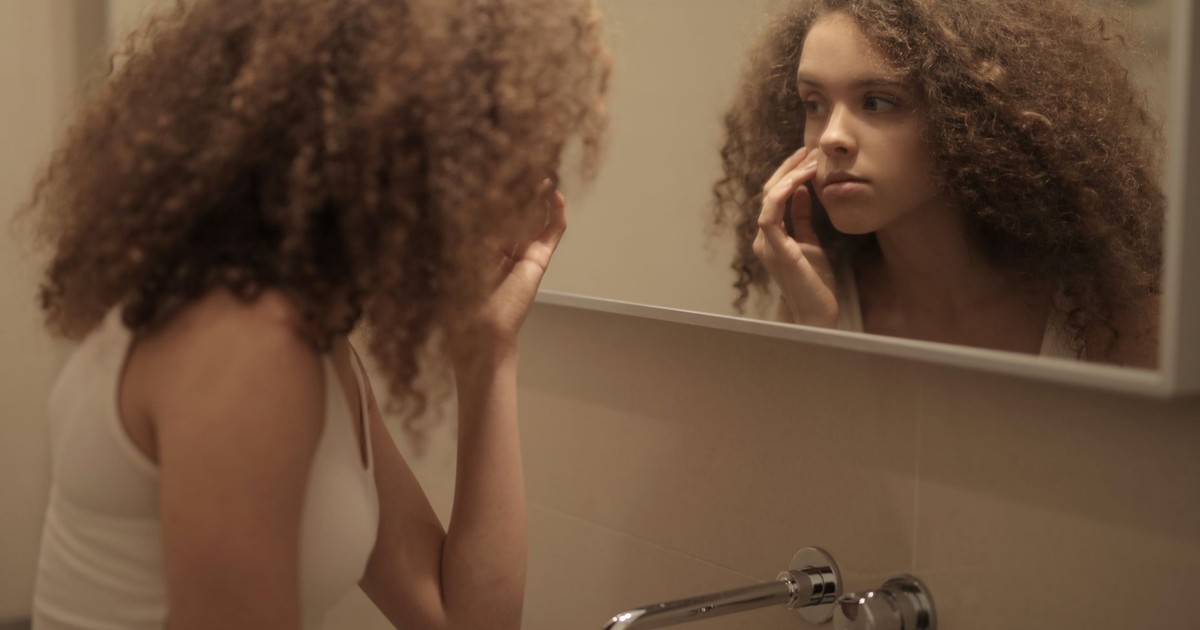

A TikTok video of a woman in her early 30s asking “Is it just me or am I the ugliest person alive?” – captioned “POV: Girls in their luteal phase” – has racked up 2.4 million views and hundreds of comments. Most of the comments say the same thing: same. That combination of puffy features, greasy skin, and a general sense of looking worse than usual has a name now – the “luteal uglies” – and millions of women are describing it with the kind of specificity that only comes from lived experience.
The reason this phrase is resonating so widely is that the physical changes aren’t imaginary. The luteal phase of the menstrual cycle produces real, measurable shifts in skin behavior, fluid retention, and even the way the brain processes mood. Women have experienced this for their entire reproductive lives. What’s new is that they’re naming it, tracking it, and increasingly understanding the biology behind it.
According to Dr. Louise Newson, a GP and women’s hormones specialist, the hormonal shifts that occur during this phase mean women can experience genuine changes in their appearance, sleep, and mood. The luteal uglies are a downstream consequence of a predictable hormonal sequence that happens every single month. “Our hormones affect our skin, they affect our collagen, so a lot of people find their skin becomes drier, their complexion not so bright, they might have acne and spots,” Newson explained to the BBC. “They might get bloating and breasts can change shape.”
What the Luteal Phase Actually Does to Your Body
The luteal phase begins the day after ovulation and lasts approximately 14 days, ending when menstruation starts. During this window, progesterone levels rise with the primary purpose of thickening the uterine lining in preparation for a potential pregnancy. When pregnancy doesn’t occur, progesterone drops sharply – and that drop is what drives many of the symptoms women associate with PMS (premenstrual syndrome).
The rising and falling of progesterone through this phase triggers a cascade of changes, including bloating, breast tenderness, headaches, fatigue, and mood shifts. These aren’t signs that something is wrong – they’re the body running its normal hormonal script. But for nearly half of all women of reproductive age, that script is disruptive enough to affect daily life. A 2024 review in Frontiers in Psychiatry found that the pooled worldwide prevalence of PMS among women of reproductive age is estimated at 47.8%.
At the more severe end of the spectrum sits premenstrual dysphoric disorder, or PMDD – a condition where luteal-phase symptoms become severe enough to significantly interfere with work, relationships, and functioning. The same review found that PMDD, considered the most severe form of PMS, affects between 3% and 8% of women of reproductive age. The most common primary symptom of PMDD is irritability, and symptoms must disrupt daily functioning to meet the diagnostic criteria.
@claire.elis the luteal phase is half your life- learn how to lean into your fluctuating hormones! #lutealphase #hormoneimbalance #hormonehealth ♬ original sound – claire elisabeth
Luteal Phase Skin Changes: The Biology of the Breakout
The skin changes that women notice during the luteal phase have a clear biological explanation, and it starts with sebum – the oily substance produced by glands in the skin that acts as a natural lubricant.
After ovulation, progesterone rises while estrogen decreases. This hormonal shift causes androgens (male sex hormones present in women in small amounts) to become relatively more dominant, which triggers increased sebum production. More oil means more congested pores. According to Dr. Elizabeth Houshmand, a double board-certified dermatologist at Houshmand Dermatology and Wellness in Dallas, higher progesterone levels are responsible for oilier skin and acne concentrated on the chin and jawline, particularly in the premenstrual days.
Luteal phase skin changes don’t stop at oil production. A 2025 study published in Skin Research and Technology found that the skin barrier – the outermost layer that locks in moisture and keeps irritants out – becomes measurably more permeable during the mid-luteal phase compared to the ovulatory phase. Research shows there is increased permeability of the skin barrier during days 22 to 26 of the menstrual cycle, when the estrogen-to-progesterone ratio is at its lowest. Estradiol (a form of estrogen) appears to have a protective effect on the skin barrier – an effect that progesterone works against, though the precise mechanism hasn’t been fully clarified. In practical terms: the skin is more easily irritated during this window, products that normally feel fine can suddenly sting, and sensitivity tends to spike.
The acne numbers back up what women are reporting on social media. Among women who experience premenstrual acne, 91% report breakouts beginning within seven days before menstruation. A 2025 study in the Journal of Investigative Dermatology Reports found that acne counts are likely to be higher by an average of 5 to 6 units during the late luteal and early follicular phases. The good news is that the skin does recover quickly. The same study found that 77% of women see their acne clear within one week after menstruation begins, as hormone levels stabilize.
The Mood Piece: Why You Feel Worse, Too
The luteal uglies aren’t just a skin story. The emotional heaviness that accompanies this phase has its own physiological basis – and it’s directly tied to the same hormonal swing.
Estrogen fluctuations during the luteal phase affect mood through their effect on serotonin levels. Serotonin is the neurotransmitter most associated with feelings of well-being and emotional steadiness. When estrogen drops, serotonin tends to follow. Declining serotonin levels linked to progesterone withdrawal can contribute to feelings of depression during the late luteal phase.
This is why the luteal uglies often feel like more than just a few extra pimples. The combination of changed skin, a puffier face, and genuinely lower mood creates a feedback loop: the physical changes make the emotional shifts feel worse, and the low mood makes the physical changes harder to tolerate. The biology runs in both directions simultaneously.
Bloating, Puffiness, and the Half-Kilo Shift
The puffiness that women describe in the mirror during the luteal phase is largely fluid retention – and that, too, is driven by progesterone. Progesterone causes the body to hold onto water, producing the bloating many women notice in the days before their period. Research has found an average weight gain of 0.5 kg during the menstrual cycle, mostly attributable to fluid retention. The scale and the mirror are both temporarily unreliable guides during this phase.
The puffiness in the face that women point to in those viral TikTok comparison videos – follicular phase versus luteal phase – is the same mechanism. It’s water, not fat, and it resolves when menstruation begins and the hormonal environment shifts.
Tracking Helps More Than You’d Think
A 2024 study published in the Journal of Medical Internet Research found that period tracker apps, first introduced in 2013, are now used by over 50 million women globally to monitor their menstrual cycles and symptoms. Beyond convenience, the research found that tracking improves health literacy and awareness about PMS and PMDD symptoms among women who use these tools.
The practical value of tracking is straightforward: when you know you’re in the late luteal phase, the breakout and the bad mood stop feeling like personal failures. They become predictable events with a known end date. That reframe alone has a measurable effect on how manageable the experience feels.
Read More: Understanding UTIs: A Guide to Women’s Health and Prevention
What to Do Now
The luteal uglies are real, cyclical, and temporary. The biology is well-documented: progesterone rises, androgens become relatively dominant, oil production increases, the skin barrier becomes more permeable, estrogen drops, serotonin dips, and fluid accumulates. All of this reverses within days of menstruation beginning.
During the luteal phase specifically, the most useful skincare adjustments are also the most counterintuitive. Stronger products – retinoids, harsh acids, aggressive exfoliants – are more likely to cause irritation during this window because the skin barrier is already more vulnerable. Dialing back to a gentle cleanser, a barrier-supporting moisturizer with ceramides or glycerin, and hydrocolloid patches for any active blemishes is a more effective strategy than escalating to harsher formulas.
For the mood component, simply knowing that serotonin dips during the late luteal phase gives you something concrete to work with. Movement, even moderate exercise, supports serotonin production and has a documented effect on PMS symptom severity. If symptoms are severe enough to disrupt your daily functioning month after month – especially if irritability, depression, or anxiety are predominant – that’s the clinical threshold for PMDD, and it warrants a conversation with a doctor rather than self-management alone.
The luteal uglies are not a personality trait. They run on a schedule, and they end.
Disclaimer: This information is not intended to be a substitute for professional medical advice, diagnosis, or treatment and is for information only. Always seek the advice of your physician or another qualified health provider with any questions about your medical condition and/or current medication. Do not disregard professional medical advice or delay seeking advice or treatment because of something you have read here.
AI Disclaimer: This article was created with the assistance of AI tools and reviewed by a human editor.
Read More: 5 Major Feminine Hygiene Mistakes That Can Affect Women’s Health