
Around 1050 CE, a city on the floodplain of the Mississippi River was as large as London. Most Americans have never heard its name.
That city, known today as Cahokia, sat across the river from present-day St. Louis and housed between 10,000 and 20,000 people at its peak, according to a 2023 National Geographic feature. Located opposite modern-day St. Louis, Missouri, this city was as large in its day as New York and Philadelphia before the mid-1700s. And yet it was abandoned entirely by 1350 CE, its builders never identified, its original name lost. The story of Cahokia is only one of five ancient cities that once dominated this continent – each a sophisticated, densely populated urban center that rewrites what most people assume about pre-Columbian life in North America.
The assumption runs deep: that North America before European contact was a land of scattered bands, not cities. The archaeological record tells a very different story. From the deserts of New Mexico to the river valleys of the Deep South, ancient cities north of Mexico operated complex governments, ran continental trade networks, and built monuments that rivaled anything in the Old World. Some of these sites are still being excavated, and what researchers continue to unearth is reshaping how historians understand the continent’s past.
Here are five of the most significant.
1. Cahokia: The Ancient Cities of North America’s Mississippian World
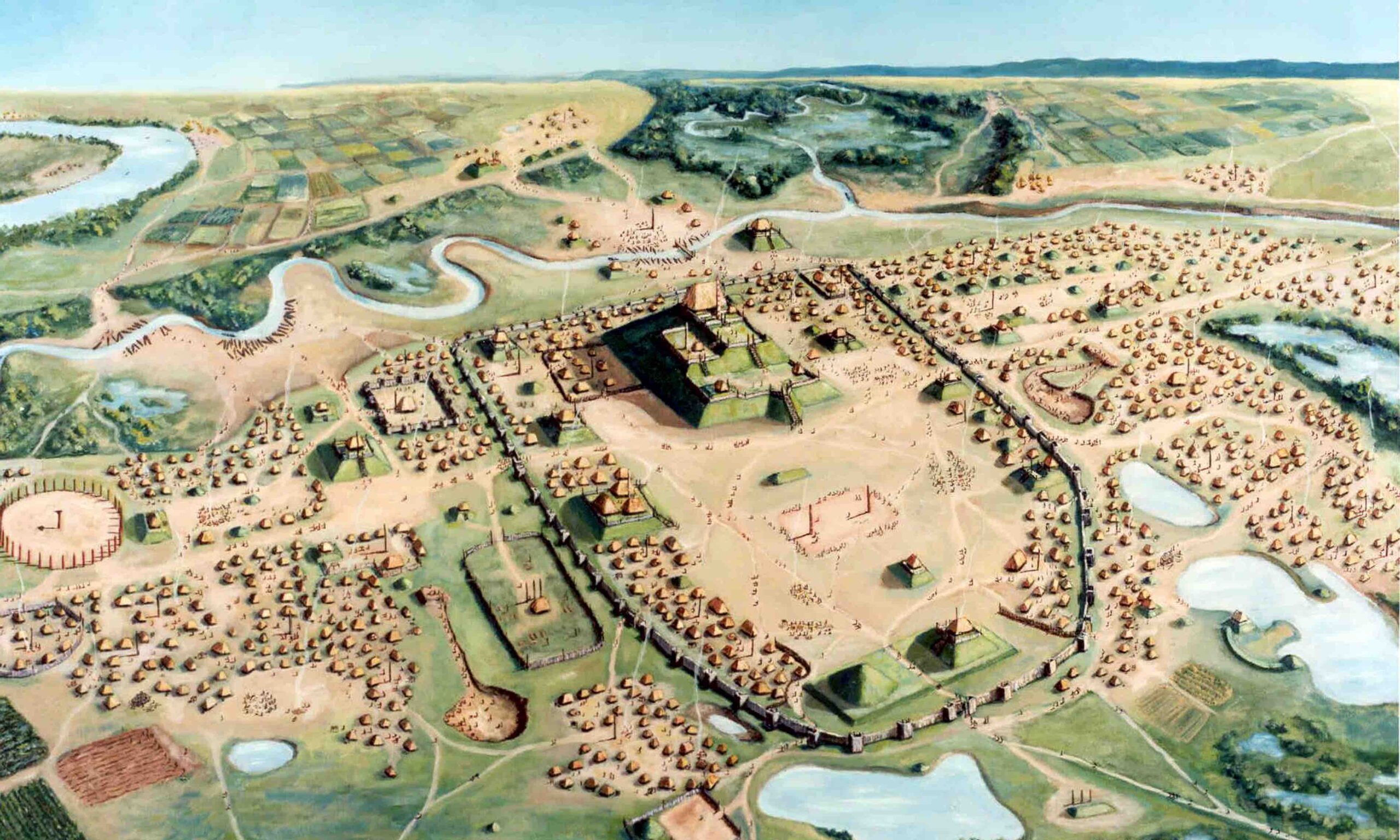
In southern Illinois, about 15 miles east of St. Louis, Missouri, lie the Cahokia Mounds, the remains of what was once the largest prehistoric American city north of Mexico. At its peak around AD 1100, the city of Cahokia covered more than five square miles and was made up of 120 earthen pyramids, often called “mounds” today. The Mississippian people who built it were farmers, traders, and builders of considerable sophistication. According to UNESCO’s World Heritage designation, Cahokia’s site covered nearly 1,600 hectares and included some 120 mounds at its height.
The centerpiece of the city was Monks Mound, a terraced structure that, according to the Cahokia Mounds State Historic Site, rises about 100 feet high with a base spanning more than 14 acres – a footprint larger than that of the Great Pyramid of Giza. The Mississippians oriented Cahokia’s center in a true east-west fashion, and west of Monks Mound, a circle of tall posts used the position of the rising sun to mark the summer and winter solstices and the spring and fall equinoxes. Archaeologists later dubbed this circle Woodhenge. The planning of this city was deliberate and cosmologically informed.
Having become a major population center around AD 1050, by 1350 Cahokia was largely abandoned by its people – and no one is sure why. Neither war, disease, nor European conquest drove Cahokia’s residents from their homes. The leading theories point to environmental stress: deforestation from large-scale mound construction, flooding, and possible soil exhaustion from intensive corn agriculture. A city that had taken centuries to build was empty within a few generations.
2. Teotihuacan: The Largest City in Ancient America
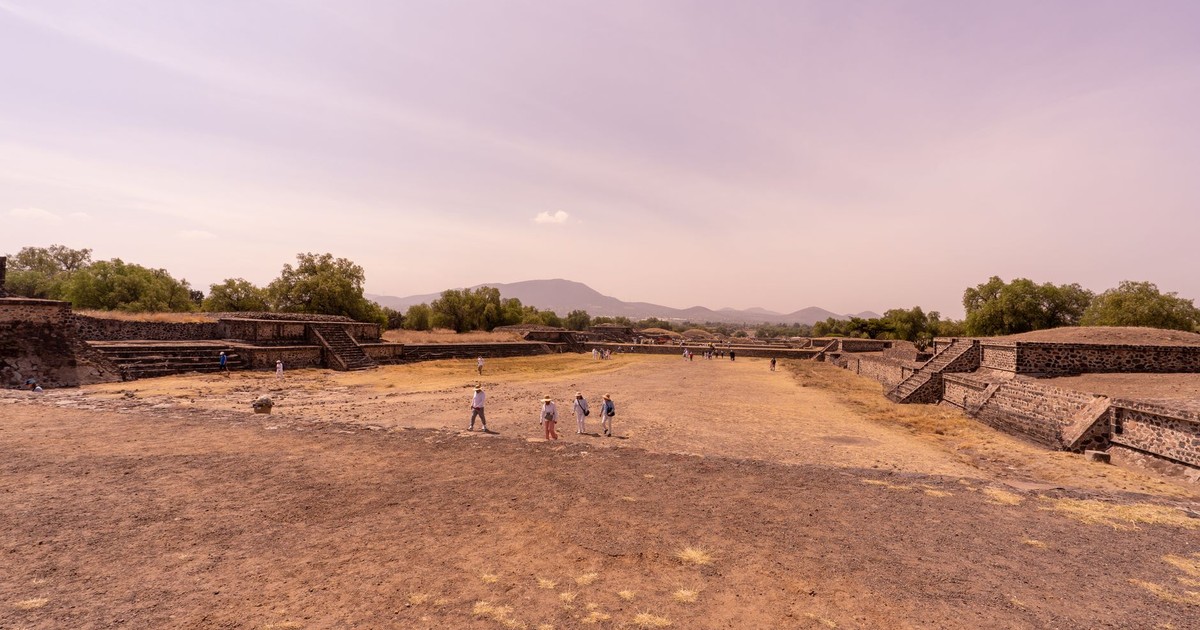
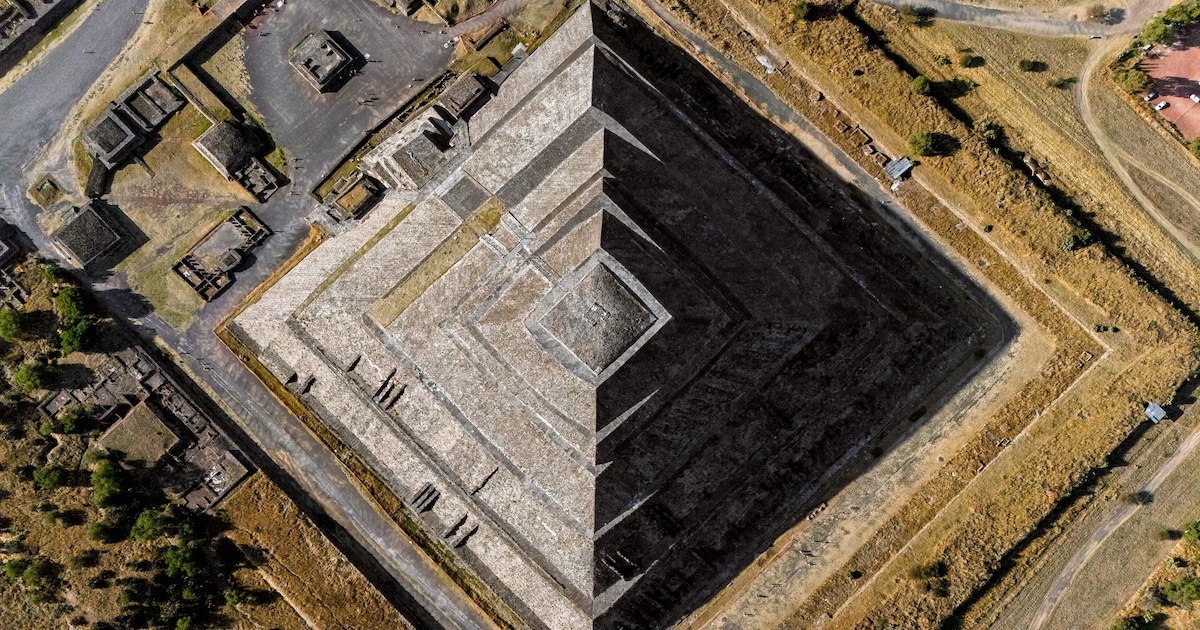
The largest of all the ancient cities in the Americas sits 30 miles northeast of Mexico City – and its scale still staggers. Teotihuacan, located twenty-seven miles northeast of present-day Mexico City, was the largest city of the ancient Americas. At its height in around 400 CE, the city covered eight square miles and was home to an estimated 125,000 to 200,000 residents. A 2015 peer-reviewed study published in PLOS ONE confirmed the city supported more than 100,000 inhabitants from multiple places of origin during its greatest period, making it one of the largest urban centers on earth at that time.
The city’s organization matched its size. The culture is renowned for the large-scale ceremonial grandeur of its monumental architecture, built around 100 to 250 CE, and the introduction of collectivized residential structures known as apartment compounds between around 250 and 550 CE. The Metropolitan Museum of Art’s research notes that these apartment compounds typically measured 200 by 200 feet, with 60 to 100 individuals living in each residence. Teotihuacan was a planned, densely populated urban grid, not a collection of huts surrounding a temple.
The city was also multiethnic. Archaeological evidence published in that same PLOS ONE study found distinct quarters occupied by Zapotec, Mixtec, Maya, and Nahua peoples, with genetic analysis of a neighborhood burial site confirming ancestry from populations across Mesoamerica. Its collapse came abruptly. The Metropolitan Museum’s research notes that climate changes caused severe droughts around 535 CE, and juvenile skeletons excavated from the site show signs of malnutrition consistent with a failing food supply. The city’s major monuments were sacked and burned around 550 CE.
3. Chaco Canyon: Ancient North America’s Desert Hub
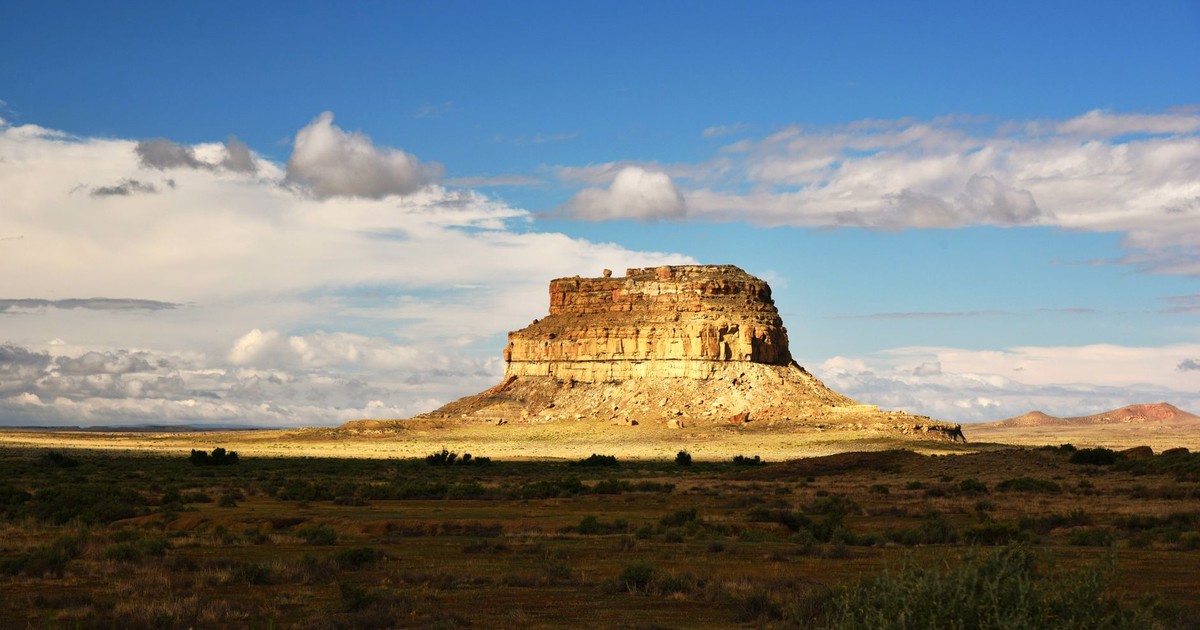
From the 800s into the 1200s, ancestral Puebloan people lived in more than 150 settlements around Chaco Canyon, a remote high desert basin in what is now northwestern New Mexico. The canyon wasn’t just a collection of villages – it functioned as a ceremonial and administrative hub for a regional civilization that stretched across hundreds of miles of the Colorado Plateau.
The crown jewel was Pueblo Bonito, a D-shaped great house constructed in stages between 850 CE and 1150 CE. It contained over 600 rooms built four to five stories high, along with dozens of kivas (underground ceremonial chambers), all spread across three acres. The wealth concentrated inside was extraordinary. According to World History Encyclopedia, one room was found to contain more than 50,000 pieces of turquoise, another 4,000 pieces of jet, and 14 macaw skeletons. Macaws are native to Mexico – their presence in New Mexico confirms long-distance trade networks running south into Mesoamerica.
The construction itself remains astonishing. Ancestral Puebloans at Chaco built aligned structures using timber imported from forests 50 miles away, all without wheels or metal tools, according to Discover Magazine. Chacoan civilization began to dissolve around 1140, perhaps due to a series of severe droughts, and the canyon was largely abandoned by the end of the 12th century. The descendants of the Chacoans are widely considered to be today’s Pueblo peoples of the American Southwest.
4. Moundville: Alabama’s Ancient Capital
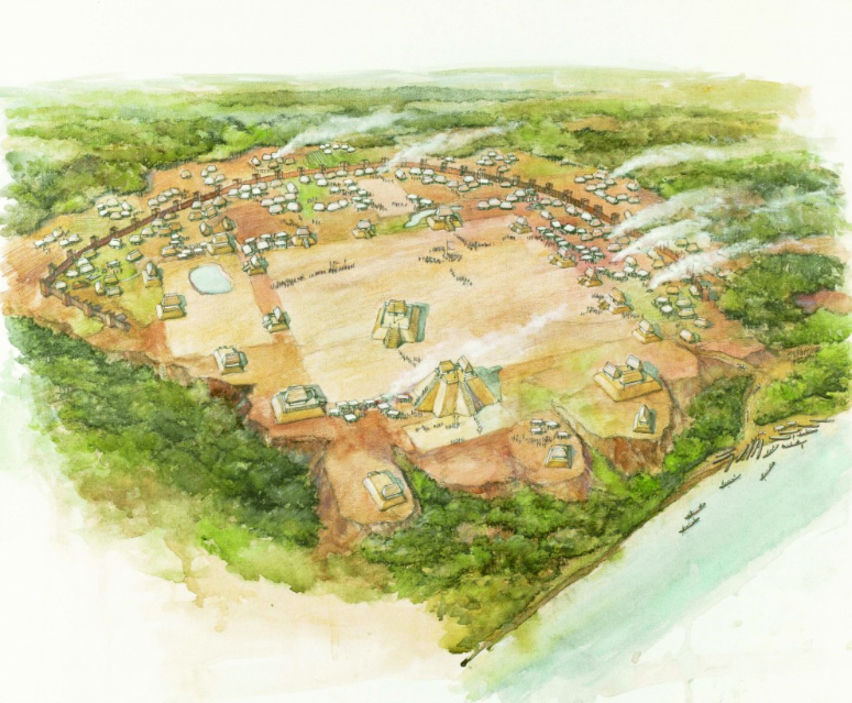
Sixty miles south of Birmingham, Alabama, a second great Mississippian city rose to prominence around a century after Cahokia’s peak. The University of Alabama’s Moundville Archaeological Park records that the site was occupied from around AD 1000 until AD 1450, and was second only to Cahokia in size and complexity among Mississippian cities. National Geographic once called it “The Big Apple of the 14th Century,” and the University of Alabama, which administers the site, notes it was at its peak America’s largest city north of Mexico.
Moundville covered 300 acres along the Black Warrior River and contained 29 platform mounds arranged around a large central plaza. The site functioned as both a political capital and a ceremonial center for a regional chiefdom that controlled trade across much of the American Southeast. Artifacts recovered there include engraved copper plates, ceremonial stone discs, and elaborate pottery with iconography tied to a broader Mississippian belief system now called the Southeastern Ceremonial Complex.
Like Cahokia, Moundville did not fall to conquest. Archaeological evidence suggests the city’s population gradually dispersed outward into smaller surrounding communities over the course of the 14th and 15th centuries. The mounds themselves were not abandoned in crisis – they were left deliberately, the city’s function apparently transferred rather than destroyed.
Moundville and Cahokia together demonstrate that the Mississippian world was not a single city-state but a constellation of urban centers connected by shared religion, trade, and political ideology. Researchers studying the deep history of the American Midwest and South continue to find that these two sites represent just the visible tip of a much larger and still incompletely understood civilization.
5. Poverty Point: The Oldest Ancient City in North America
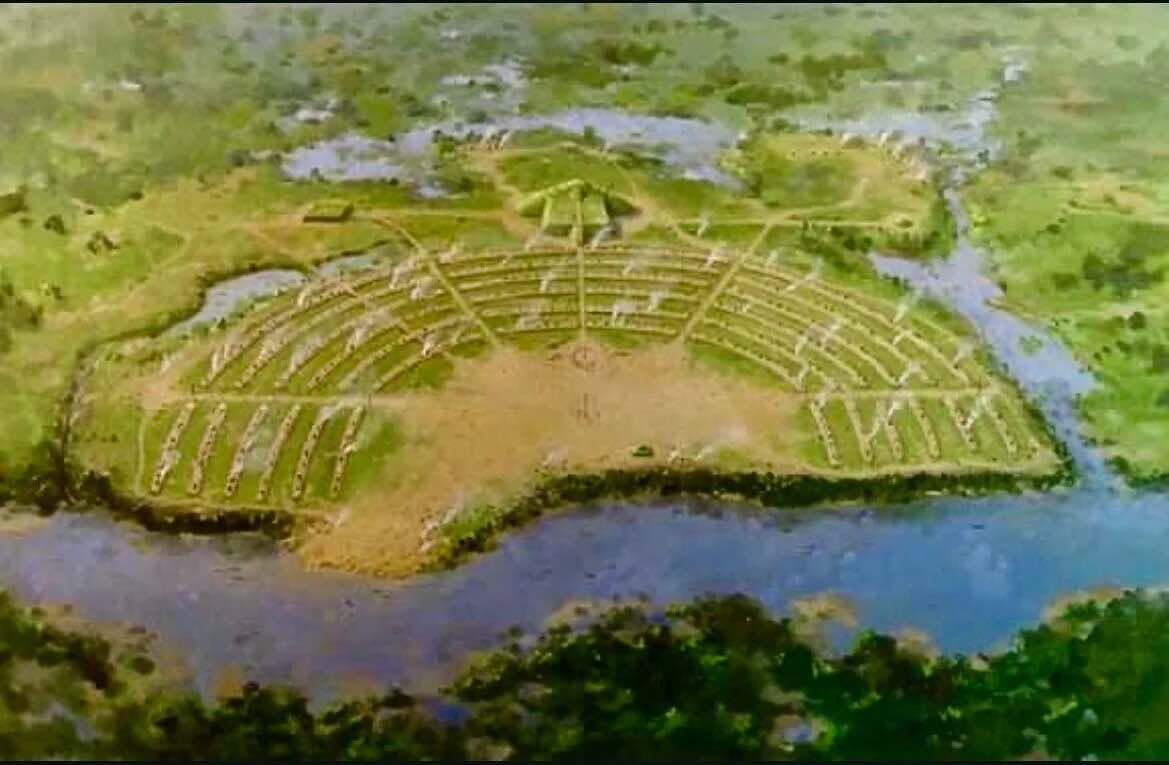
The oldest city on this list preceded the others by more than a millennium. Poverty Point, a site in northeastern Louisiana, was built and occupied from around 1730 BCE – during the same era that Egypt was constructing its New Kingdom monuments. The EPFL academic concept database, drawing on archaeological literature, places the Poverty Point culture among North America’s foundational urban traditions, one that would not be equaled in scale for nearly two thousand years.
The engineering at Poverty Point is staggering for its age. T.R. Kidder, professor of anthropology at Washington University in St. Louis, stated in a 2025 study published in Southeastern Archaeology that the builders moved the equivalent of 140,000 dump truck loads of dirt – all without horses or wheels. The site consists of six concentric semi-circular earthen ridges, each serving as residential terraces, surrounding a central plaza, with several large mounds arranged nearby. The largest mound stands 72 feet high.
The builders appear to have been hunter-gatherers, not farmers. Most ancient urban centers grew from agricultural surpluses that could feed a non-farming population. Poverty Point upends that model entirely. The site drew goods from as far as the Great Lakes and the Appalachians, suggesting a trade network of continental reach operating 3,000 years ago from a semi-nomadic society. Kidder’s team, whose 2025 findings were covered by Archaeology Magazine, proposes the site functioned as a periodic gathering place where egalitarian hunter-gatherer groups converged to trade, build, and perform shared rituals. No comparable site from this period exists anywhere in North America.
Five Cities, One Overlooked Story
Each of the five sites covered here – Cahokia, Teotihuacan, Chaco Canyon, Moundville, and Poverty Point – was a functioning urban center with civic planning, long-distance trade, religious architecture, and dense populations. Teotihuacan alone housed more people in 400 CE than most European cities of the same era. Cahokia matched the population of medieval London. Poverty Point organized continental commerce before the wheel reached North America. These were not proto-urban experiments. They were cities.
All five are accessible to visitors today. Cahokia Mounds State Historic Site in Illinois, Chaco Culture National Historical Park in New Mexico, the University of Alabama’s Moundville Archaeological Park, and Poverty Point World Heritage Site in Louisiana are all open to the public, most with on-site museums. Teotihuacan, just outside Mexico City, receives thousands of visitors daily. Standing at the base of Monks Mound or walking the Avenue of the Dead makes viscerally clear what the historical record alone sometimes struggles to convey: these were real cities, built by real engineers, inhabited by people who organized their world with extraordinary ambition – and whose story archaeologists are still actively uncovering.
AI Disclaimer: This article was created with the assistance of AI tools and reviewed by a human editor.
Read More: Aboriginal Man Traveled 2,000 Miles To Attend His Granddaughter’s Graduation