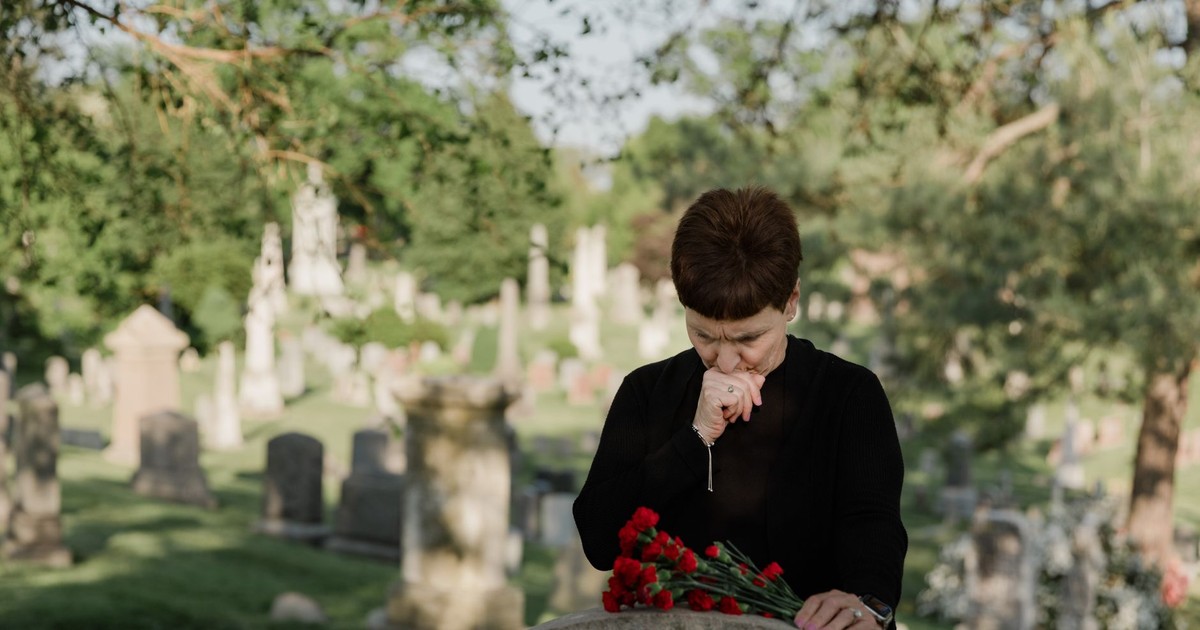

Grief can kill you. That’s not a figure of speech. A 2025 study tracking bereaved individuals found that those carrying persistent high grief symptoms had an 88% higher risk of dying within 10 years of their bereavement. The risk wasn’t explained by age alone. Something about the grief itself – its weight, its duration, its specific character – made a measurable biological difference. How many people are carrying grief that goes unrecognized, unnamed, and therefore untreated?
Most people know one version of grief – the kind that follows a death, the kind that comes with a funeral and condolence cards. But grief doesn’t confine itself to that script. It arrives before deaths happen, and long after the cards stop coming. It accumulates silently across multiple losses. It attaches itself to things society doesn’t think of as worth grieving: a pet, a changing coastline, a parent who is physically present but psychologically unreachable. The popular five-stage model – denial, anger, bargaining, depression, acceptance – is now widely understood by researchers to be an oversimplification. Modern grief research consistently shows that grief is non-linear, deeply individual, and far more varied in its forms than any tidy framework can capture.
A person in anticipatory grief doesn’t need the same conversation as someone in cumulative grief. Someone experiencing disenfranchised grief needs their loss acknowledged before anything else. The six forms below are among the most clinically significant and least discussed types of grief – and misidentifying which one you’re carrying can leave you seeking the wrong kind of help.
1. Anticipatory Grief

Most people first encounter the concept of grief as something that follows a loss. Anticipatory grief inverts that timeline entirely. It’s the emotional pain and sorrow experienced when a loved one is dying or when death is expected – a grief that begins before the loss itself arrives.
The term has a specific origin. Psychiatrist Erich Lindemann introduced “anticipatory grief” in 1944 – documented in his paper “Symptomatology and Management of Acute Grief” published in the American Journal of Psychiatry – while studying bereavement responses in trauma contexts, and it has since become a recognized feature of the caregiving and terminal illness experience. Families watching a parent decline through cancer, or a spouse deteriorate through a progressive neurological disease, often begin mourning months or years before the death occurs. The person is still alive, but the relationship as it once existed is already changing beyond recognition.
Caregivers who spend years emotionally bracing for a loss don’t emerge from the death exhausted but “pre-grieved.” They often grieve again, sometimes more acutely, when the moment finally arrives – anticipatory grief compounds what follows rather than cancelling it out. If you’re caring for someone with a terminal diagnosis, the sadness, withdrawal, and emotional heaviness you’re already feeling are not premature or self-indulgent. They’re a recognized form of grief, and they deserve support now, not only after.
2. Disenfranchised Grief

Disenfranchised grief is grief that is not recognized or validated by society, often leaving individuals feeling isolated. The concept was first presented by Dr. Kenneth Doka in 1989, who observed that certain losses – however devastating to the person experiencing them – fall outside the cultural boundaries of what is considered “legitimate” mourning. His original framework is detailed at drkendoka.com, where the full scope of his publications on the topic is documented.
Pet loss is one of the most common examples. Research has found that levels of grief following a pet’s loss are comparable to levels of grief following the loss of a human – yet this process is largely unrecognized socially and underexplored in research. People who lose a dog or cat are often met with “it was just an animal” rather than the kind of sustained support offered after a human death. Approximately 30% of pet owners experience intense grief following pet loss, according to research published by the National Institutes of Health. Other losses that frequently fall into this category include miscarriage, the end of an affair, the death of an estranged family member, or the loss of a friendship with no clear endpoint.
The specific harm of disenfranchised grief isn’t just the absence of support – it’s the internalized message that the loss wasn’t real enough to warrant pain. People in this situation often feel ashamed of their own distress, which inhibits the processing that allows grief to move. If you’ve lost something that others haven’t validated, naming it as a real loss – to yourself first, then to a trusted person or a therapist – is often the first and most important step.
3. Cumulative Grief

Cumulative grief is the experience of grieving multiple losses over time, where the emotional impact layers upon itself. It often occurs when one doesn’t have the chance to fully process one loss before another occurs, leading to an overwhelming accumulation of unresolved grief.
The losses involved don’t have to be deaths. Cumulative grief involves losses that go beyond multiple bereavements – they can include chronic illness, caregiving stress, estrangement, moving away from family, and loss of independence. A year in which someone loses a parent, receives a difficult health diagnosis, and goes through a divorce may produce grief that feels qualitatively different from any one of those losses in isolation. The nervous system isn’t designed to fully process one loss while actively absorbing another. When losses stack faster than they can be integrated, the result is a kind of emotional overload that can look like numbness, chronic fatigue, or a flattened ability to function.
The overwhelming nature of cumulative grief can lead to deep emotional exhaustion and confusion, and it often requires a different approach than typical grief counseling – because the work involves coping with a recent loss while also addressing unresolved grief from past losses. Anyone who has ever said “I thought I was over it, but then something else happened and everything fell apart” may be describing cumulative grief. Therapy that addresses losses one at a time, in sequence, tends to be more effective than general bereavement support in these cases.
4. Ambiguous Loss

Dr. Pauline Boss, PhD, coined the term “ambiguous loss” in the 1970s to describe a specific kind of grief: one that cannot resolve because the loss itself cannot be clearly confirmed or understood. Her institutional profile at the University of Minnesota documents the full breadth of her research across more than 100 peer-reviewed articles and chapters on the subject.
Dr. Boss identified two distinct forms. The first involves physical absence with psychological presence – the person is gone, but their fate is unknown. The second involves psychological absence while someone is physically present. Families of missing people or soldiers listed as missing in action often exist in an indefinite suspension, unable to fully grieve because the person hasn’t officially been declared dead. The second form is in some ways the more prevalent and more quietly painful: the experience of loving someone with dementia, severe depression, addiction, or a traumatic brain injury, whose body is present but whose personality, recognition, and relational presence has diminished or disappeared.
Both types share the same fundamental problem: grief without resolution. There’s no clear moment to mourn, no social script to follow, no endpoint on the horizon. Ambiguous loss is particularly associated with prolonged depression and caregiver burnout precisely because it denies the person the closure that allows grief to shift. Recognizing it by name, and working with a therapist experienced in this area, can reduce the isolation that often makes it worse. Connecting with others in similar situations – families of dementia patients, for example – can provide the social validation that ambiguous loss typically denies.
5. Prolonged Grief Disorder

Most grief, however intense, naturally changes over time. Prolonged Grief Disorder (PGD) is what clinicians call grief that doesn’t. PGD can be diagnosed when acute grief stays distressing and disabling beyond 12 months following bereavement.
Prolonged grief disorder is the newest disorder added to the DSM. After decades of research suggesting that many people were experiencing persistent difficulties associated with bereavement substantially beyond culturally normed expectations, and following a review and public comment process, the American Psychiatric Association approved it for inclusion. It was formally included in the DSM-5-TR, released in March 2022. A 2022 study in JAMA estimated the prevalence of PGD in the general population at approximately 3.4% using the new diagnostic criteria – a figure that represents millions of people whose grief had, until recently, no formal clinical name.
Risk factors for PGD include a history of depression, emotional dependency on the deceased, loss of a child or spouse, and violent or sudden causes of death. The diagnostic recognition matters practically: it means that targeted treatments – specifically grief-focused cognitive behavioral therapy and complicated grief treatment – are now validated options rather than experimental ones. If grief is still dominating your daily life more than a year after a significant bereavement, speaking with a mental health professional specifically about PGD is worth doing. Not all grief therapists are trained in PGD-specific protocols, so asking explicitly about their experience with prolonged grief is a reasonable starting point.
For readers who want to understand how loss reshapes health and relationships over time, this piece on what happens after a partner passes away covers the financial, emotional, and social risks that bereaved adults often face unprepared.
6. Ecological Grief: The Newest Types of Grief to Be Named

Ecological grief is defined as “grief felt in relation to experienced or anticipated ecological losses, including the loss of species, ecosystems and meaningful landscapes due to acute or chronic environmental change.” A 2021 study in the International Journal of Environmental Research and Public Health was among the first to formally examine ecological grief as both a potential mental health risk and a functional response to loss, finding that people who maintain deep ties to specific natural environments report genuine grief responses when those environments are damaged or destroyed – responses that mirror clinical presentations of loss in every measurable way.
This form of grief is frequently dismissed or pathologized as anxiety about climate change, but the two are distinct. Climate anxiety is anticipatory and future-focused. Ecological grief is a response to losses that have already happened – a coral reef that no longer exists, a forest that burned, a species that a person grew up knowing. Indigenous communities, subsistence farmers, and coastal populations have documented this form of grief for decades; what’s changed is that researchers are now naming and studying it rigorously.
Read More: 10 Mistakes to Avoid After Your Partner Passes Away (for Those Over 60)
What to Do With This

Grief carries measurable physical consequences. The 2025 study tracking a large bereaved population found clear links between grief and elevated risks of both mortality and morbidity – risks that track not just with the fact of loss but with how that grief is processed, named, and supported over time.
Across grief research, one finding recurs consistently: social validation accelerates healing, and its absence prolongs suffering. A 2017 cross-cultural analysis published in Death Studies found that grief expression and trajectories vary considerably across different cultures, even though grief itself is a universal human phenomenon – meaning that cultural context shapes not just how people grieve, but whether they’re given permission to grieve at all. Whatever type of grief you’re carrying, the starting point is the same: name it accurately, find at least one person or professional who can receive it without minimizing it, and resist the cultural pressure to resolve it on a timeline that suits everyone else’s comfort.
Disclaimer: The information provided here is for educational and informational purposes only and is not a substitute for professional psychological, psychiatric, or mental health advice, diagnosis, or treatment. Always seek the guidance of a licensed mental health professional, therapist, psychologist, or psychiatrist with any questions or concerns about your emotional well-being or mental health conditions. Never ignore professional advice or delay seeking support because of something you have read here.
AI Disclaimer: This article was created with the assistance of AI tools and reviewed by a human editor.