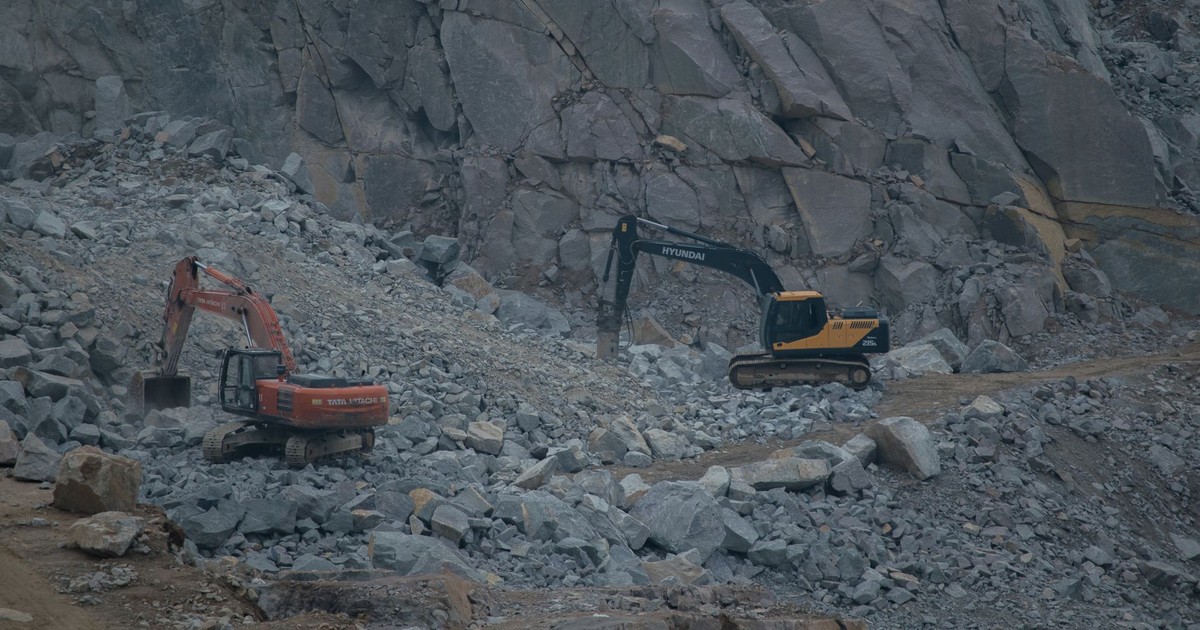

Three miles above sea level, geologists have confirmed that the most valuable mineral deposit discovered anywhere on Earth in three decades sits directly beneath some of the most fragile frozen terrain on the continent – terrain that millions of people depend on for drinking water.
The site is called Filo del Sol, Spanish for “sharp edge of the sun.” Straddling the border of Chile and Argentina in the high Andes, it had been under geological investigation for years. But a 2025 resource estimate changed the scale of what miners were dealing with entirely. An initial mineral resource estimate completed in 2025 suggests that the companies in charge of mining this area – Lundin Mining and BHP – may have stumbled upon five times more metal than they bargained for. That’s not a rounding error. That’s a redefinition of the project.
The assessment estimates the presence of up to 13 million tonnes of copper, 907,000 kilograms (32 million ounces) of gold, and 18.6 million kilograms (659 million ounces) of silver. Those numbers come directly from Lundin Mining’s official announcement. To put it in context, Filo del Sol now ranks in the top ten for mineral resources among the largest producing copper mines anywhere in the world.
The reason the estimate jumped so dramatically traces back to where geologists were looking. This update, gathered from data collected from 400 additional exploration holes, came from the discovery that deeper mineralization of copper far exceeded the estimates that were closer to the surface. The ore gets richer as you go down – which is unusual, and which is why the project keeps attracting bigger players.
A Find That Defines a Generation of Dangerous Minerals Mining
A new resource estimate for the Filo del Sol project in Chile’s Atacama region has confirmed its potential to be part of one of the world’s largest copper, gold, and silver resources, according to Lundin Mining. Jack Lundin, CEO of Lundin Mining, called it “one of the most significant greenfield discoveries in the last 30 years,” with the potential for one of the highest-grade undeveloped open-pit copper projects in the world. That quote comes directly from the official Lundin Mining press release, where Lundin also described the Vicuña district as poised to become a globally ranked mining complex.
The two companies didn’t arrive here independently. Vicuña Corp., the joint venture formed to hold this project, completed the mineral resource estimate with an effective date of April 15, 2025. That joint venture, confirmed by BHP in January 2025, is structured as a 50/50 partnership between BHP Canada and Lundin Mining – two of the largest mining operators on the planet pooling resources on a single deposit. That level of commitment from both companies signals they believe the numbers are real.
The geology behind the find isn’t accidental. This treasure is nestled along the Atacama Desert, long known for its immense copper reserves due to its location in the Andes and its placement within the eastern portion of the Ring of Fire. According to the USGS 2026 Mineral Commodity Summaries, Chile holds the world’s largest copper reserves at 180 million metric tons – nearly as much as Australia and Peru, the next two largest copper-holding countries, combined. Filo del Sol sits at the extreme end of that geological corridor, but what makes it genuinely extraordinary is how far down the richest ore goes.
Why Getting to It Is So Dangerous
The deposit’s location is also its central problem. Located at roughly 5,000 meters (16,400 feet) above sea level, the mine and its high elevation can take a toll on workers and even induce altitude sickness. At that height, the air contains roughly half the oxygen available at sea level. Normal tasks become physically demanding. Moving heavy equipment, operating machinery, and maintaining concentration all become harder with every passing hour above 4,000 meters.
The health risks aren’t speculative. According to the National Institutes of Health, high altitude is associated with high-altitude pulmonary edema (a dangerous accumulation of fluid in the lungs), pulmonary hypertension, and acute mountain sickness – a cluster of symptoms including headaches, nausea, and disorientation that can escalate rapidly without proper acclimatization. Workers rotating in from lower elevations face the most acute risk during their first days on site. The same research notes that mining at altitude has been reported to accelerate silicosis and other pneumoconioses – lung diseases caused by inhaling mineral dust – in workers compared to lower-altitude operations.
Cardiovascular strain is another documented concern. Research published in High Altitude Medicine and Biology examining occupational health in high-altitude miners found that the reduced oxygen at altitude increases sympathetic nervous system activity, resulting in elevated blood pressure – a compounding risk for workers who already face physically intensive daily labor.
Logistics add another layer of difficulty. The site isn’t near a road network or a port. Fuel, food, water, safety gear, and industrial equipment all have to be transported into extreme terrain under extreme weather conditions. Workers can face altitude sickness, while companies must move fuel, machines, food, water, and safety gear into a place where even breathing can feel like work.
The Water Calculation That Could Stop Everything
The physical dangers to workers are serious but manageable with adequate protocols. The environmental math may be harder to solve. Open-pit mining – the method planned for Filo del Sol – is water-intensive. According to a Columbia Law School analysis of Andean mining operations, extraction at this scale requires between 60 and 100 million liters of water per day. That’s a staggering demand in one of the driest places on Earth.
The site sits adjacent to periglacial zones – high-altitude landscapes of frozen ground and ice that act as natural slow-release water reservoirs. Argentina has 8,484 square kilometers of ice cover spanning 12 provinces and 39 river basins, together providing the country with freshwater for drinking, agriculture, and other needs. These glaciers and periglacial environments aren’t just scenic – they are the primary upstream source of water for communities and farmland hundreds of kilometers downstream.
Argentina’s original Glacier Law, passed in 2010, prohibited mining and infrastructure development in and around these zones. Argentina had been among the countries with the most restrictive glacier protection frameworks in the region under the previous law, which established broad protection over glaciers and periglacial zones – considered strategic freshwater reserves – and prohibited extractive activities and any intervention that could affect their natural function.
That protection has now changed. Argentina’s Chamber of Deputies approved an amendment that authorizes mining in ecologically sensitive areas of glaciers and permafrost, passing with 137 votes in favor, 111 against, and three abstentions after nearly 12 hours of debate. The reform, championed by President Javier Milei’s administration, introduces selective glacier protection limited to those considered essential for water supply, eliminates automatic protection of periglacial zones, and allows mining and hydrocarbon development in previously restricted areas, subject to environmental impact assessments.
Protests preceded the vote. According to UPI’s coverage of the April 2026 debate, thousands of people demonstrated outside parliament as lawmakers deliberated, with some carrying banners reading “Water is more precious than gold!” and “A glacier destroyed cannot be restored!” Al Jazeera reported that seven Greenpeace activists were arrested after scaling a statue outside parliament to protest the vote.
Columbia Climate School researchers noted that the reform “sets a negative and dangerous precedent for Argentine environmental policy” and that the recent vote demonstrates how glacier protection is “at the mercy of political pendulums” when it collides with economic pressure.
A Clean Energy Paradox
The deeper irony here is that copper from Filo del Sol would primarily feed the clean energy transition. Electric vehicles, wind turbines, solar panel wiring, and grid-scale battery systems all depend heavily on copper. Global demand for the metal is rising fast precisely because of the shift away from fossil fuels. The Filo del Sol deposit could provide a major boost to industries in need of copper, gold, and silver for green energy, aerospace, and telecommunications.
The operators are aware of the optics. In 2022, Lundin Mining announced plans to build high-voltage power lines for renewable energy to supply the site’s operations – an attempt to reduce the carbon footprint of the mining process itself. That’s a genuine commitment, but it doesn’t address the water question or the physiological toll on workers at altitude.
The tension is real and unlikely to resolve cleanly. The metals inside Filo del Sol are exactly what green energy infrastructure requires. The environment above them is exactly what downstream communities depend on for survival. The reform to Argentina’s glacier protections came at a time when the government is trying to boost the mining sector to meet demands for critical minerals used in the clean energy transition, such as copper, gold, silver, and molybdenum. It’s a policy choice that treats one environmental priority as expendable in the name of another.
Read More: Farmer Spends 16 Years Studying Law to Take On Chemical Company Over Land Pollution
What This Means for You
Filo del Sol isn’t just a mining story. The copper inside it will eventually end up in the electric vehicles, solar panels, and grid upgrades that are being built to address climate change. Where that copper comes from – and what it costs to extract – is a question that connects directly to how responsibly the energy transition gets built.
For anyone tracking the intersection of resource extraction, freshwater security, and worker health, this deposit is a case study worth watching closely. More than 7 million Argentines depend on glaciers and Andean snow as their main source of drinking water, according to UPI’s reporting on the Senate debate, citing opposition Senator Eduardo de Pedro – a former Argentine Minister of the Interior and current National Senator for Buenos Aires Province – who warned that the glacier law reform “puts strategic resources at risk without guaranteeing benefits for the country.” The dangerous minerals mining operations that will follow Argentina’s revised glacier protections will test whether environmental impact assessments can truly replace blanket prohibitions – or whether, as critics argue, they simply make harm more bureaucratically manageable.
AI Disclaimer: This article was created with the assistance of AI tools and reviewed by a human editor.