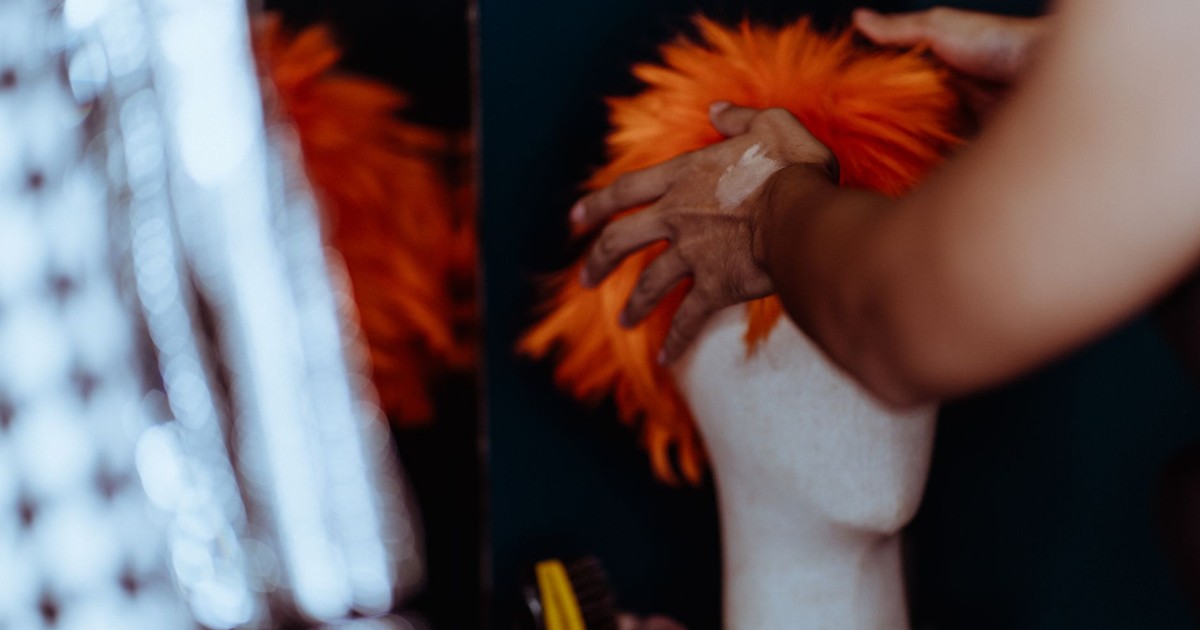
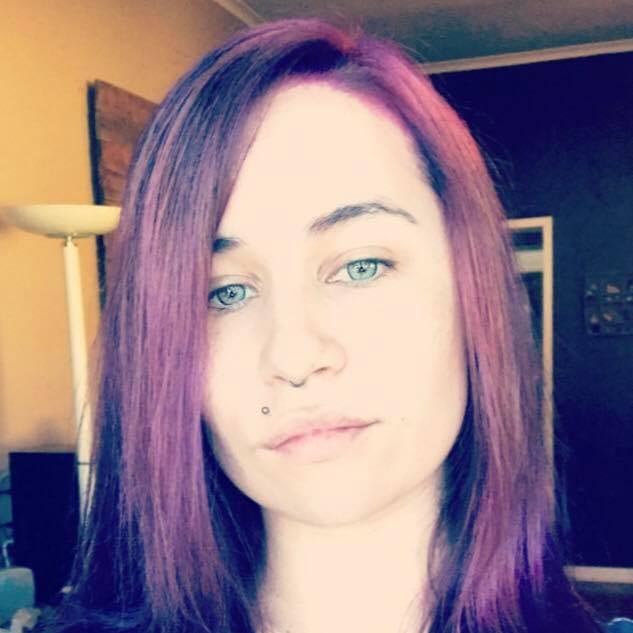
A Georgia woman showed up to her front-of-house hospitality job wearing a new wig every shift. Not because she wanted to. Because her employer told her the bright pink hair she’d worn for years wasn’t allowed in a customer-facing role – and she refused to dye it. The wigs were intentionally awful: spiky punk styles, sweeping bob cuts, the kind of looks that made customers do double-takes. One TikTok video documenting the situation racked up more than 574,000 views, and the phrase her followers latched onto was “malicious compliance.”
Emily Benschoter, 29, had accepted a front-of-house hospitality position after completing the hiring process without an in-person or video interview. Before arriving for her first shift, Benschoter contacted her employer to make sure there would not be an issue. That conversation revealed the company’s appearance policy did not allow employees to have brightly colored hair while working. Dyeing it was off the table. So she arrived in a wig instead – and then another, and another after that.
Speaking to Newsweek, she said: “It’s dehumanizing that I can’t be accepted at face value because my hair is a non-traditional color. It’s so superficial that my hair color is an obstacle. I prefer my pink hair, it’s me to my core. So now I purposely pick wacky wigs, which is quite funny.” She also noted: “The worst the wig, the better,” adding that it was “a way to open up the conversation with the customers who think it is insane that I have to cover my pink hair.”
A Workplace Hair Ban Protest Goes Viral
The TikTok comment sections filled quickly. Many viewers questioned why a company would object to pink hair while accepting wigs that often looked far more distracting. Others recognized exactly what she was doing. The phrase “malicious compliance” appeared throughout the comment threads – a form of protest where someone follows instructions to the letter while exposing how unreasonable those instructions may be.
According to Fortune, malicious compliance – following instructions exactly as given, even when doing so will cause inefficiency or backfire – has become a viral workplace trend among workers frustrated by rigid or arbitrary policies. The tactic is less dramatic than quitting, but often just as revealing about the state of a workplace relationship. In Benschoter’s case, the policy intended to make one employee stand out less made her recognizable to millions.
Why Hair Color Sits in a Legal Gray Zone
Hair color occupies a complicated legal position. Unlike hairstyles tied to race or ethnicity, hair color is not a protected characteristic under federal anti-discrimination law. In general, an employer can impose a dress code to regulate the appearance of employees, as long as it is not discriminatory. A ban on pink hair – while it may feel arbitrary to the person wearing it – is currently legal in most US workplaces.
The CROWN Act, the most significant piece of hair-related legislation in recent American history, addresses a very different problem. According to Fortune’s coverage of the legislation, the CROWN (Creating a Respectful and Open World for Natural Hair) Act prohibits prejudicial treatment towards individuals on the basis of their hair texture or hairstyle – specifically styles associated with race: braids, locs, cornrows, twists, Bantu knots, afros, and tightly coiled or curled hair. Pink hair – a personal style choice available to anyone regardless of race – falls outside that protection.
California became the first state to make race-based hair discrimination illegal. Governor Gavin Newsom signed the inaugural statewide CROWN Act into law on July 3, 2019, updating the state’s anti-discrimination law so that the term “race” includes traits historically associated with race. Since then, the movement has spread rapidly across the country, and the hospitality sector – where Benschoter worked – is precisely the kind of customer-facing environment employers most often cite when defending strict appearance policies.
How Far the CROWN Act Has Reached
What started as a California initiative has become one of the most consequential expansions of civil rights protections in modern employment law. As of 2026, 27 states plus Washington, D.C., have passed CROWN laws, with Pennsylvania among the most recent additions.
Pennsylvania’s law is particularly notable because of the scale of the problem it was designed to address. According to CBS Philadelphia’s coverage of the signing, more than 900 complaints of racial discrimination based on hair were made to the Pennsylvania Human Relations Commission in 2022 alone – before any specific legal prohibition existed statewide. According to Jackson Lewis, the state’s CROWN Act took effect on January 24, 2026.
At the federal level, the picture remains incomplete. Federal legislation was reintroduced in the House in March 2025 by Reps. Bonnie Watson Coleman, Yvette Clarke, and Robin Kelly, according to Rep. Watson Coleman’s office, but has not been enacted into law, leaving workers in the remaining states without explicit statutory protection.
The Data Behind the Policy Fight
The legislative push hasn’t come from nowhere. The numbers describing the experience of Black women in American workplaces make the case plainly. The 2023 CROWN Workplace Research Study found that Black women’s hair is 2.5 times more likely to be perceived as unprofessional. More than 20% of Black women between the ages of 25 and 34 have been sent home from work because of their hair, according to the same research cycle. The effect on job-seeking behavior is equally significant: 66% of Black women change their hair for a job interview, including 41% who changed it from curly to straight, and Black women are 54% more likely to feel they must wear their hair straight to be successful in the interview process.
The CROWN research also found that 25% of Black women believe they have been denied a job interview because of their hair, and Black women with coily or textured hair are twice as likely to experience microaggressions at work compared to Black women with straighter hair.
The Chastity Jones case illustrated exactly how those numbers play out in practice. According to the Economic Policy Institute, Jones, a Black woman in Alabama, was offered a customer service position, only to have the job offer rescinded after she refused to cut her locs – a protective hairstyle central to her identity. Cases like hers helped build the political and legal momentum that eventually produced CROWN legislation in states across the country.
According to SHRM, the Equal Employment Opportunity Commission has already challenged grooming and appearance policies for targeting certain hairstyles associated with race, bringing enforcement actions in that space even before CROWN laws existed in many states.
The Wider Question Benschoter’s Protest Raised
Benschoter’s story sits at a specific intersection: a workplace hair ban protest that was both legally permitted and socially awkward to defend. Her employer had the legal right to ban pink hair. She had the legal right to wear a wig that violated every aesthetic principle the policy was presumably meant to uphold. While employers often argue that appearance standards help present a consistent image to customers, critics question whether hair color has any meaningful connection to someone’s ability to perform their job.
Viewers who watched Benschoter’s videos found the wigs and the policy equally difficult to defend – many pointing out the obvious irony that the replacement looks she wore were far more attention-grabbing than the pink hair the company objected to.
Workers frustrated by rigid or unclear policies are increasingly turning to TikTok rather than HR to share their experiences, often reaching millions of people in the process. What would once have been a private dispute between one employee and one manager now becomes a public referendum on whether the policy makes sense at all.
Read More: The 4 Words in Your Job Description That Give Your Boss Total Control
What This Means for You
If you live in one of the 27 states with a CROWN law, you have explicit legal protection against discrimination based on natural hair texture and protective styles – braids, locs, twists, afros, cornrows, and Bantu knots are all covered. If your employer’s grooming policy restricts or penalizes those styles, that policy may now be unlawful, and you can file a complaint with your state’s civil rights agency or the EEOC. If you’re in a state without a CROWN law, the federal protections are narrower, but the EEOC can still bring action if a grooming policy has a demonstrably discriminatory impact based on race.
Hair color – pink, blue, or otherwise – occupies a different legal position entirely. Absent a contract or union agreement, an employer can legally require you to cover or change it. What Benschoter did, technically following the rule while making its absurdity visible, has a long history as a form of workplace protest. It doesn’t change the policy, but it can change the conversation around it. And sometimes, that’s where change starts.
AI Disclaimer: This article was created with the assistance of AI tools and reviewed by a human editor.