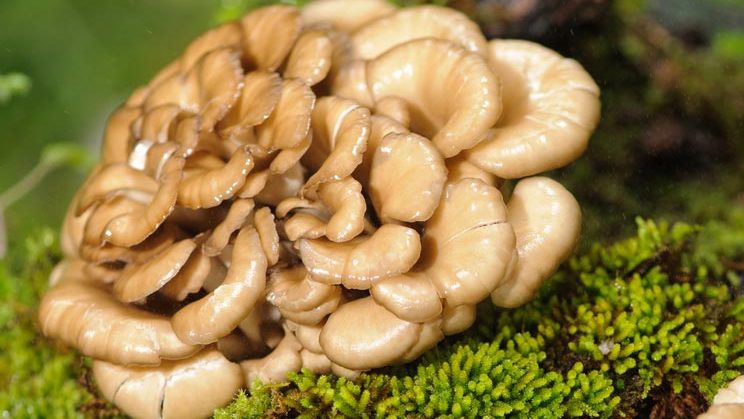

For centuries, certain mushroom varieties have occupied an almost mythical place in traditional medicine across Asia — revered not just as food, but as cognitive enhancers long before neuroscience had the tools to explain why. Now, modern research is beginning to catch up with what ancient practitioners seemed to instinctively understand. A growing body of scientific evidence suggests that regularly eating a specific type of mushroom – one already found in grocery stores and health food shops – may do something remarkable: meaningfully improve memory and slow the kind of cognitive decline that millions of aging adults quietly dread.
The findings aren’t coming from fringe wellness blogs or supplement companies with something to sell. They’re emerging from peer-reviewed research conducted at respected institutions, with results compelling enough to make neuroscientists take notice. What’s particularly striking isn’t just that this mushroom appears to support brain health – it’s the mechanism by which it does so, stimulating the production of a protein critical to the growth and maintenance of neurons.
Two of the three groups in a clinical trial ate mushrooms every day for 18 weeks. Only one group’s memory improved. The mushrooms were botanically identical in species – both maitake, both consumed in the same amount, baked into the same bread. The only difference was the strain.
That finding, from a 2026 study published in the Journal of Nutritional Science and Vitaminology, upends a common assumption in food-as-medicine research: that if a food works, any version of it will do. For maitake mushrooms, the evidence now points in a more precise direction, and the implications for how we think about diet and brain aging are worth taking seriously.
Maitake (Grifola frondosa) has been eaten across East Asia for centuries, prized for its fan-shaped clusters and earthy, savory flavor. It already had a credible track record in immunology and metabolic health research. What it lacked, until this year, was controlled human evidence that it could do something measurable for the aging brain. That gap has now been partly filled, though researchers are careful about how much they claim.
The Trial That Made the Difference
The researchers conducted a randomized, double-blind, placebo-controlled trial over 18 weeks, targeting 47 healthy Japanese adults aged 60 or older. They were affiliated with Yukiguni Factory, a Japanese food and mushroom producer, alongside academics from Kobe Pharmaceutical University and Shimane Rehabilitation College.
Participants were divided into three groups: two groups consumed bread containing 50 grams of maitake mushroom paste, using either the Y10M or C5304 strain, and a third group received identical bread with no mushroom content. Cognitive performance was measured using the Montreal Cognitive Assessment (MoCA), a widely validated screening tool that tests multiple domains including memory recall, attention, and executive function.
The Y10M group showed a significant improvement in cognitive assessment based on the MoCA score compared to the placebo group after the intervention. However, no difference was observed in MoCA scores between the C5304 group and the placebo group. Daily mushroom consumption alone wasn’t the deciding factor. Which mushroom, specifically which strain, mattered enormously.
No participants discontinued the intervention due to adverse effects in any group, making this one of the few mushroom-cognition trials with a clean safety record across all arms.
Why Strain Matters: The Biology Behind the Mushroom Memory Boost
The fact that one maitake strain produced a measurable mushroom memory boost while another produced none points to something researchers have long suspected but rarely been able to demonstrate cleanly in humans: bioactive compounds vary significantly between strains of the same species.
The activity of natural killer (NK) cells, a type of immune cell, was significantly augmented in the Y10M group and positively correlated with MoCA scores. NK cells are part of the innate immune system, meaning they respond rapidly without needing prior exposure to a pathogen. Their relevance to brain health is less obvious than it might seem from an immune-function angle.
NK cells may help clear amyloid-beta, the protein whose accumulation is closely associated with Alzheimer’s disease, by supporting microglial function – the brain’s resident immune cells. The maitake polysaccharides in Y10M bread may stimulate this pathway, though the authors are careful to note that the precise mechanism remains unconfirmed.
Two compound families in maitake provide plausible biological pathways. First, beta-glucans: grifolan, a gel-forming beta-glucan derived specifically from Grifola frondosa, has been commercialized in Asia as an immunostimulant and is thought to be one of the key drivers of maitake’s immune-modulating effects. Growing research into fungal compounds has begun to illuminate how mushroom-derived polysaccharides, including beta-glucans, interact with the immune system in ways that extend well beyond their traditional associations.
Second, ergothioneine, an amino acid produced by fungi, is found in particularly high concentrations in mushrooms. Crucially, low blood ergothioneine levels correlate with cognitive decline and dementia in older adults, suggesting that dietary intake through mushrooms may help maintain the protective reservoir. Whether Y10M maitake is richer in ergothioneine than C5304 hasn’t been directly established, but the divergent cognitive outcomes between strains at least raise the question.
What the Broader Research Landscape Shows
The maitake trial doesn’t sit in isolation. Multiple lines of evidence, observational, longitudinal, and now one controlled trial, are pointing toward mushrooms and memory function.
A 2026 study in Food & Function tracked 3,162 Japanese adults over a mean follow-up of more than 10 years and found that regular mushroom consumption may enhance short-term and working memory in middle-aged and older adults. The benefits were most pronounced at moderate to high intake levels. This was an observational study, so it can’t establish causation, but its scale and follow-up duration make it hard to dismiss as coincidence.
A 2024 epidemiological study in Nutrients using data from the EPIC-Norfolk cohort adds depth. Drawing on an 18-year dietary tracking period across more than 5,000 participants, researchers found that mushroom consumers displayed better cognitive performance than non-consumers across multiple cognitive domains, with those eating one or more portions per week showing the highest cognitive scores, a dose-dependent relationship.
According to the WHO, 57 million people were living with dementia worldwide in 2021, with nearly 10 million new cases diagnosed annually. Global projections suggest that number could reach 139 million by 2050 if current trends continue. Against that backdrop, any accessible dietary approach that might slow cognitive aging deserves rigorous attention.
The maitake study authors frame their findings in that context. The study suggests that consumption of maitake mushrooms may help inhibit the decline in cognitive function in healthy older individuals, specifically the progression from normal cognition into the territory of mild cognitive impairment, a precursor state to dementia. That framing is deliberate: the trial enrolled healthy adults, not those already showing cognitive symptoms, which is exactly the population where prevention has the most leverage.
The Limits of What We Know
The study was published April 30, 2026 in the Journal of Nutritional Science and Vitaminology and, by the authors’ own description, represents the first controlled evidence of this kind. That’s significant, and also a reason to hold conclusions lightly.
The sample of 47 adults is small. All participants were healthy Japanese adults aged 60 and over, a specific demographic that may not reflect the broader global population, given differences in baseline diet, gut microbiome composition, and overall mushroom consumption patterns. The authors note the limitations including small sample size and call for larger, longer-term studies to confirm findings.
The strain specificity finding, that Y10M worked and C5304 didn’t, is scientifically interesting but practically thorny. Maitake mushrooms sold in grocery stores or supplement form are rarely labeled by strain. A consumer buying maitake powder today has no reliable way to know whether it more closely resembles Y10M or C5304. Supplement marketing tends to run ahead of that kind of detail.
Read More: 6 Dietary Habits That May Lower Dementia Risk Even Before Memory Problems Begin
What to Do Now
The most defensible dietary takeaway from this body of research is simply to eat more mushrooms, regularly, and in meaningful amounts. The dose in the maitake trial was 50 grams of fresh maitake daily, incorporated into bread. That’s roughly the size of a small fist of mushrooms, an achievable target for most adults. The longitudinal Japanese study found benefits most pronounced at moderate to high intake measured in grams per day, not in occasional servings.
Fresh or lightly cooked maitake is the most direct way to consume what was used in the trial. Maitake is widely available in Asian grocery stores and increasingly in mainstream supermarkets, usually sold in frond-like clusters. If fresh maitake isn’t accessible, other edible mushrooms, shiitake, oyster, cremini, contribute to the same broad dietary pattern associated with cognitive benefit in observational research, though none yet have a controlled human trial specifically for memory of this kind.
Anyone already at risk for cognitive decline, or with a family history of dementia, should raise the topic of diet with their physician or a registered dietitian before making significant changes. The evidence here is encouraging and biologically coherent, but no single food, however well-studied, substitutes for a comprehensive approach to brain health that includes sleep, physical activity, and cardiovascular risk management. What this trial adds is something more precise than most: a specific mushroom, a specific strain, a specific measurable outcome. That kind of granularity is rare in nutritional research, and it’s worth watching closely as the follow-up work unfolds.
Disclaimer: This information is not intended to be a substitute for professional medical advice, diagnosis, or treatment and is for information only. Always seek the advice of your physician or another qualified health provider with any questions about your medical condition and/or current medication. Do not disregard professional medical advice or delay seeking advice or treatment because of something you have read here.
AI Disclaimer: This article was created with the assistance of AI tools and reviewed by a human editor.