
On September 6, 2025, fifteen undersea cables were cut in the Red Sea simultaneously – an event so precise it looked coordinated, not accidental. Within hours, a quarter of all internet traffic moving between Asia and Europe had gone dark. Most people who noticed blamed their router.
To restart the modem, check the Wi-Fi settings, assume the problem is local – that impulse makes sense because most outages are local. But the thread connecting your home broadband to a fiber optic cable lying on the ocean floor is thinner and more fragile than almost anyone has reason to imagine. The electrical grid feeding the infrastructure that keeps that connection alive is under unprecedented strain, with the U.S. Department of Energy issuing more than 40 emergency orders since May 2025 to force aging power plants to stay online past their retirement dates – a stopgap that reveals just how fragile the supply picture has become. The question of whether a major, prolonged internet outage is coming isn’t really in dispute among people who watch these systems for a living. The question is whether you’ll be ready when it does.
Internet outage preparation isn’t about stockpiling MREs in a bunker. It’s about closing specific, practical gaps that most households have never thought to close.
1. Understand Why Internet Outage Preparation Is Becoming Urgent
The numbers behind internet reliability have been deteriorating. According to the Cloudflare Radar 2025 Year in Review, 174 major internet outages were observed around the world in 2025 – averaging more than three significant disruptions every week. That’s not a flicker here and there. That’s a global system under mounting pressure.
Power failures were the single largest driver, responsible for 45% of all outages in 2025, with global network outages rising 33.38% from January to May 2025 alone – from 1,382 to 1,843 incidents. And the underlying risk keeps growing: according to the American Society of Civil Engineers’ 2025 Infrastructure Report Card, 70% of U.S. transmission lines are 25 years or older, creating a vast aging infrastructure liability. Pile on top of that the NERC 2025 Long-Term Reliability Assessment, which projects that summer peak electricity demand will grow by 224 gigawatts – a 69% increase over 2024 projections – driven primarily by new AI data centers pulling enormous loads from a grid not designed to handle them.
The next time your internet goes out, it may not come back in twenty minutes. Knowing the scale of the risk is the first step in taking internet outage preparation seriously enough to actually act on it.
2. Keep Physical Cash at Home

During the October 20, 2025 AWS outage – a DNS failure in Amazon’s northern Virginia data center that paralyzed more than 3,500 companies across 60+ countries – payment terminals, banking apps, and digital wallets all failed at once for millions of users. Cash didn’t.
Emergency management professionals consistently flag cash access as one of the most overlooked elements of outage preparation. When the internet goes down, digital payment infrastructure typically goes with it. ATMs may be offline. Bank apps won’t load. Concerns about cyberattacks, power outages, and banking disruptions have made access to physical cash more critical, and relying on digital transactions alone could leave families exposed during a crisis.
The practical guidance is simple: keep a few hundred dollars in small bills – fives, tens, twenties – somewhere accessible at home. That amount covers groceries, fuel, and basic supplies for several days without any internet access required. Review the amount every six months and adjust for inflation.
3. Build a Communication Plan That Doesn’t Depend on the Internet

Text messages often route through different pathways than internet-dependent apps, making SMS more reliable than WhatsApp or iMessage when data networks are congested or down. But if the cellular towers lose power, even SMS fails.
FEMA recommends downloading the FEMA app to receive real-time weather and emergency alerts – but that’s only useful if you’ve done it before the outage. More durably, a battery-powered or hand-crank NOAA weather radio gives access to emergency alerts and official communications without any cellular or internet signal at all. Every household should have at least one.
The rest of a communication plan is about coordination before an event, not during it. Establish in advance where family members will meet if phones are down, which out-of-state contact will serve as a relay point (it’s often easier to reach someone across the country than across town during a local disaster), and who is responsible for checking on neighbors or relatives with medical needs. Write it down. A plan that exists only in someone’s head and relies on being able to reach that person by phone isn’t a plan.
4. Stock a Power Backup That Can Keep Critical Devices Running
Power failures caused nearly half of all internet outages in 2025. That makes a backup power source one of the most targeted investments in internet outage preparation. But “backup power” covers a wide range depending on your needs and budget.
At the minimum end, a portable power station or high-capacity power bank can keep smartphones, a battery-powered router, and medical devices charged for 24 to 48 hours. These units cost between $100 and $400, require no installation, and charge off a standard outlet or solar panel. For longer outages, a generator is an option – but it must always be used outdoors, at least 20 feet from windows, doors, and vents, due to the risk of carbon monoxide poisoning.
If you or anyone in your household depends on electrically powered medical equipment – oxygen concentrators, CPAP machines, insulin refrigeration – backup power isn’t a comfort item, it’s a medical necessity. Identify those needs before an outage occurs, and discuss backup power options with your primary care provider or medical device supplier. The time to have that conversation is not during a blackout.
5. Store Enough Food and Water to Last at Least 72 Hours

When a grocery store’s point-of-sale system goes offline during an extended outage, the online delivery app won’t load, and the ATM outside is dark, food access becomes an immediate problem. FEMA’s emergency preparedness guidance recommends that every American household maintain a ready-to-go emergency supply kit, with a minimum of 72 hours of supplies as the baseline for a portable go-bag. For home storage, the agency recommends a seven-day to two-week supply.
Water is the most critical item: the human body can survive weeks without food but only about three days without water, and FEMA recommends storing at least one gallon per person per day for drinking and basic sanitation. Non-perishable foods – canned proteins, dried grains, shelf-stable nut butters – should be rotated every 12 months so nothing expires unused.
A manual can opener costs two dollars and becomes essential the moment the electric version is useless.
6. Prepare for Cyberattacks, Not Just Technical Failures
A growing share of internet disruptions trace back to deliberate attacks on infrastructure rather than hardware failures or weather events. Global network outages rose 33.38% from January to May 2025, rising from 1,382 to 1,843 incidents, and the threat picture driving that increase is increasingly intentional.
In May 2026, CISA issued guidance urging critical infrastructure operators to plan for major cyberattack scenarios, and the broader threat picture justifies that urgency. Russia-linked threat actors hit roughly 30 sites connected to Poland’s energy grid in a coordinated attack beginning in late December 2025, and CISA, the FBI, and EPA updated their joint warning in April 2026 about Iran-affiliated cyber actors targeting U.S. critical infrastructure. Meanwhile, the World Economic Forum’s 2026 Global Cybersecurity Outlook found that 64% of organizations are already factoring geopolitically motivated cyberattacks into their risk mitigation strategies.
For individuals, the preparation mirrors a standard outage plan – backup power, stored supplies, offline communication tools. The additional layer is cyber hygiene: keeping devices patched and updated, enabling two-factor authentication on financial accounts, and knowing which institutions have a phone-based fallback when their digital services go down. A bank that can be reached by phone and has branch locations you can visit physically is meaningfully more resilient for you than one that operates entirely through an app.
You can read more about how blackout risks vary by state – including which U.S. regions face the highest grid stress heading into peak demand season.
7. Back Up Your Most Critical Digital Documents Offline
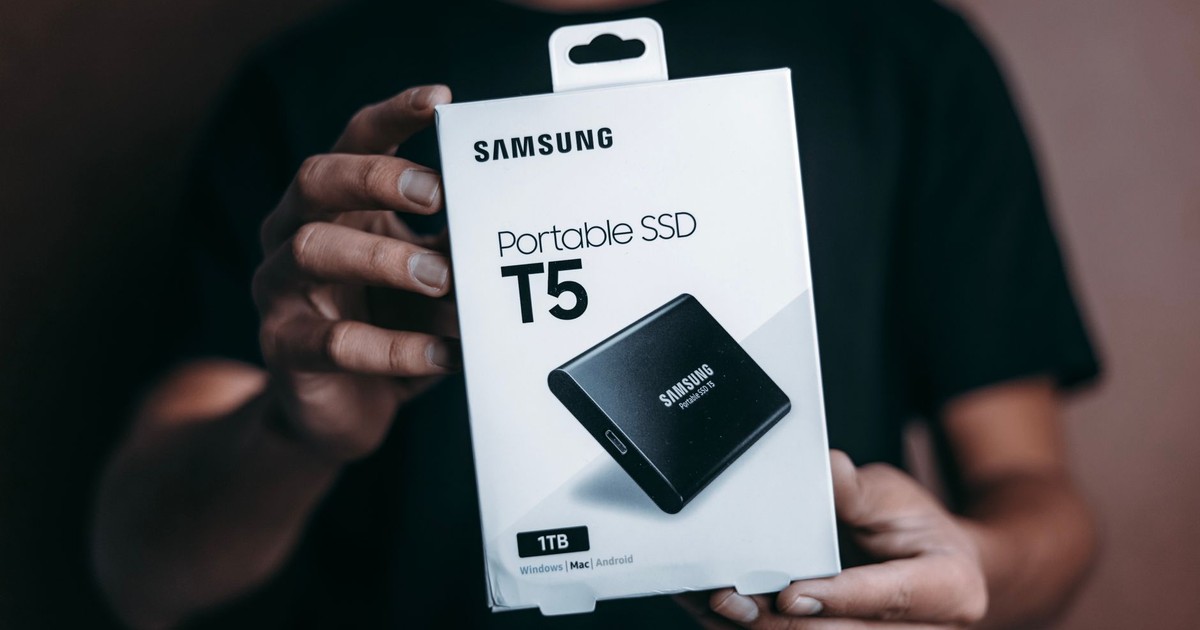
When connectivity disappears, so does access to cloud storage, email inboxes, and digital wallets. Documents you may suddenly need – insurance policies, prescriptions, medical records, government IDs, property deeds – live in those places for most people. If the internet is down for three days during a disaster, none of those documents are reachable.
FEMA recommends keeping important documents in a waterproof container, but security experts suggest going further: scanning everything – IDs, insurance policies, medical records, prescriptions – and storing copies on an encrypted USB drive as well as a secure cloud account. Physical printed copies in a fireproof, waterproof box at home remain the most reliable fallback when all digital systems are unavailable.
The same logic applies to contact information. Most people couldn’t recite five phone numbers from memory because those numbers live in a phone. If the phone dies or the network goes down, a printed list of key contacts – family, doctor, insurance provider, employer – taped inside a kitchen cabinet costs nothing and solves a real problem.
Read More: Blackout risks by state
What to Do Now
With 174 major outages recorded worldwide in a single year, more than half of organizations reporting outage costs exceeding $100,000, and power failures driving nearly half of all disruptions, the pattern is clear: these events are frequent, expensive, and increasingly tied to causes – aging grids, cyberattacks, undersea cable damage – that no individual can control. What individuals can control is how exposed they are when one happens.
Start with the two gaps most likely to cause immediate harm: no cash and no backup power. Those two items cover a majority of the practical problems that emerge in the first 24 hours of a serious internet or power outage. Then work through the rest – stored water, a communication plan, offline documents, a battery-powered radio – over the following weeks. FEMA’s guidance is to aim for at least a 72-hour portable kit and a seven-to-fourteen day home supply, because after a major disaster, emergency responders may not reach you for several days. That window is the one worth preparing for.
Disclaimer: This information is not intended to be a substitute for professional financial advice, investment advice, tax advice, or legal advice, and is provided for informational purposes only. Always seek the guidance of a qualified financial advisor, accountant, or other licensed professional regarding your personal financial situation or investment decisions. Do not make financial, investment, or tax decisions based solely on information presented here. Past performance is not indicative of future results, and all investments carry risk, including the potential loss of principal.
AI Disclaimer: This article was created with the assistance of AI tools and reviewed by a human editor.