

Most people in a group conversation focus on the person speaking. Someone with neurodivergent traits is more likely to track the person who hasn’t spoken in twenty minutes – the one sitting slightly apart, smiling on cue, but whose shoulders haven’t relaxed since they sat down. It happens automatically, before any conscious decision to look.
This kind of noticing has a neurological basis. In autism, heightened sensory processing may have originally been adaptive for environmental monitoring, while detail-focused cognition can catch things that rapid task-switching brains routinely miss. The result is a person who absorbs more raw information from any given room – not in a dramatic, hyper-attentive way, but steadily, the way background noise registers at the edge of your awareness even when you’re not trying to hear it.
For ADHD, the picture is different but overlapping: dopaminergic systems built for immediate-reward environments, combined with rapid attention shifting, create brains that are often scanning for change rather than settling into a single focus. Whether the brain leans autistic, ADHD, dyslexic, or some combination, the filtering system works differently – and what gets through is often the detail everyone else filed away as background.
1. The Person Who Feels Left Out Before Anyone Says a Word

In a group setting, most people track the conversation. A person with neurodivergent traits tracks the room. Heightened sensory processing means more data is being taken in – not just from the speaker, but from every other person present simultaneously. The quiet friend who hasn’t connected, the colleague whose laugh came a beat too late, the family member whose posture shifted the moment a certain name came up – these are things that land differently when the brain doesn’t automatically filter them out.
Neurodivergent people may find social cues challenging because they often depend on subtle, context-specific signals – body language, proximity, mirroring, gestures, posture, vocal tone, and facial expressions. But the challenge isn’t necessarily that the signals are invisible. For many neurodivergent individuals, it’s that they’re all visible, all at once, often without a reliable map for what each combination means. That overload produces something paradoxical: a person who misses the broad social script but catches the small human moment underneath it.
Neurodivergent people are frequently the first to check in on the person sitting quietly at the edge of a gathering – not through social intuition in the traditional sense, but through raw observation that bypassed the usual filters.
2. Sensory Details That Others Genuinely Don’t Register
The flickering of an overhead light. The faint chemical smell in a newly painted room. The specific pitch of a phone buzzing three tables away. For many people, these things dissolve into the background within seconds. For many neurodivergent individuals, they don’t dissolve at all.
Sensory processing differences in autism are recognized as a core feature of the condition across peer-reviewed research, and the numbers reflect how common this is. Between 74% and up to 97% of autistic individuals show sensory processing differences, depending on the measurement method used – a 2022 population-based study of 25,627 autistic children found 74% had documented sensory features, while a 2025 state-of-the-art review in Brain Sciences found the upper range reaching 97%.
These differences aren’t a dysfunction of the sensory organs themselves. Atypical sensory processing is a common clinical observation in autism spectrum disorder, with neural hyperexcitability suggested as the cause for sensory hypersensitivity. The ear, the eye, the skin – they work. The brain’s calibration of what to amplify and what to suppress is simply set differently. That calibration picks up what gets filtered out for most people, including environmental details that turn out to matter more than the average person realizes.
3. Patterns and Inconsistencies in What People Say Versus What They Do

When someone says they’re fine but can’t quite meet your eyes, most people accept “fine.” A person with neurodivergent traits often can’t let it go – not because they’re suspicious, but because the inconsistency between the verbal signal and everything else registers as a mismatch that demands resolution.
For neurodivergent individuals, pattern recognition can be heightened, specialized, or overwhelming. This extends beyond visual environments to social ones. The same mental process that compels a pattern-sensitive brain to notice the one wrong tile in a symmetrical floor also notices the one word in a sentence that lands at the wrong emotional frequency. Social cues can be more important than what people are actually saying when it comes to interpreting social situations, and a brain that processes patterns intensely tends to give significant weight to the gaps between what’s said and what’s expressed non-verbally.
The neurodivergent brain may process multiple types of input simultaneously, making distinctions between them extraordinarily difficult – but also unusually rich. Catching that a person’s story changed slightly between Monday and Thursday isn’t necessarily a skill someone consciously developed. For many neurodivergent people, it’s what their brain does by default.
4. When the “Vibe” of a Room Shifts Before Anyone Can Name It

Before someone announces there’s a problem, the tension is already somewhere in the air. A neurodivergent person is often the one who felt it first – who went quiet, who got up to leave, or who said “something feels off” while everyone else was still relaxed.
Most people don’t register the seams on their socks or the hum of fluorescent lights. For a significant number of people – particularly autistic individuals, those with ADHD, and some with anxiety or trauma histories – sensory processing works differently, with profound effects on daily life. That extended range of sensory pickup applies to social environments as much as physical ones. A shift in how quickly someone is speaking, a drop in the usual background chatter, two people avoiding eye contact who usually don’t – these micro-signals combine into an overall read of “something changed,” sometimes before the neurodivergent person can articulate exactly what they noticed.
Hypervigilance and rapid attention shifting, which were adaptive for threat detection in ancestral contexts, become liabilities in contemporary sustained attention tasks – but in a moment where the social environment genuinely has shifted, that same rapid-scan capacity becomes a real and early warning system. The brain is doing what it was built for. The context just doesn’t always reward it.
5. Who in a Group Is Struggling – Even When They’re Performing Fine

People who are in quiet distress are often very good at concealing it. They show up. They contribute. They laugh. But there’s something slightly off in the timing of the laugh, or the effort visible behind an expression that should be effortless, or the way they volunteered for something they’d normally decline, as if they needed to feel useful.
Individuals with autism often exhibit remarkable attention to detail, focusing intensely on specific aspects of their environment and interactions. That granular attention to the specific over the general means small behavioral inconsistencies don’t get averaged away. A neurodivergent observer may register “she seems tired in a way that isn’t physical” well before anyone else does – and may not be able to fully explain why, which is itself a characteristic of this kind of noticing: it arrives ahead of its own explanation.
Key social cues include body language, proximity, mirroring, gestures, posture, vocal tone, and facial expressions. Most people track these consciously during conversations. A brain that’s already processing them automatically – even when conversation is happening somewhere else – has more data to work with when someone is quietly not okay. The friend who texts to check in out of nowhere, who happened to catch something nobody else was watching for, is often the person whose brain never quite stopped collecting.
6. The Unspoken Emotional Undercurrent in a Conversation – and Neurodivergent Traits That Catch It

Two people can have an entire conversation about logistics – scheduling, plans, who’s picking up the kids – while the actual subject of the conversation is something neither of them is willing to name out loud. The neurodivergent brain may process multiple inputs simultaneously, and social cues typically used to identify emotional intent may not register the same way – leading to different but often more literal processing of what’s being communicated.
That literalness cuts both ways. On one side, it can mean missing the unspoken subtext that neurotypical communication often runs on. Neurotypical brains process social subtext automatically, while neurodivergent brains often must manually decode body language and tone – which is effortful, but also precise. The manual decoding process tends to flag incongruities that automatic processing smooths over. When someone says “I’m not angry” and the room temperature has clearly dropped, the neurodivergent brain is less likely to accept the verbal statement as the full data set.
The “double empathy problem,” first articulated by Dr. Damian Milton in his 2012 paper in Disability & Society, reframes what was previously classified as a lack of empathy as a fundamental mismatch between two different social operating systems. Neither is wrong. But the person doing manual decoding is also doing something the automatic processor isn’t: actively reading every available input, not just the one being offered on the surface.
Read More: Science Finally Explains the Surprising Link Between ADHD and Creativity
7. When Someone Needs Help but Won’t Ask
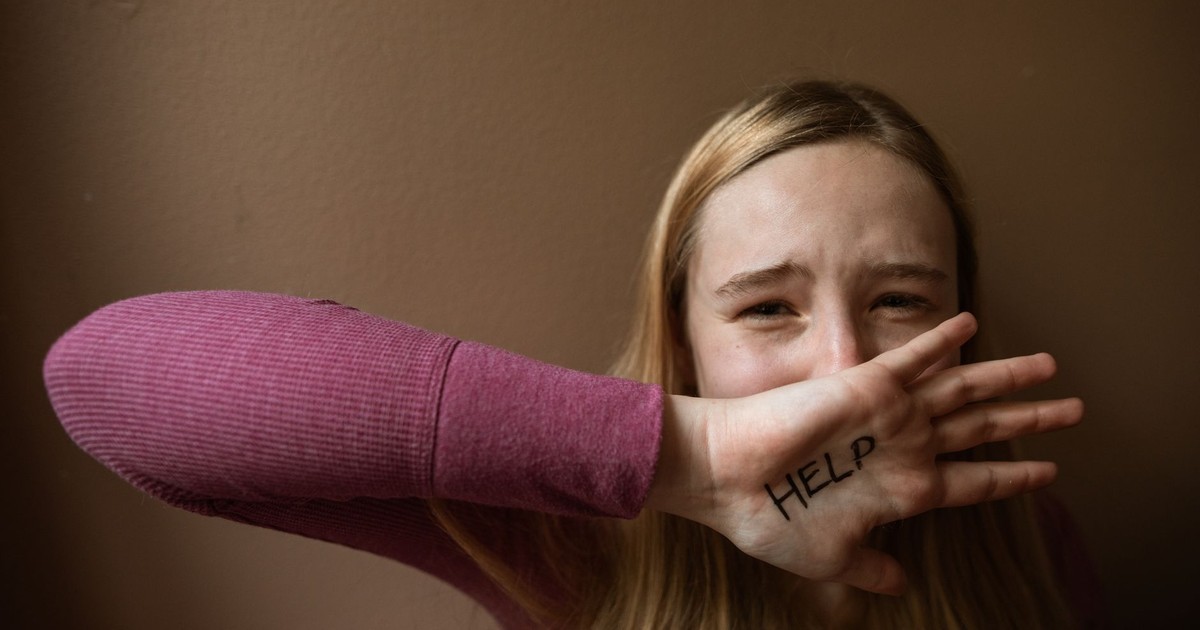
There’s a specific kind of person who would rather fail quietly than ask for assistance. They give every signal except the verbal one. Many autistic people report feeling overwhelmed by others’ emotions, absorbing distress or joy intensely – and this same emotional permeability that can be overwhelming in high-stimulation environments becomes a functional advantage in one-on-one moments where someone is struggling but hiding it.
A 2025 study published in BJPsych Open found that differences in social behaviors are common in young people with neurodevelopmental conditions, and that the long-standing hypothesis attributing those differences primarily to deficits in social cognition does not fully hold up. The person noticing that a colleague has been quieter for three days straight, that a friend declined a specific kind of invitation they’d normally accept, or that someone’s tone shifted slightly when a particular topic came up – that person isn’t operating from a social deficit. They’re operating from an unusually specific read of the humans around them.
Executive functioning skills often develop differently in neurodivergent individuals, which means that the same brain struggling to organize a to-do list may be simultaneously running a highly detailed model of who in the room needs checking on. The internal resource that was supposed to regulate attention toward tasks is, instead, quietly cataloging human behavior. The result is someone who often knows, before you’ve said anything, that you’re not okay.
What This Means for You

The seven traits above aren’t a diagnostic checklist, and noticing them in yourself doesn’t confirm anything clinical. ADHD and autism spectrum traits are distinct neurodevelopmental variants that exist on a spectrum rather than as fixed categorical disorders. Many people have some of these traits without ever receiving a formal diagnosis – and many who recognize themselves in this list have simply moved through the world with a nervous system calibrated differently from the majority.
A 2023 study in Scientific Reports found that developmental disabilities affect roughly 16.65% of U.S. children aged 3 to 17, and neurodivergent traits frequently extend into adulthood unrecognized. If you find yourself exhausted by social environments that others seem to tolerate easily, catching things nobody else mentions, or knowing something is wrong before you can explain why – those experiences aren’t imagination. They’re a consistent feature of how certain brains process the world.
Concrete next steps are available to anyone who recognizes these patterns. Speak with a psychologist or psychiatrist who specializes in adult neurodevelopmental assessments. Ask specifically about ADHD and autism spectrum evaluations – many adults with these traits have gone decades without a formal assessment simply because they were never referred. A diagnosis doesn’t change who you are. It can change how clearly you understand why you work the way you do – and give you practical language for the things you’ve always noticed that others missed.
Disclaimer: The information provided here is for educational and informational purposes only and is not a substitute for professional psychological, psychiatric, or mental health advice, diagnosis, or treatment. Always seek the guidance of a licensed mental health professional, therapist, psychologist, or psychiatrist with any questions or concerns about your emotional well-being or mental health conditions. Never ignore professional advice or delay seeking support because of something you have read here.
AI Disclaimer: This article was created with the assistance of AI tools and reviewed by a human editor.