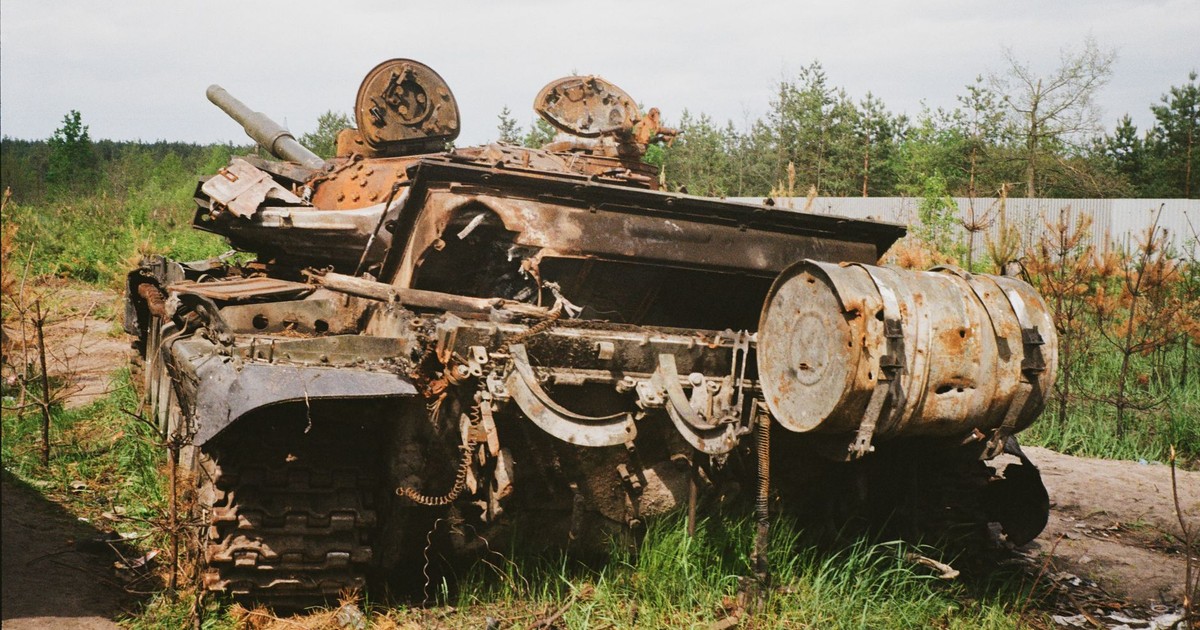

On July 9, 2026, Russian forces conducted live-fire weapons drills on Lake Peipus, a body of water that splits the border between Russia and Estonia, without notifying Estonian authorities in advance. Estonian Defense Minister Hanno Pevkur called the exercise “certainly not routine,” noting that Russia had not previously conducted weapons exercises on Lake Peipus. The lake is Europe’s fifth-largest, through which the border between Estonia and Russia runs.
The drills landed in the middle of a months-long pattern of Russian military and intelligence activity targeting the three Baltic states – Estonia, Latvia, and Lithuania – that analysts, diplomats, and NATO itself have been watching with mounting alarm. For the first time in years, serious voices in Western security circles are asking whether Russia’s pressure on these NATO members could tip from provocation into something far harder to walk back.
Moscow has been building its case for confrontation one incident at a time. Russia’s foreign ministry has accused Estonia, Latvia, and Lithuania of assisting Ukraine in Kyiv’s campaign against Russian oil terminals, blaming them for allowing the use of their airspace by Ukrainian forces. Russian Foreign Ministry spokesperson Maria Zakharova warned the Baltic states that they had “received an appropriate warning,” adding: “If the regimes of these countries have enough sense, they will listen. If not, they will have to deal with a response.” All three Baltic states have repeatedly rejected these accusations as disinformation.
Russia Invades Countries Through the Back Door: Hybrid Warfare Comes First
The pattern of how Russia invades countries – or at least softens them up before conventional military action – rarely begins with tanks. In the Baltic states, the threat has so far taken the shape of active hybrid operations, with Estonia, Latvia, and Lithuania building physical border defenses including walls and bunkers along their frontiers with Russia.
Lithuania, Latvia, and Estonia together have a combined population of about 6 million, compared with Russia’s 143 million – a demographic asymmetry that makes the security calculus particularly stark. Their response has been to lean hard into alliances and fortification. Workers in Lithuania have been digging anti-tank ditches, pouring concrete bunkers, and erecting rows of dragon’s teeth – pyramid-shaped concrete obstacles designed to stop armored vehicles – along the border with Russia.
Intelligence services have been tracking a coordinated sabotage campaign running in parallel. According to a 2026 security assessment by Crisis24, a private-sector geopolitical intelligence firm, Russia will continue expanding hybrid operations into kinetic sabotage and targeted attacks in Latvia, Lithuania, and Estonia through late 2026, with strong indications that Moscow-engineered activity has already escalated from cyber and influence operations to kinetic sabotage and targeted assassinations. The arrests that came in April of this year put faces to the threat. On April 27, 2026, Lithuanian authorities charged a network of 13 individuals from several countries over two attempted murders in Vilnius that police linked to Russia’s GRU military intelligence agency, with Lithuania’s criminal police chief Saulius Briginas confirming the suspects acted in the interests of the GRU.
Drone activity has compounded the threat from multiple directions. Stray Ukrainian drones targeting Russian oil export infrastructure have repeatedly crossed Baltic airspace – a byproduct of Russia’s own jamming efforts deflecting Kyiv’s strikes. A recent assessment from the International Institute of Strategic Studies found that Russia likely used shadow fleet ships to launch drones over Europe that disrupted civilian aviation between 2024 and 2026, while the Baltic region is also under additional strain from stray Ukrainian drones as Ukraine has ramped up attacks on Baltic Sea ports used for Russian energy exports. On May 19, 2026, a Ukrainian drone strayed into Estonian airspace and was shot down over a marsh near Kablaküla by a Romanian F-16AM Fighting Falcon jet on Baltic Air Policing duty. Earlier, on March 25, a drone arriving from Russian airspace struck the chimney of the Auvere power plant in northeastern Estonia, though no one was injured and the electricity grid was not damaged.
In mid-May, Latvian Prime Minister Evika Siliņa resigned over the government’s handling of multiple incidents involving stray drones suspected to be from Ukraine crossing into Latvian territory. In March and May 2026, suspected Ukrainian drones also crossed into Latvia from Russia, with one exploding at an oil storage facility in the eastern city of Rezekne.
Drones Launched From the Shadows
The drone threat isn’t entirely an accidental spillover from Ukraine. A recent assessment from the International Institute of Strategic Studies found that Russia likely used shadow fleet ships to launch drones over Europe, repeatedly disrupting civilian aviation between 2024 and 2026. Shadow fleet vessels are commercial ships Russia uses covertly to circumvent Western sanctions and, increasingly, as platforms for clandestine military operations. A 2026 intelligence report documented 144 suspected drone sightings across NATO member countries, including Germany, France, and Denmark, with findings suggesting the drones were likely launched from Russian shadow fleet vessels operating in the Baltic Sea.
Denmark got an early taste of how serious the problem was becoming. Danish Prime Minister Mette Frederiksen described drone incidents linked to Russian shadow fleet ships – which triggered airport closures in 2025 – as the most serious attack on Danish critical infrastructure in recent memory.
The overall picture has drawn reaction from Washington. US Secretary of State Marco Rubio described Russia’s escalating campaign against the Baltic states as deeply concerning, saying: “You always worry that something like that can spark into something bigger.” The remark captures a fear that individual provocations – each calibrated to stay just below the threshold of a formal Article 5 NATO response – could accumulate into a crisis no one planned for.
Kaliningrad: The Missile Problem Next Door
Any assessment of Russian military pressure on the Baltics has to account for Kaliningrad, Russia’s isolated exclave wedged between Poland and Lithuania on the Baltic coast. The Iskander-M ballistic missile, which Russia stations in Kaliningrad, carries an operational range of up to 500 kilometers, placing six NATO countries within reach: Poland, Germany, Sweden, Latvia, Lithuania, and Estonia.
During the Zapad-2025 military exercises last September, Russia deployed Iskander-M systems in the Kaliningrad region as part of the Russian-Belarusian drills, positioning the missile launchers in the direction of Warsaw. The message to NATO was deliberate. With Iskander units positioned in Kaliningrad, experts warn that NATO’s most vulnerable point remains the Suwałki Gap – a narrow 65-kilometer corridor connecting Poland and Lithuania – which could be severed early in any conflict, cutting the Baltic states off from allied reinforcement.
Russia is also reportedly developing a longer-range version of the missile. In January 2025, Russia announced it would begin manufacturing an extended-range Iskander-1000 ballistic missile with a reach of up to 1,000 kilometers and deploy it in Kaliningrad – the enclave that borders Lithuania and Poland. At that range, much of Western Europe comes within striking distance.
What Russia Actually Has on the Ground
Despite the alarming drumbeat of provocations, military analysts urge a clear-eyed look at Russia’s current conventional capacity. Researchers at Harvard’s Belfer Center have warned that while a large conventional offensive aimed at the Baltics remains a serious planning scenario, it would require a fast-moving, high-intensity conflict against the full alliance – a scenario that becomes significantly more likely if Putin perceives NATO’s unity as fragile. Estonia’s Foreign Intelligence Service has reported that Russian garrisons directly behind the borders of Estonia, Finland, Latvia, and Lithuania are “mostly empty,” with Russia having deployed those forces to Ukraine.
A 2026 analysis by the European Council on Foreign Relations estimated that Russia could cobble together roughly 15,000 ground personnel and 90 to 100 fighter aircraft for a conventional invasion of Estonia – and the actual figure is likely significantly more modest. That’s a far cry from the kind of force needed to overrun three NATO states simultaneously.
The longer-term picture is more sobering. The Carnegie Endowment for International Peace concluded in a 2026 analysis that Russia is poised to emerge from the war with Ukraine less secure, more resentful, and more threatening to Europe than before the conflict began. Russia is expanding military infrastructure near its borders with NATO members and could eventually station approximately 115,000 personnel along its northern and Baltic frontiers once fighting in Ukraine winds down. That timeline gives NATO a window – but not an indefinite one.
Read More: Revealed: The 6 Most Dangerous Places if World War 3 Erupts
NATO’s Answer on the Eastern Flank
As of June 2026, NATO has maintained enhanced Forward Presence battlegroups integrated into its command structure across the eastern flank – multinational formations designed to signal allied resolve and slow any Russian advance long enough for reinforcements to arrive. Nine such battlegroups were in place as of mid-2026, with Canada planning to complete the full implementation of a persistently deployed brigade capability in Latvia by the end of 2026, contributing up to 2,200 Canadian troops.
The alliance also moved quickly after a string of attacks on undersea infrastructure in the Baltic Sea. In January 2025, NATO launched the enhanced vigilance activity known as Baltic Sentry, specifically in response to incidents targeting critical undersea infrastructure in the Baltic Sea. Cables, pipelines, and data links connecting the Baltic states to the rest of Europe have become soft targets in Russia’s shadow war.
NATO Secretary General Mark Rutte has been unambiguous about the alliance’s commitment. Rutte stated that allies’ commitment to Article 5 – the mutual defense clause – is “ironclad,” and that the alliance’s resolve and ability to defend every ally is “absolute.”
For now, that guarantee is what stands between Baltic sovereignty and an emboldened Kremlin. A 2025 Lithuanian public opinion poll found that 76 percent of respondents believed Russia poses hybrid threats to their country, and the Lithuanian foreign minister has stated that severe escalation or outright war remains a real possibility – even if it is not seen as imminent.
The Stakes in Plain Terms
The Baltic states have long operated on a historical axiom: “To be alone is to be dead.” Determined not to repeat the mistakes of neutrality made in the 1930s, Estonia, Latvia, and Lithuania have structured their entire security around a dual guarantee – NATO and the European Union. That doctrine is being stress-tested in real time.
The July 9 live-fire exercise on Lake Peipus was, in one reading, a modest military drill. In another, it was Russia reminding Estonia – and every NATO ally watching – that it can act on its borders without warning or explanation. Combined with an active sabotage network, drone overflights, Iskander missiles in Kaliningrad, and the prospect of over 100,000 troops redeploying to the Baltic frontier after Ukraine, the pressure is cumulative and calculated. As the Carnegie Endowment for International Peace noted in its 2026 analysis, as long as Russia’s war with Ukraine continues, a direct attack on another European country remains unlikely – but an unexpected crisis or miscalculation could change that calculation rapidly, just as the full-scale invasion of Ukraine itself was a miscalculation. The European Commission has stated it is monitoring the situation closely, with a spokesperson affirming that “an attack on one of our member states is an attack on the European Union as a whole.” Whether that unified resolve deters Moscow before the next provocation crosses a line that can’t be walked back is the defining question facing Europe’s security order in 2026.
AI Disclaimer: This article was created with the assistance of AI tools and reviewed by a human editor.