

The last time the United States tried permanent daylight saving time, public approval collapsed within two months. When Congress put the country on year-round clocks in January 1974, support stood at 79%. By February, it had fallen to 42% – because people quickly realized the sun wouldn’t rise until 8 a.m. or later in the middle of winter, and as late as 9:30 a.m. in some parts of the country.
That experiment lasted less than two years. Now, more than five decades later, Congress is trying again. The Sunshine Protection Act, which would allow states to make daylight saving time permanent, passed the House in a 308-117 floor vote – a day after clearing the House Rules Committee. The measure has bipartisan support and the backing of President Donald Trump, and would allow states to make daylight saving time permanent, with the option to opt out. The Senate is next, and its outcome is far from certain.
The debate sounds simple on paper – just stop changing the clocks – but the practical consequences depend heavily on where you live, what time you wake up, and how much your health is tied to natural morning light. The effects in Florida look nothing like the effects in Minnesota, and the same hour that gives one city a pleasant evening sunset could push another city’s sunrise dangerously close to 9 a.m.
1. Northern States Face the Darkest Mornings Under Permanent Daylight Saving
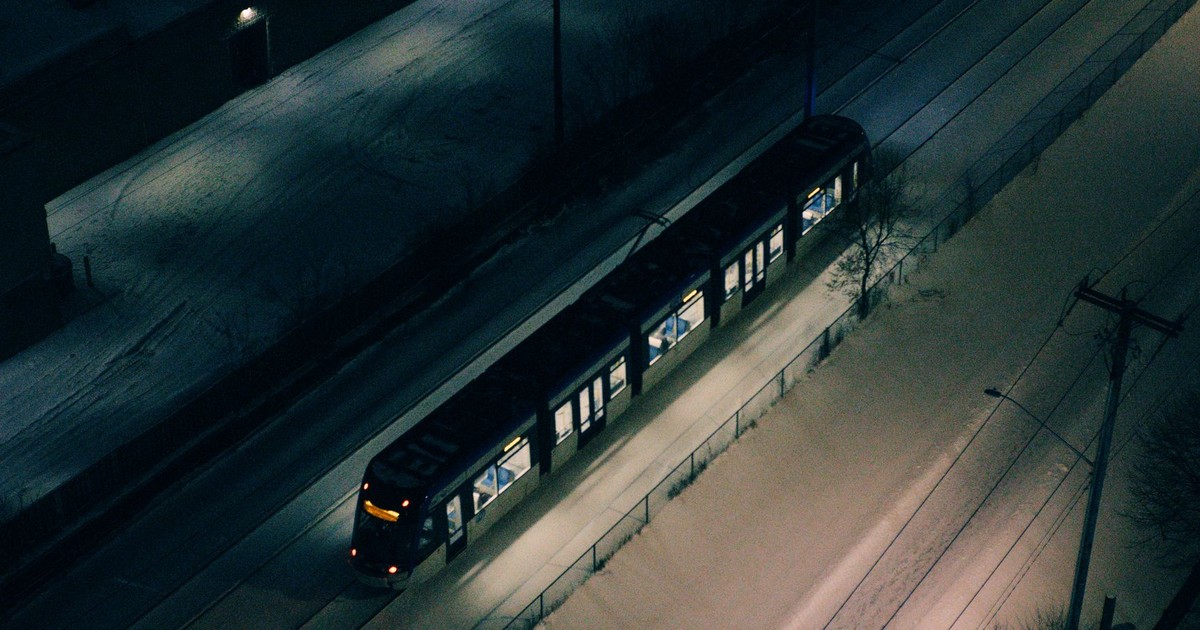
Permanent daylight saving is not an evenly distributed change – and nowhere would feel it more sharply than the northern tier of the country. Winter sunsets in much of the U.S. would occur after 5 p.m., but sunrises would largely happen after 8 a.m., and in some areas after 9 a.m.
In a floor speech opposing the Sunshine Protection Act, Sen. Tom Cotton of Arkansas cited specific winter sunrise times that would result from permanent daylight saving: the sun wouldn’t rise until nearly 9 a.m. in Seattle, as late as 9:15 a.m. in Grand Rapids, and as late as 9:45 a.m. in Williston, North Dakota. In the northern Midwest, that scenario is not hypothetical – under permanent daylight saving time, some areas could see sunrises past 9:30 a.m. during the winter solstice.
According to Newsweek, residents of Miami would see the sunrise a little after 8 a.m. on a mid-January morning, while New Yorkers would see their sunrise jump from about 7:18 a.m. to 8:17 a.m. local time – gaining an extra hour of evening daylight, with sunset shifting to just before 6 p.m. rather than just before 5 p.m. For New England, the numbers are even more striking. In parts of northern Maine, sunrise could approach 9 a.m. on the darkest mornings of the year under permanent daylight saving time. Anyone living above the 42nd parallel would face mornings with no sunlight well into the work and school day, for months at a stretch.
2. Southern States Get the Best of the Deal
Geography shapes this policy more than politics does. The closer a state sits to the southern edge of the continental U.S., the less dramatic the change – and in many cases, the more favorable. According to the National Conference of State Legislatures, 19 states have already enacted measures to provide for year-round daylight saving time if Congress allows it: Alabama, Colorado, Delaware, Florida, Georgia, Idaho, Louisiana, Maine, Minnesota, Mississippi, Montana, Oklahoma, Oregon, South Carolina, Tennessee, Texas, Utah, Washington, and Wyoming.
Florida, which sits at a lower latitude, stands to gain more usable evening light while experiencing comparatively modest delays in sunrise. That’s precisely why Rep. Vern Buchanan of Florida authored the current legislation – CNN reported that the bill’s Florida origins reflect the state’s outsized enthusiasm for the change. Federal law currently allows states to opt out of daylight saving time and remain on standard time, as Arizona and Hawaii do, but it does not allow states to adopt permanent daylight saving time on their own. That is why congressional action is needed before any of those 19 state laws can take effect.
For southern-tier residents, the shift would mostly mean sunsets extending past 7 p.m. in winter – a significant quality-of-life improvement for anyone who currently watches the sun disappear before 5:30 p.m. The morning trade-off is real but far less severe than what northern states would experience. If you live in Texas or Georgia, the policy largely works in your favor.
3. Your Heart Pays a Price Every Spring – Until It Doesn’t Have To

One of the clearest arguments for ending the clock switch entirely – in either direction – is what happens to cardiovascular health in the days immediately following the spring transition. The collective loss of an hour of sleep on the second Sunday in March has been linked to more heart attacks and fatal traffic accidents in the ensuing days, a well-documented acute effect.
A University of Michigan study, led by the University of Michigan Frankel Cardiovascular Center, found a 24% increase in heart attacks on the Monday after the spring switch, compared to a 21% reduction the Tuesday after the fall change – a pattern that suggests the human heart is genuinely sensitive to even small disruptions in sleep. Changing clocks twice a year disrupts circadian rhythms – the body’s innate, roughly 24-hour clock that regulates sleep, hormone production, and many other physiological processes – leading to measurable increases in stroke risk and obesity rates. A Finnish study, cited by the American Heart Association, found the overall rate of ischemic stroke was 8% higher during the first two days after any daylight saving time transition.
Permanent daylight saving would eliminate those dangerous springtime transitions entirely. Whether the long-term misalignment between winter clocks and natural light creates a different set of chronic health costs is the question the research turns on – and the answer, as the sleep science section below shows, matters.
4. The Sleep Science Strongly Favors Standard Time
The American Academy of Sleep Medicine has criticized the idea of making daylight saving time permanent. While the AASM supports ending the biannual clock change, it advocates for making standard time permanent instead, arguing it would align best with people’s circadian rhythms and ultimately improve health and safety.
In a position statement published in January 2024 in the Journal of Clinical Sleep Medicine, the AASM states that permanent standard time is the optimal choice for health and safety. Their concern is rooted in how the human brain responds to morning light. Under permanent daylight saving, winter mornings would be darker for longer – and morning light is the primary signal the body uses to set its internal clock. A 2025 analysis published in the Proceedings of the National Academy of Sciences by Stanford Medicine researchers found that both permanent standard time and permanent daylight saving time would be healthier than continuing to switch twice a year – but those two options are not equally good for your health.
That Stanford research estimated that permanent standard time would prevent roughly 300,000 cases of stroke per year and result in 2.6 million fewer people with obesity. Permanent daylight saving would achieve neither outcome at the same scale. If sleep quality is your primary concern, the research is consistent: standard time wins. If stopping the twice-yearly health shock is the priority, either option is better than what we have now.
5. Roads Become More Dangerous Right After the Switch

The traffic data on daylight saving time is some of the most consistent in this entire debate. A University of Colorado Boulder study published in Current Biology found fatal crashes in the U.S. increase about 6% in the week after the switch to daylight saving time, analyzing more than 730,000 accidents over two decades. The mechanism is straightforward: people lose roughly 40 minutes of sleep on the night of the spring change, then drive to work in the dark.
Darker mornings compound the problem. Backers of the Sunshine Protection Act have argued that making daylight saving time permanent would reduce traffic accidents. That argument holds for the spring transition itself – but it cuts both ways for winter mornings. Under permanent daylight saving, children would wait for school buses and adults would commute to work in darkness for months in northern states, where sunrise could stay past 8:30 a.m. well into January and February. Many schoolchildren in those areas would make their way to school before the sun rises.
Eliminating the spring-clock shock removes a known, acute risk. Locking in darker winter mornings creates a sustained risk for pedestrians, cyclists, and school-age children – and researchers at the Insurance Institute for Highway Safety note that the road-safety effects of the two tradeoffs do not simply cancel each other out.
6. The Economy Absorbs a Hidden Annual Cost

A Chmura Economics analysis estimated the total economic cost of daylight saving time transitions at roughly $672 million annually across all U.S. metropolitan areas – a figure driven by lost productivity, scheduling friction, and healthcare costs linked to the transition period.
President Trump has argued in a Truth Social post that “hundreds of millions of dollars are spent every year by people, cities, and states, being forced to change their clocks.” That’s one side of the ledger. On the other side, a 2011 study from the National Bureau of Economic Research found that while daylight saving time does reduce electricity use for lighting, it increases overall energy consumption because of higher demand for heating and cooling – meaning the energy savings argument for the current system may be largely a myth.
Supporters of permanent daylight saving point to boosted tourism, longer retail hours in the evening, and outdoor recreation extending into the fall and winter. The biannual time change disrupts daily routines, inconveniences families and businesses, and no longer reflects the needs of a modern economy, while permanent daylight saving time would provide Americans with greater consistency and more usable daylight in the evening. For retail, hospitality, and recreation businesses in southern and coastal states, the longer-light argument carries real weight.
7. Religious and Cultural Communities Face Practical Disruptions

Later sunrises under permanent daylight saving time would have widespread impacts on Orthodox Jews who pray in the morning at a synagogue, since many morning prayer services are tied to sunrise time. In cities with large Orthodox communities – New York, Chicago, Baltimore, Cleveland – winter sunrises after 8:30 or 9 a.m. would push morning prayer services into working hours, creating conflicts that hundreds of thousands of observant families would need to navigate daily.
Orthodox Jewish law ties specific morning prayers (Shacharit) to the appearance of the sun, meaning the service times would shift with the clock whether communities wanted them to or not. The effect would be felt most sharply in the northern cities where the sunrise delay is most extreme.
Farmers, early-shift workers, and anyone whose schedule is tied to natural light rather than the clock face similar friction. The bill’s opt-out provision helps states decide, but it doesn’t resolve the daylight physics – a later sunrise is a later sunrise regardless of what the legislation says.
Read More: New Sunset, Sunrise Times in US if Daylight Savings Bill Passes
What This Means for You

The Sunshine Protection Act aims to permanently end the twice-annual changing of clocks and establish daylight saving time as the national standard. The bill must now pass the Senate, but it could mean the end of twice-yearly clock changes for good. Whether that’s a health win or a health loss depends significantly on your latitude.
If you live in the South, the consequences are mostly favorable: better winter evenings, modest changes to morning light, and the end of the twice-yearly health shock. If you live in the northern half of the country, the calculus is harder. Darker winter mornings carry real costs – to sleep quality, to cardiovascular health, to road safety, and to your circadian biology. Permanent standard time would mean earlier sunrises and sunsets, which the AASM and Stanford researchers argue aligns better with circadian rhythms and increases morning safety for schoolchildren. Whatever the Senate decides, the evidence is consistent on one point: the worst outcome for health is the system we currently have – switching twice a year, every year, with all the acute physiological disruption that comes with it. The fight is really over which permanent option to choose, not whether to keep changing.
AI Disclaimer: This article was created with the assistance of AI tools and reviewed by a human editor.