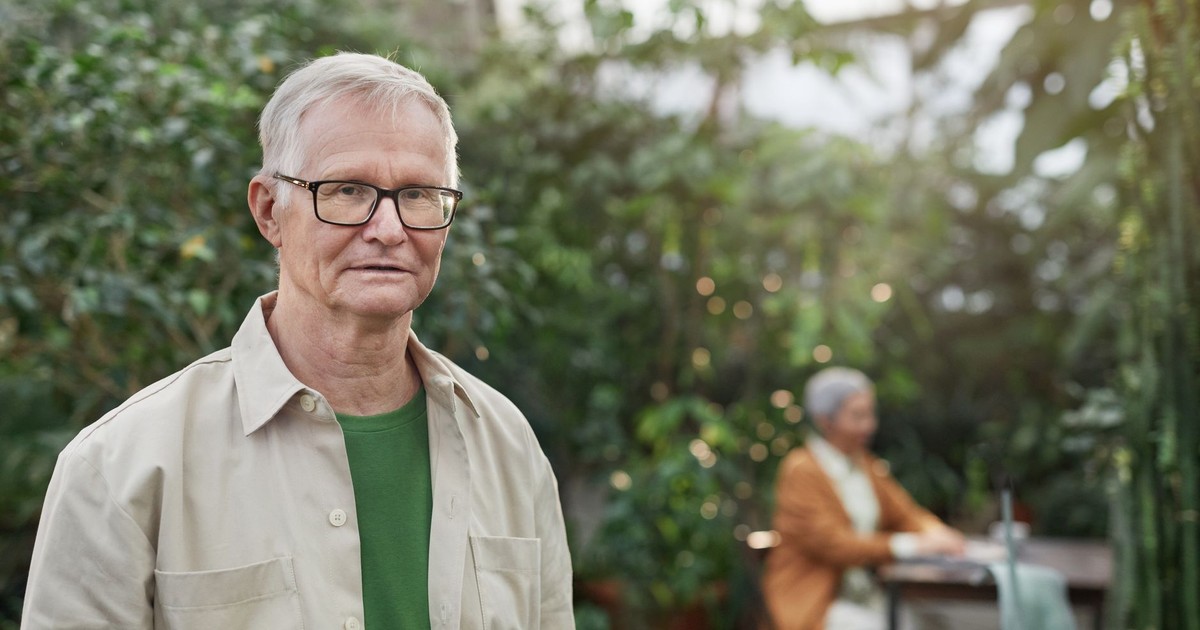

Men over 65 report fewer daily hassles than they did in their early 50s, and that drop tends to level off around 65 to 70. Many men in this age range are navigating real health challenges, shifting finances, and smaller social circles. The logistics of life haven’t necessarily gotten easier. The question is what older men have quietly stopped caring about – and why that shift produces something that looks, from the outside, a lot like peace.
The psychology behind this has a name and a researcher attached to it. Laura L. Carstensen, Professor of Psychology at Stanford University and founding director of the Stanford Center on Longevity, developed socioemotional selectivity theory to explain why older adults consistently report higher emotional well-being despite accumulating losses. The theory holds that when people perceive time as finite, present-oriented goals related to emotional meaning take priority over future-oriented goals aimed at information-gathering and expanding horizons. The less unlimited time feels, the more precisely people cut what doesn’t actually matter to them.
1. Caring What Strangers Think of Them

Older adults’ brains respond to emotional stimuli very differently from younger adults’ brains. A study published in ScienceDirect using fMRI found that older adults showed greater neural activation in response to positive images, while their processing of negative emotional stimuli was selectively dampened compared to younger adults – a pattern researchers call the “positivity effect.” In older adults, the neural response to negative stimuli is not just reduced cognitively, but measurably attenuated at the brain level.
A comment from a stranger, an awkward social moment, a perceived slight from someone whose opinion carries no real weight – these simply don’t land the same way after a certain age. The brain has started filtering them before they reach conscious attention.
Older men frequently describe this as one of the most liberating changes of later life. Carstensen’s work on socioemotional selectivity makes clear this isn’t indifference – older adults care deeply, but about fewer things. The energy once spent managing impressions of acquaintances, coworkers, and casual observers gets redirected toward relationships that actually matter.
2. Keeping Up Appearances

Research finds that overall appearance and physical stature become less important as people age. Older men tend to be more positive about their bodies and less concerned about their appearance compared to both younger men and older women. That reflects a genuine shift in what registers as worth worrying about, not resignation or neglect.
In younger decades, physical presentation can feel tied to professional standing, social status, and romantic value. By the time men reach their 60s and 70s, most of those equations have stopped running in the background. The question “how do I look?” gets replaced, quietly, by “how do I feel?” Comfort wins. Practicality wins. The wardrobe simplifies.
This connects to the broader “positivity effect” documented across multiple fMRI and behavioral studies. Carstensen’s socioemotional selectivity theory, detailed in her 2021 paper in The Gerontologist, argues that as people perceive their remaining time as finite, they shift their goals from information-gathering toward emotional satisfaction. Looking impressive to strangers is information-gathering work – it serves future social capital. Once that calculus changes, the effort stops making sense.
3. Maintaining Surface-Level Friendships

Research published in Psychology and Aging found that as people age, their social networks shrink primarily by shedding peripheral relationships, not close ones. The number of truly meaningful connections stays relatively stable. What falls away is the noise: the acquaintances, the surface-level social obligations, the relationships maintained out of habit or social pressure rather than genuine warmth.
For many older men, this process is deliberate. They stop attending networking events that never produced anything real. They stop returning calls to people who only reach out when they need something. They stop maintaining friendships that were really just shared geography – a former coworker, a neighbor from a house sold a decade ago, a golf buddy from a club they no longer visit.
Older men do have higher odds of being socially isolated than women – a real risk worth taking seriously. Maintaining a smaller number of genuinely close relationships, with regular real contact, protects against loneliness far more effectively than keeping a large, low-investment social roster. A 2024 study in the Journals of Gerontology confirmed that older adults benefit more from maintaining existing close relationships than from expanding their networks, with well-being tied more strongly to relationship quality than quantity.
4. Dreading the Idea of Retirement

The fear of retirement – the loss of purpose, identity, and structure – is often loudest in the years before it happens. Once men actually arrive there, the picture shifts. Engagement matters more than stopping work altogether: men who remain active after retirement, whether through part-time work, volunteering, or purposeful projects, consistently report better outcomes than those who disengage entirely. The structure doesn’t have to be a paycheck – it has to be something worth showing up for.
Self-perception plays a measurable role. Research on aging attitudes has consistently found that positive self-perceptions of aging are associated with higher life satisfaction in older adults. How a man frames the next chapter in his own mind shapes the experience of living through it.
The men who stop dreading retirement tend to have already learned something useful: the identity they feared losing was often built around external validation – title, rank, the respect of colleagues – rather than anything intrinsic. Once that scaffolding is gone, many find they didn’t need it as much as they thought.
5. Obsessing Over Work Status and Career Hierarchy – Where Older Men Regrets Are Most Common

Career rank, job titles, and the social status that comes with professional identity can consume enormous psychological real estate during working years. By the time men reach their mid-60s, most report that the hierarchy they navigated so carefully feels, in retrospect, far less consequential than it appeared.
Cornell University gerontologist Karl Pillemer, whose Legacy Project drew on interviews with more than 1,000 older Americans – most of them between the ages of 70 and 100 – documented this pattern in detail. Among the most common sources of wasted worry his subjects identified: professional standing, peer comparison, and the fear of being perceived as unsuccessful. Older men, asked to reflect on where they spent their anxious energy, return to this category again and again.
Research on chronic people-pleasing, which includes much of the status-maintenance behavior common in professional life, shows it can damage self-esteem and mental health over time. Older men who have stopped chasing status often report something concrete in return: they sleep better. Quality sleep is one of the strongest predictors of life satisfaction in older adults, and the connection to reduced status-anxiety is one the research on aging increasingly supports.
6. Pushing Through Without Asking for Help

A generation of men shaped by norms around self-reliance and emotional stoicism paid a measurable cost for those norms. Across all age groups, men have significantly higher suicide rates than women. According to the CDC, among men aged 55 and older, suicide rates increase with age – men 85 and older have the highest rate of any age group, nearly 17 times higher than women in the same bracket.
The men who report high life satisfaction in later years tend to share one thing: they stopped pretending they didn’t need support. They asked the doctor about the thing they’d been ignoring for two years. They had the conversation with their son or their partner that they’d been postponing. They let someone in.
Psychological research on resilience in older adults consistently finds that adaptive coping – adjusting approach, reaching out, changing strategy when the current one isn’t working – predicts better mental health outcomes than stoic endurance. The men who model this tend to be the ones others describe as seeming genuinely at ease in their later years.
7. Waiting for the Right Moment to Enjoy Life

Older men who report high well-being share a specific habit: they savor. Research finds that older adults with greater savoring ability maintained their well-being over time with a smaller decline in life satisfaction as they aged. Savoring, in psychological terms, means actively extending and appreciating a positive experience rather than rushing past it toward the next obligation.
Younger men often defer enjoyment – the trip they’ll take when work settles down, the hobby they’ll start after the kids leave home, the friendship they’ll invest in once the busy season ends. Older men, by contrast, tend to have stopped waiting. Research aligned with Carstensen’s selectivity framework consistently finds that older adults actively choose to focus on positive information and use their mental energy selectively. The ordinary gets savored: a morning walk, a meal cooked slowly, a phone call made to someone they actually want to talk to.
Physical habits follow the same pattern. Research consistently links higher physical activity, quality sleep, and regular consumption of fruit and vegetables with higher life satisfaction in older adults. None of those things require waiting. All of them require deciding, today, that ordinary wellbeing is worth protecting.
Read More: Things People In Their 80s Wish They’d Done Differently
What This Means for You
Among older adults aged 70 and over, an estimated 14.75% live with a mental disorder, most commonly anxiety or depression. That number sits alongside the high life satisfaction data – positive aging isn’t automatic. The men who report the greatest peace in their later years made specific decisions rather than drifting into contentment by default.
The seven shifts documented here follow a consistent thread: older men stop spending energy on inputs that produce no real return. Other people’s opinions of their wardrobe. Friendships that were never really friendships. Status markers that only felt important because everyone around them treated them that way. Decades of research on aging make clear that this kind of selectivity reflects psychological maturity, not disengagement. When older men stop caring about social comparisons and impressing strangers, it’s a sign of a mind that has learned, through long experience, what actually matters – and what never did. The men who have made that shift consciously aren’t waiting for permission. They’ve already stopped asking for it.
Disclaimer: This information is not intended to be a substitute for professional medical advice, diagnosis, or treatment and is for information only. Always seek the advice of your physician or another qualified health provider with any questions about your medical condition and/or current medication. Do not disregard professional medical advice or delay seeking advice or treatment because of something you have read here.
AI Disclaimer: This article was created with the assistance of AI tools and reviewed by a human editor.