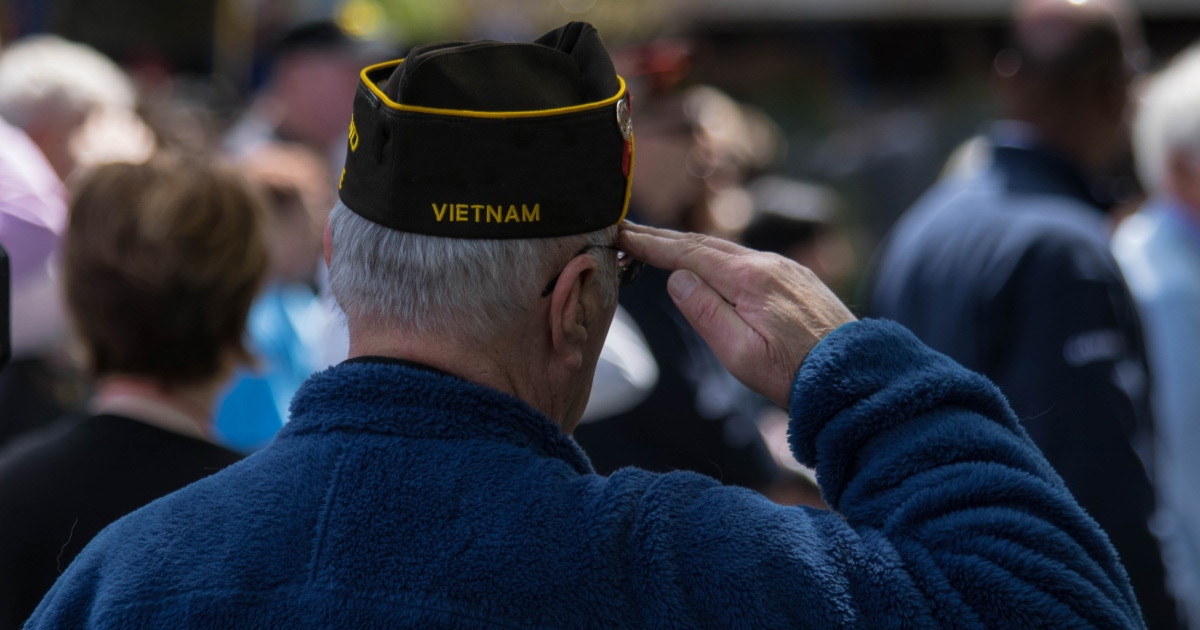

A road in Sumner County, Tennessee carries two names at once. One was given in 1987, honoring 25 local men who died in Vietnam. The other was added in June 2026, without anyone asking the people the first name was meant to protect. That combination lasted only a few weeks before veterans made their feelings known and lawmakers reversed course.
The Charlie Kirk Memorial Highway signs were installed in June along State Route 386, which is also designated as Vietnam Veterans Boulevard. Kirk, the conservative activist and co-founder of Turning Point USA, was fatally shot at Utah Valley University in September 2025. The signs appeared along one of the most-traveled stretches of road in Middle Tennessee, a corridor that thousands of commuters use daily. For local Vietnam veterans, the addition wasn’t a tribute. It felt like an intrusion.
The signs drew frustration from local Vietnam veterans, including Barry Rice, who, as President of the Tennessee Council of Vietnam Veterans, said that about 10 years ago they were able to get signs along the highway to honor 25 veterans from Sumner County who made the ultimate sacrifice in Vietnam. What followed was a swift and public backlash that ultimately forced a reversal, and exposed a breakdown in the basic courtesy of consulting veterans before placing a new memorial designation on ground dedicated to the dead.
The Road That Already Had a Name – and a Purpose
State Route 386 has been dedicated as Vietnam Veterans Boulevard in memory of 25 Sumner County service members who died during the Vietnam War. That designation didn’t happen overnight. Rice stressed the years of work Sumner County Vietnam veterans put in to have Highway 386 named in their honor. That recognition expanded nearly a decade ago when signs were put up along the highway in memory of those who didn’t come back from the Vietnam War.
The road itself sees significant traffic. According to the Tennessee Department of Transportation, nearly 85,000 people drove on a stretch of Vietnam Veterans Boulevard between Hendersonville and Nashville on an average day in 2024. Every one of those drivers passes the signs bearing the names of 25 Sumner County residents who gave their lives overseas. Adding a second memorial designation to that same corridor struck many veterans as a dilution of something that had been fought for and earned.
Sumner County Commissioner Jeremy Mansfield said the signs were installed on a stretch of State Route 386 long known as Vietnam Veterans Boulevard, and that many veterans were upset over the Kirk signs being placed along the roadway intended to honor those who died in service. “Many of our Vietnam veterans were angry and frustrated to see this designation placed on ground set aside to honor their brothers in arms,” Mansfield said. One veteran described learning about the change only after it was done, telling reporters the process felt like it happened “under the cover of darkness,” adding: “There would have been a lot, a lot of us there to protest this, but we didn’t know anything. It was under the cover of darkness. It’s like we don’t exist.”
The Charlie Kirk Sign Tennessee Controversy: How It Unfolded
The criticism prompted the bill’s sponsor, State Rep. Johnny Garrett, to reverse course and find a new location. “I thought it was a good location,” Garrett said. The Tennessee General Assembly had approved the Charlie Kirk sign designation in May 2026, and the Tennessee Department of Transportation fabricated and installed the signs, a process that proceeded without any consultation with the veterans’ community.
Kirk, a right-wing activist and ally of President Trump, died after a shooting at an outdoor speaking event at Utah Valley University. He was a conservative political activist and media personality who co-founded Turning Point USA. His death prompted a wave of legislative tributes across states where he had been politically influential, but Tennessee’s decision to honor him on a road already dedicated to fallen service members was a choice that proved impossible to defend once veterans were heard.
Just weeks after signs designating part of Vietnam Veterans Boulevard as the Charlie Kirk Memorial Highway were installed, they began coming down. The change came after Vietnam veterans strongly objected to placing the memorial on a roadway dedicated to those who served and died in the Vietnam War. One day after WZTV aired concerns from veterans, lawmakers began working to relocate the designation.
Mansfield, who helped amplify the veterans’ objections on social media, issued a statement thanking those who spoke up: “Your opinion on this mattered, and I was surprised to learn they were never consulted before the first sign went up.”
The move was eventually confirmed, though not without a procedural wrinkle. The Tennessee Department of Transportation stated: “The Tennessee General Assembly approves memorial designation of roadways, while the Tennessee Department of Transportation is responsible for fabricating and installing the signage. Regarding the placement or removal of the signage, TDOT will follow the direction provided by the General Assembly, which we have not yet received.” Mansfield said State Rep. Johnny Garrett, who selected the initial location for the Charlie Kirk Memorial Highway, has agreed to move the signs to Long Hollow Pike in Goodlettsville.
What the Relocation Means in Practice
Long Hollow Pike in Goodlettsville is where the designation is being moved after Vietnam veterans objected to placing it on a roadway dedicated to those who served and died in the Vietnam War. Moving the signs there sidesteps the core objection veterans raised: that a road already dedicated to soldiers who died in combat is not the right place for a separate political tribute, regardless of who it honors.
Veterans said Vietnam Veterans Boulevard should remain dedicated exclusively to the 25 Sumner County service members who made the ultimate sacrifice. That position isn’t about opposing Kirk’s legacy – it’s about the specific meaning attached to a specific stretch of asphalt, earned through decades of advocacy by people who served alongside those 25 men.
The episode also raises a practical question about how memorial highway designations are handled. The Tennessee General Assembly approves these designations, and TDOT installs the signs. Nowhere in that process, it appears, is there a formal requirement to notify or consult existing honorees or the veteran communities tied to an already-designated route.
Tennessee’s Broader Kirk Legacy
Tennessee lawmakers have named multiple pieces of legislation after Kirk, including the Charlie Kirk American Heritage Act, which took effect July 1.
The law allows Tennessee public educators to teach about the positive impacts of Christianity on American history, though it does not require that instruction. The bill was signed by Gov. Bill Lee in April. The legislation was sponsored by State Rep. Mark Cochran (R-Englewood), and applies to public school teachers and faculty at public colleges and universities.
The law allows instruction on topics including the Mayflower Compact, references to divine authority in the Declaration of Independence, the influence of religious leaders on the nation’s founding, and the history of the national motto, “In God We Trust.” Cochran said the legislation is not intended to require a new curriculum or mandate classroom instruction. “The primary motivation for the legislation was really to set some reassurance for our teachers to make sure those folks who want to teach these concepts that they know there’s nothing wrong with that,” he said.
According to a statement from the House Republican Caucus, the Charlie Kirk American Heritage Act “authorizes local education agencies, public school teachers and faculty at public institutions of higher education to provide instruction on the positive impacts of Christianity on American history when teaching the subject.” The measure cleared the Tennessee Senate by a 27-6 vote and the Tennessee House by a 70-22 margin. These teachings will be allowed to begin in the Fall 2026 semester.
Some educators have raised concerns about violating the separation of church and state. The debate around the law mirrors debates in other states where similar legislation has been introduced, touching on the boundary between historical education and religious instruction in publicly funded schools.
For those following how governments balance competing commemorations on public infrastructure, the FBI’s investigation into Kirk’s assassination at Utah Valley University provides important context for why so many state legislatures moved quickly to honor him after September 2025.
Read More: Highschool students build tiny homes to help homeless veterans
What This Means for You
The Charlie Kirk sign Tennessee dispute ultimately resolved because veterans spoke up, loudly and publicly, after the fact. The outcome was the right one. But the process exposed a gap: memorial highway designations can be approved and installed without any formal mechanism requiring consultation with the communities those roads already honor.
As Mansfield put it: “State Route 386 has always been Vietnam Veterans Boulevard, dedicated to the 25 Sumner County service members who gave their lives in Vietnam. Many of our Vietnam veterans were angry and frustrated to see this designation placed on ground set aside to honor their brothers in arms.” No administrative fix was required to prevent this – only the basic step of asking.
For anyone paying attention to how local governments handle public memorials and commemorative designations, this case makes the argument clearly: the communities those dedications are meant to serve deserve a seat at the table before the signs go up, not after. Once the signs are installed and the cameras arrive, the damage to trust is already done.
AI Disclaimer: This article was created with the assistance of AI tools and reviewed by a human editor.