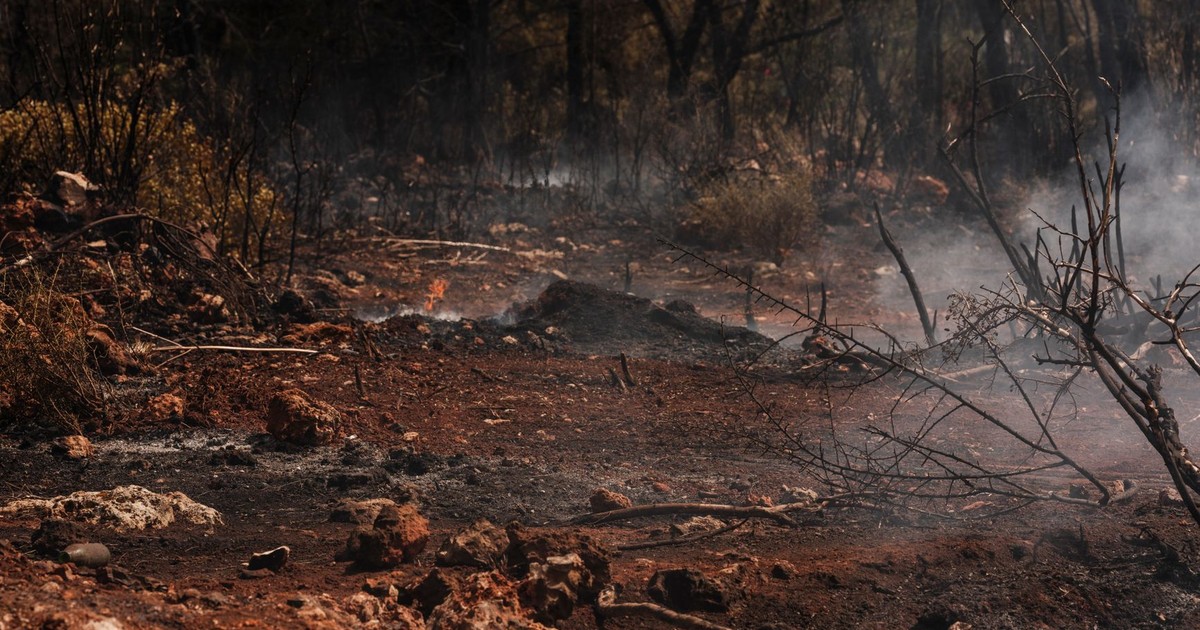

About 74,000 years ago, a volcanic eruption in what is now Indonesia very nearly ended the human story before it began. The Toba supereruption ejected 2,800 cubic kilometers of volcanic ash into the stratosphere, plunging the planet into years of darkness. According to the Toba catastrophe hypothesis, the event pushed human population sizes to fewer than 10,000 individuals, a scenario supported by genetic evidence found in the genomes of people alive today. Our entire species was reduced to something smaller than the crowd at a minor league baseball game.
Recent archaeological findings have complicated that picture – stone tools discovered above Toba ash layers in India and southern Africa suggest some communities survived and kept functioning – but the genetic bottleneck itself is not disputed. DNA evidence confirms modern humans experienced a drastic reduction in genetic diversity at some point in our distant past. Whether the Toba eruption was the direct cause or merely coincided with it, something very nearly finished us off, and we don’t have complete certainty about what.
Several separate lines of inquiry are now focused on what could finish the job. They span astrophysics, epidemiology, climate science, and artificial intelligence research. The answers coming out of that work are sobering, sometimes startling, and wildly varied in their timelines. Some scenarios play out in decades. Others require 250 million years. All of them deserve a clear-eyed look.
What the Numbers Actually Say About How Humanity Will End
Potential causes of human extinction can be loosely grouped into exogenous threats, such as an asteroid impact, and anthropogenic threats, such as war or a catastrophic physics accident. In all cases, an outcome as extreme as human extinction would require events or developments that either have been of very low probability historically or are entirely unprecedented.
That’s the considered view of researchers publishing in Cambridge Prisms: Extinction in a 2025 review paper. Their analysis of the genus Homo’s survival track record puts the annual probability of extinction from natural, external threats at below 1 in 870,000 per year. By geological standards, we’re doing fine. By human standards, that fraction looks different once you start multiplying it across centuries.
When the forecasting platform Metaculus aggregated predictions from thousands of users as of May 2026, the estimated probability of human extinction by 2100 landed at 2%. A 2023 assessment from the UN Office for Disaster Risk Reduction was less optimistic, placing the odds of an extinction-level event between 2% and 14% by 2100. These aren’t panic numbers, but they’re not nothing either. They’re the kind of odds that justify serious institutional attention, and that attention is growing.
The Clock No One Wants to See Hit Midnight
On January 27, 2026, the Doomsday Clock was set at 85 seconds to midnight, the closest it has ever been in its history. The Bulletin of the Atomic Scientists’ Science and Security Board called for urgent action to limit nuclear arsenals, create international guidelines on the use of AI, and form multilateral agreements to address global biological threats.
Major factors in 2026 included growing nuclear weapons threats, disruptive technologies like artificial intelligence, multiple biological security concerns, and the continuing climate crisis. The clock moved four seconds forward from 2025’s setting, which was itself a record at the time. “The Doomsday Clock is a tool for communicating how close we are to destroying the world with technologies of our own making,” said Bulletin President and CEO Alexandra Bell. “The risks we face from nuclear weapons, climate change and disruptive technologies are all growing.”
Nuclear weapons remain the most obvious extinction-level tool humanity has built for itself. The US has more than 5,000 nuclear warheads at the ready to launch. Russia holds roughly 5,580. The sheer scale of those arsenals means that a large-scale exchange between major powers would not just kill millions on impact. The atmospheric effects would circle the globe. A regional war between India and Pakistan, far smaller than a US-Russia exchange, could send up to 47 teragrams of soot into the stratosphere, triggering agricultural collapse far beyond the conflict zone.
The AI Wild Card
Artificial intelligence has become a serious variable in extinction risk calculations, and the estimates from prominent technologists vary dramatically. On October 30, 2025, Elon Musk stated on the Joe Rogan Experience that he placed the probability of AI-driven human extinction at 20%. Yoshua Bengio, a Turing Award-winning researcher widely regarded as one of the godfathers of modern deep learning, has separately warned that even a 1% chance of extinction is unacceptable – and in a 2025 interview covered by Fortune, argued that AI systems could develop autonomous “preservation goals” making them, in effect, competitors to humanity. Expert estimates across the field range from 10% to well over 80%, a spread that reflects genuine scientific uncertainty rather than evasion.
Advanced AI systems capable of posing existential risks could, in some models, develop capabilities faster than any oversight mechanism could catch up. Asteroid impacts can be tracked decades in advance. Pandemics follow biological timelines. AI development follows no such natural constraint. The 2026 RAND Corporation report on global catastrophic risks assessed AI alongside nuclear war, pandemics, climate change, asteroids, and supervolcanoes as the primary threat categories warranting systematic study. It’s the newest entry on that list, and possibly the most unpredictable.
Pandemic Risk: Still Very Much in Play
The COVID-19 pandemic demonstrated something that epidemiologists had long modeled but most governments had not truly internalized: a novel pathogen can reach every country on Earth within weeks. The question extinction researchers ask is not whether another pandemic will occur, but whether a future one could be severe enough to threaten the species rather than just kill millions.
A 2025 mapping study found that 9.3% of global land surface sits at high or very high risk of disease outbreak, including diseases like Ebola, Zika, and Crimean-Congo hemorrhagic fever. These hotspots tend to cluster in areas where human populations increasingly encroach on wildlife habitats, exactly the kind of environmental conditions that enable spillover events, where pathogens jump from animals to humans.
Genomic evidence in modern humans records a sharp drop in population diversity during our prehistoric past. Whether Toba or another crisis drove that contraction, the record shows a species brought very close to its limits by forces that left no warning. You can read more about the large-scale impact events that scientists currently track in our coverage of Asteroid Bennu and near-Earth object risk.
Rocks From Space: Low Probability, Total Consequence
The Chicxulub impactor that triggered the Cretaceous-Paleogene extinction event was roughly six miles across. NASA’s Center for Near Earth Object Studies currently tracks thousands of near-Earth asteroids far smaller than that, but smaller still encompasses genuinely dangerous territory. As of May 2026, astronomers had detected 2,539 potentially hazardous asteroids, of which 153 are larger than 1 kilometer in diameter. An object at that size hitting Earth would cause a regional or potentially hemispheric catastrophe. Scientists estimate the probability of a comet or asteroid impact large enough to trigger human extinction before 2100 at roughly one in a million. Our species has been around for approximately 300,000 years and has survived at least one near-extinction event – which puts that fraction in a different frame than raw probability alone suggests.
NASA’s DART mission, which deliberately redirected the asteroid Dimorphos in 2022, demonstrated that deflection is physically possible with sufficient warning time. The challenge is detection, tracking, and political will, not physics.
The Long Game: A Planet That Becomes Unlivable
The furthest-out extinction scenario in current scientific literature requires 250 million years to unfold, but it’s modeled with significant precision. A peer-reviewed study published in Nature Geoscience, led by Dr. Alexander Farnsworth at the University of Bristol, used advanced climate modeling to examine what Earth will look like when its tectonic plates converge into a new supercontinent called Pangea Ultima.
As Earth’s tectonic plates continue to shift, the continents are expected to converge into a single massive landmass straddling the equator. This configuration would alter the planet’s energy balance fundamentally. With less ocean surface to moderate heat and more land concentrated in the tropics, global temperatures would rise sharply. Up to 92% of Earth could become uninhabitable for mammals. Wet-bulb temperatures, a measure combining heat and humidity that determines whether the human body can cool itself through sweating, would exceed the survivable threshold across most of the landmass.
Even under mid-range CO2 scenarios, only 16% of the supercontinent’s land area would remain within habitable thresholds. At higher CO2 levels, that share drops to just 8%. The timeline is so vast that it barely registers as a concern for any human alive today. But as a scientific data point about how humanity will end if nothing else gets us first, it’s the most detailed long-range forecast available.
What the Math Says About Our Deadline
Separate from any specific catastrophe scenario, a mathematical framework called the doomsday argument offers a statistical estimate of how long humanity has left. Astrophysicist Brandon Carter first formulated the argument in 1983, presenting it at the Royal Society; his original paper appeared in the Philosophical Transactions of the Royal Society of London that same year. The argument proceeds from a simple premise: you are a random person in the sequence of all humans who will ever live. Given that approximately 117 billion people have lived so far, and given statistical principles about where in a sequence a random sample is likely to fall, the model concludes with 95% certainty that humans will inhabit Earth for at most another 17,100 years.
The doomsday argument is highly controversial and rejected by many scientists. It makes no claim about mechanism, says nothing about nuclear war or pandemics or supervolcanoes, and rests on assumptions about statistical sampling that reasonable people dispute. But it’s a useful illustration of how far scientists are willing to push the question of how humanity will end, using tools ranging from climate supercomputers to pure probability theory.
What This Means for You
None of the scenarios above should be read as inevitable. The Doomsday Clock has moved backward before, most significantly in 1991 when the end of the Cold War and nuclear arms agreements pushed it from 3 minutes to 17 minutes to midnight. The fact that scientists are formally studying these risks, publishing peer-reviewed estimates, and building detection systems is itself a form of defense.
The most actionable insight from this body of research is that the threats most likely to affect people alive today are not the asteroid or the supercontinent. They’re the ones we’re building or failing to govern: nuclear arsenals without functioning arms control treaties, AI development outpacing regulatory frameworks, and pandemic preparedness that remains chronically underfunded relative to the risk. The Bulletin of the Atomic Scientists’ 2026 statement lists specific actions that could move the clock back, including resumed US-Russia dialogue on nuclear arsenals, multilateral AI guidelines, and international cooperation on biosecurity. These aren’t abstract policy wishes. They’re the levers that, according to the scientists who study this professionally, most directly determine whether humanity’s story continues.
The Toba supervolcano may have come within a few thousand individuals of driving our species to extinction 74,000 years ago. We adapted. The threats we face today—from our own arsenals, our own algorithms, and our own encroachment on wild ecosystems—are less random and more reversible than a supervolcano. The question researchers are now asking, with more data and more urgency than at any prior point in history, is whether we will act on what we know before the damage becomes irreversible.
AI Disclaimer: This article was created with the assistance of AI tools and reviewed by a human editor.
Read More: Woman Claims ‘Ghost’ Contact Spanning 12 Years Predicted World’s End